Lifting and Moving Operations: An Inch Can Save a Life
In the world of technical rescue there is a lot of technology, and advanced equipment and training to go along with it. There are, however, skills in the world of technical rescue that possess a caveman-like skill set. What I mean by that is it’s not always the expensive piece of equipment that gets the job done. Now, don’t get me wrong, I love tools and gadgets as much as the next guy, but the technology found in those tools came from basic caveman-like ideas.
In this article, we’re going to look at the discipline of lifting and moving. This is a great topic in the sense that to this day we still use those caveman-like techniques to get the job done. Lifting and Moving is a vital skill and requires some outside-the-box thinking from all rescuers involved. For the purposes of this article, we’ll refer to anything we’re going to lift as the “Load.” With that being said, let’s punch that gas pedal to the floor and get this article moving.
The first thing a rescuer needs to learn and understand is that you can’t just lift a load without “reading” it first. What I mean by that is you need to look at what you’re lifting and how it will affect loads near it and on it. As the rule of physics states, for every action there is an equal and opposite reaction. What that means is simply this, you need to go find the thickest book on physics and read it cover to cover to gain the understanding you need to move that object. Just kidding! It simply means look at what you’re going to lift and visualize how it will affect the loads on and around it. A collapse field could sometimes be like a Jenga game, move or lift the wrong piece and you’ll collapse others.
Lifting and moving loads can be accomplished in a multitude of ways. Here are a few examples:
- Fulcrum & Leaver
- Hydraulic Tools
- Pneumatic Struts
- Pneumatic Air Bags
- Ropes
Let’s first look at the Fulcrum & Leaver. The F&L is categorized into three different classes:
- Class 1
- Class 2
- Class 3
The F&L is an ancient means of generating raw power through human output. When technology fails, this will always perform. How it works is simple. As you push down on the lever, you create somewhat of a mechanical advantage. The longer the lever, the more power you’ll generate. Positioning and size of the fulcrum will not only dictate your power, but also the height of your lift. Different levers work in different ways; however the outcome is the same. If you look at Figures 6, 7 and 8, you can see each lever is different. They all, however, provide you with power. Like anything else, you need to realize your limitations. If you’re creating an F&L, you should be using either 4x4 or 6x6 lumber.
Getting back to the limitations, there’s something called the crack rule. When lifting heavy loads, stress and strain are placed on the F&L, but it’s the stress and strain on the lever that we’re mainly concerned about. Once you hear two cracks in a lever made from a 4x4, it’s time to replace it or make the decision to change the dimension of lumber to a 6x6. When using a 6x6, at the third crack it’s time to replace it. One of the great things about using lumber is that it lets you know when it’s being overloaded. I’d have to say it’s in your best interest to respect it and replace it when needed.
Hyrdaulic Rescue Tools
Let’s move into the world of hydraulics. In a nutshell, it’s raw power at the end of a switch. In the world of rescue, the capabilities of hydraulic tools is only limited to your outside-the-box mentality.
Here are some examples of hydraulic tools:
- Spreaders (Figure 9)
- Cutters (Figure 10)
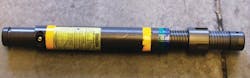
- Rams (Figure 11)
- Combi Tool (Figure 12)
- Hydraulic Saws and Breakers (Figure 13)
At first glance, you may think that spreaders, cutters, and rams are exclusively for motor vehicle operations. If you haven’t had any formal urban search and rescue (USAR) training, then rightfully so, that’s how you would think. These tools aren’t object-specific; meaning the actions they perform can be applied to anything. When using these tools, you need to keep in mind the stability of the load being lifted. There’s a saying that’s pretty much worth its weight in gold, “Lift an Inch, Crib an Inch.”
When loads are moved or lifted, gravity wants to return it to the ground by any means possible. Loads can shift in a split second, causing devastation to an operation. When lifting objects, it is imperative that cribbing is used to support the load. You’ll generally find cribbing cut from dimensional lumber of the sizes 4x4 and 6x6. Cribbing can vary in length; however 24 inches is a common size. You’ll also find 4x4 and 6x6 wedges and 2x4s as fillers. Adding to the cache of cribbing will be pieces of micro-lam and or 3/4-inch plywood.
Cribbing is an important aspect to your lifting operation. It needs to be done with care and on the money. The principal behind cribbing is not only to stabilize the load, but it also transfers the load force vertically into the ground. Crib stacks can have multiple levels. The rule of thumb to follow is the height should not exceed three times the width and should not exceed 30 degrees out of plumb. Outside of those two features, the third most important aspect you must adhere to is all the cribbing should line up with each other, giving you a solid contact point from top to bottom.
If you look at figures 14 and 15, Figure 14 depicts how not to build a crab stack while Figure 15 is a shining example. The contact points are where the strength is. On a 4x4, each contact point is rated for 6,000 pounds, giving a simple two-tier crib stack a load rating of 24,000 pounds. Using 6x6 lumber, those contact points are bumped up to 15,000 pounds with a load rating on a 2-tier stack at a whopping 60,000 pounds....yes that’s some serious weight. The next time you’re building a crib stack, don’t let someone tell you “it doesn’t have to be perfect” or “that will do,” those statements couldn’t be any further from the truth. Whether you’re building a crib stack for a 3,000-pound car or a 30,000-pound truck, you should build your stack one way every time...perfect!
Let’s now wrap this article up by touching on air bags. You’ll find three different types of airbags – low, medium, and high pressure. Low pressure can operate using around 7 psi, medium 15 psi and high pressure weighs in at 118 psi. The difference in size is...we’ll let’s just say noticeable (see Figures 16, 17, 18). The lifting capabilities between the different bags also changes. When an air bag inflates, it looks something like a pillow. Because of that there is a two-bag maximum stack rule. Anything over two just becomes too much of a balancing act.
Other notable points are to always put the larger bag on the bottom and ensure the air connections are facing out towards you. When lifting on a crib stack you want a solid top and, depending on the ground you’re lifting on, perhaps a solid bottom. An example of a ground type that would require a solid base is grass and or dirt. Some departments choose to always use a solid base and I think that’s great forward thinking. The reason for the solid top is that if you inflated an air bag resting on two 4x4s, the inflation of the bag would want to spread them apart. By using a solid top (Figure 19) this problem is avoided. The solid top transfers the force created by the inflation of the airbag vertically down through the crib stack and into the ground. Airbags are a very powerful means of lifting loads and it is imperative that you keep the load that’s being lifted stable the entire duration of the operation. The stabilization method used is “lift and inch, crib an inch” meaning as the load is being lifted you continuously follow the load with your crib stack. Wedges are used to continue stabilization until a full piece of lumber can fit.
Lifting operations can be simple or complex and a size-up of the load prior to lifting is a must. You need to determine how moving one load will affect other loads nearby or directly in contact. Like any other rescue skill, a little training goes a long way.
Until next time, keep those loads stable and your forces vertical.
MICHAEL R. DONAHUE is a 14-year veteran of the fire service assigned to Rescue Company 1 in Elizabeth, NJ. Mike is the owner and founder of Progressive Rescue, a company dedicated to further firefighter's in all aspects of the job. He holds the title of rescue specialist with New Jersey's Urban Search and Rescue Team (NJ-TF1) and he is actively teaching at Middlesex Fire academy and the Middlesex County College as their Fire Science Program Coordinator. Mike has been on two Firehouse.com podcasts: The Buzz on Technical Rescue: Rope Rescue Operations and The Buzz on Technical Rescue: Special Operations Roundtable. He has taught as a HOT instructor at Firehouse Expo and is the Specialized Rescue Forum moderator for Firehouse.com. You can reach Michael by e-mail at [email protected].
About the Author
 Michael Donahue
Michael Donahue
Owner and founder of Progressive Rescue, Mike Donahue is a 13-year veteran to the fire service. In those thirteen years Mike has experience as both a volunteer and federal firefighter and has been a career firefighter in the City of Elizabeth for the last 10 years, the last seven of which and currently working out of Rescue Company 1. Mike holds the title of Rescue Specialist with New Jersey's urban search and rescue team (NJ-TF1). You can find Mike actively teaching at Middlesex and Somerset Fire Academies as well as Middlesex County College as an Adjunct Professor and the Fire Science Program coordinator. He is actively involved in writing new course programs for the various organizations he teaches for. Mike has reviewed several text books for publishers such as Delmar and Jones & Bartlett. Mike has also co-written the new rope program for Jones & Bartlett and taught Rope Rescue Made Simple at Firehouse Expo 2010. Mike also is a monthly columnist for Firehouse.com covering the area of technical rescue. His teaching techniques and cutting edge style have gained the respect from many of his peers. Mike's passion, experience and desire to educate emergency service providers prove to be the driving force that has made him so successful. Progressive Rescue prides itself on providing the most cutting edge, diverse instructional programs available. We strive to provide your department with the most comprehensive, dynamic learning experience available at a truly competitive price. You can reach Mike by e-mail at [email protected]