Our chosen profession is one steeped in tradition. We are proud to don the Maltese Cross and place fire related logos in every conceivable place. Patches, embroidered shirts and a slew of those "hero" shirts are worn with all sorts of phrases indicating our love of the job, riding fast or the brotherhood.
At first glance, one can easily see that people involved in this job are passionate about it. I am passionate about it too. I believe that there is nobility in service. Dedicating your life towards helping others is a worthwhile choice.
Having the benefit of the general public's gratitude based on your choice of job is both exhilarating and humbling. People give you respect because of your job, regardless of how good you are at it. They do so no matter the level of your experience. They confer their feelings on to you because of the traditional role that firefighters have played in society.
The tradition based society, that the brotherhood is, has given us many great things. We pay homage to those that have given their lives in service to the country and those that they serve locally. We remember with pride the rank and file that have worn down the path to the engines and ladders we work on today. Their dedicated service provides direction for us as we look to the future and refer to the past.
We see what worked. We learn from mistakes and teach others. Part of our tradition is training. As a personal responsibility, many of us dedicate countless hours towards making firefighters safer and better educated.
One negative thing about tradition is the phrase that is spoken most often in jest, after an enthusiastic member of the department attends new classes and brings that material home… "We don't do it that way here." The next most often stated phrase is: "Two hundred years of tradition unimpeded by progress."
This needs to change. Culturally, we need to change. Our tradition needs to change. It is imperative that we adjust to a new reality.
Much like the newlyweds who must choose where to spend their holiday dinner and thus change what was once a tradition, we too must choose. They create a new tradition. It is time for us to do the same.
After reading Chief Doug Cline's article, Overhauling a Training Program, one item really resonated for a long time. After reviewing the 16 Life Safety Initiatives offered by the National Fallen Firefighters Foundation, he asked five questions. The second one, "What are we training on? (realistic or cool guy stuff)" really made me think.
Our business is sometimes dangerous but, most often it is mundane. It is sometimes exciting but, routinely boring. We work long hours waiting for the call to perform and use what we have learned.
While we are sometimes exhilarated working the exciting calls, the truth is, more often calls are simple service calls or ones that will never be sexy enough to make the news. These "routine" calls are inspections, lift assists, non-life threatening medical aid calls or any one of a thousand items we are dispatched to that does not require rapid intervention teams, jaws or high angle rescue.
In the near future, our service will see less fire. As students of history, we can plainly see that new construction codes have reduced the frequency of fires already. The push is on for adoption of residential sprinklers. This will further reduce our calls for a "worker."
Although this may sound like heresy to some, the National Fallen Firefighters Foundation has let it be known that this is a good thing. Since training is aimed at reducing firefighter injury and mortality, having less fires will reduce the potential for both.
Now on to training and Chief Cline's question; "What are we training on? (Realistic or cool guy stuff)." Simple question, not so simple answer.
Several excellent training classes and courses work to promote firefighter safety by instructing firefighters to self-rescue. They teach really cool techniques that may in fact save a firefighters life. These include basic exercises like the long lug out drill and low-profiling an SCBA to escape a tight space. Usually they incorporate some sort of rappelling and head-first bailouts on a ladder.
These absolutely do have their place. In fact, I have learned a great deal in these classes and I hope I never have to employ these techniques. Their value will be returned if even one firefighter's life is spared by performing these techniques.
Now, here comes the part that will turn many off. These slick techniques are useful during emergencies on the fireground. They are fun to perform in training. They raise the bar for excitement and it is a superb way to get full group participation. A training officer's dream.
Realistically, our beloved fire service is facing unprecedented financial cuts that are decimating fire departments across the nation. Firefighters are being laid off in double digits in many cities and towns. The remaining force must continue to perform the same duties that once took X-amount of personnel and do they same job with a severely restricted work force.
Realistically, we need to re-think our aggressive-by-nature attitudes so that we do not jeopardize the safety of the crews. We need to take a better look at the risk/benefit analysis of performing risky tactics because we do not have the back-up we are used to on the fireground. We need to reduce the chances that we are put into such a risky place from which we will need to "bail-out."
Since budget dollars are stretched to the breaking point now, we need to concentrate and spend money where it will be the most cost effective. This is determined by looking at the cost of training and also the cost of sustaining a workforce. It must include the potential cost of injury or the immeasurable cost of a line of duty death.
Training is based on educating our members on all aspects of firefighting, drilling on perishable skills, learning about new technologies and working to maintain a safe working environment. After all, in our incident priorities, our primary consideration is life safety and that starts with our own life.
Perhaps it is time to choose to create a new tradition. Save the life of a firefighter. As Chief Cline stated, we need to overhaul our training program by changing what we focus on. Firefighter safety begins with good decision making. Training programs need to be focused on teaching firefighters how to recognize areas that will be dangerous. They need to be better equipped with tools to decide how they will mitigate the problem safely. Training needs to be based on preventing dangerous situations from occurring. Basic fire theory, strategy and tactics for firefighting and fireground safety should be the new concentration of training.
The self-rescue techniques certainly have their place and we will never be able to completely eliminate the dangers of this job. In our turnout gear, the labels even deem this job "ultrahazardous, ultradangerous." It is and it will be forever more. Staffing cuts only make this job more dangerous.
By choosing to change the tradition of "doing things the way we have always done it" and instead making the new tradition "the way we do it now," we will save firefighters lives. Preventing line of duty deaths is the ultimate goal. Refraining from getting into dangerous situations by training on good strategy, tactics and decision making will save Firefighters lives. Employing a sound risk/benefit analysis, we will save firefighters lives.
Our new tradition that needs to be passed down is one of safety.
JAMESON R. AYOTTE, a Firehouse.com Contributing Editor, is a fire lieutenant/paramedic with the Amesbury, MA Fire Department. where he is the shift commander of Group 3. Lt. Ayotte holds a B.S. in Exercise Physiology and an M.S. in Physical Therapy from UMass-Lowell. He is a certified Fire Officer I, Fire Officer II and Fire Instructor I. In addition to working as a full-time firefighter, he works as an instructor at the Massachusetts Fire Academy. View all of Jameson's articles here. He can be reached at [email protected].
About the Author
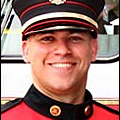
Jameson Ayotte
Firehouse.com Contributor
Jameson R. Ayotte is a Fire Lieutenant/Paramedic with the Amesbury, MA Fire Department. He began his career in EMS in 1994 and entered the fire service in 2002. Lieutenant Ayotte has been a company officer since 2005 and is the Shift Commander of Group 3. He is a member of the Amesbury Fire Honor Guard.
Lieutenant Ayotte holds a B.S. in Exercise Physiology and an M.S. in Physical Therapy from UMass-Lowell. He is a certified Fire Officer I, Fire Officer II and Fire Instructor I. In addition to working as a full time Firefighter, he works as an instructor at the Massachusetts Fire Academy. He lives in Newburyport with his wife Melanie and their three sons. He can be reached at [email protected].