Nuts, Bolts, Screws & Washers: What Loose Hardware Says About Firehouse Habits and Apparatus Accountability
Key Takeaways
- When fire department crewmembers don't embrace their role in ensuring that fire apparatus are at peak quality, they put their life and the life of their fellow members at risk.
- Every firefighter should feel ownership of their rig. This means checking thoroughly, questioning irregularities and documenting issues clearly.
- When fire department leaders treat apparatus care as a priority, crews do, too.
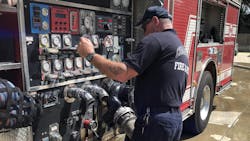
You show up for your shift, grab a cup of coffee and start your rig check—and there it is again: a bolt on the bay floor. No tag, no note, no clue where it came from. You ask around. No one knows. It gets brushed aside as “just a bolt.” However, how many times has this happened?
These seemingly minor findings are becoming all too common across firehouses. From loose nuts to broken brackets, small parts turn up without explanation and, worse, without follow-up. It might be cosmetic, or it might be critical, but here’s the truth: If it’s coming off of the rig, it matters, and if we aren’t tracking it, we’re gambling with readiness, safety and service.
Shift in mindset
Loose hardware isn’t always a fluke. It often is a warning sign—and a cultural signal. A nut, bolt, screw or washer that’s lying on the floor isn’t just a maintenance issue; it’s a reflection of habits, accountability and whether crews treat their apparatus like lifesaving equipment or background noise.
This article is about more than broken brackets and missing screws. It’s about a shift in mindset, one that treats small mechanical issues as operational risks, not afterthoughts. If something fell off of the vehicle, it matters. Ignoring it puts lives at risk.
When inattention becomes tragedy
On Jan. 9, 2009, a Boston Fire Department ladder truck crashed into a building. Lt. Kevin Kelley was killed. Investigators discovered that the truck’s brakes weren’t inspected for nearly a year. Inadequate training, lax reporting and poor record-keeping were cited.
Since 2016, breakdown-related removals from service at the Seattle Fire Department jumped 50 percent, according to a report by the Seattle Times. One ladder truck required major repair after its fifth-wheel bearing went ungreased for a substantial amount of time. Short staffing, supply chain issues and rising call volumes strained the department’s maintenance capacity.
During a major fire, the water fixture of a Nashville Fire Department reserve aerial detached during operations, according to a report by Fleet Maintenance. The circumstance required another unit to complete the job. The failure exposed gaps in preventive maintenance for backup rigs.
An audit of Atlanta Fire & Rescue revealed that 20 percent–40 percent of vehicles were out of service at any given time, according to an August 2024 report by Atlanta News First. The article went on to note that daily inspections often were ignored and that one-third of the fleet was past its service life.
Domino effect of small things
In the fire service, the line between operational success and failure is razor thin. Particular to apparatus accountability, a $0.75 bolt that’s found on the floor could end with a multi-thousand-dollar repair, an out-of-service rig or, worse, an injury or death. These aren’t exaggerations; they are preventable outcomes. That said, they only are preventable when we treat the small things like they matter.
A single missing fastener could loosen brackets, rattle wiring or disrupt critical systems. Every component, no matter how small, plays a role in the larger system of readiness. A single loose bolt might not seem like much, but when it’s ignored, it can become the first in a chain of failures, each compounding the last, each bringing us closer to a critical breakdown.
Loose fittings on a discharge valve can cause slow leaks that erode pressure. That pressure drop might compromise a fire attack.
It isn’t just mechanical parts. Body panels, step brackets and ladder rack mechanisms, for example, might seem cosmetic, but even noncritical components can be safety hazards if they come loose during travel or operation. A loose running board bracket could injure a firefighter. A detaching panel could cause road debris.
This is how breakdowns happen; not all at once, but piece by piece, from unchecked problems that escalate silently. Readiness isn’t just about turnout speed; it’s about knowing that your rig is 100 percent because someone noticed that a bolt was missing—and followed up.
From task to culture: A shift in ownership
Too often, maintenance is seen as “someone else’s job.” This mindset creates blind spots. However, when a rig fails on scene, titles don’t matter. Everyone is affected.
We must reframe maintenance as a shared responsibility. Every firefighter should feel ownership of the rig. That means checking thoroughly, questioning irregularities and documenting issues clearly.
Communication matters. A note on a whiteboard won’t cut it. Use daily reports or shared logs to track concerns until they’re resolved. The more formal the process is, the less likely problems are to fall through the cracks.
Leadership plays a huge role here. Officers set the tone. When leaders treat apparatus care as a priority—not just when something breaks, but every day—crews take notice. When leaders turn a blind eye or accept half-done rig checks, the crew will, too. Cultural change doesn’t happen overnight, but it starts with consistent expectation, clear communication and reinforcement from the top down.
This is professional pride. It’s the same mindset that drives quality CPR or disciplined search tactics. We take care of our rigs not just because it’s policy but because it’s the right thing to do.
Building a reporting system that works
A solid reporting system is key. Without it, even vigilant firefighters might hesitate to speak up.
Departments should standardize how to document and communicate maintenance concerns. Whether digital or paper, these systems should collect details, effects and actions that were taken.
Equally important is feedback. When firefighters see their reports being addressed—not ignored—they’re more likely to continue flagging problems. Transparency builds trust.
Better yet, integrate reporting with PM schedules and parts inventories. This streamlines tracking and prevents delays in addressing issues.
Equip the people who fix the apparatus
Modern fire apparatus aren’t simple machines. With complex electronics, computerized pumps and safety interlocks, rigs demand more from those who maintain them. However, many departments haven’t invested in modernizing their mechanic programs. Often, fire apparatus mechanics are promoted internally or pulled from unrelated city roles, sometimes without specific training on fire service systems.
Here’s what must change:
- Certification. Apparatus technicians should receive ongoing education through the Emergency Vehicle Technician Certification Commission or manufacturer programs.
- Manufacturer support. Apparatus makers offer resources, training and technical assistance. Tap into that expertise.
- Modern tools. Fire apparatus technicians need diagnostic software, schematics and specialty tools, just as paramedics need up-to-date monitors.
- Crew collaboration. Maintenance staff and line personnel should meet regularly. This builds mutual understanding and helps to identify recurring design or usage issues.
When a rig goes down because of a preventable failure, that isn’t just lost time; it’s a crew going out with compromised equipment. Maintenance deserves the same respect and investment as any front-line function.
Vendor maintenance: Still your responsibility
Departments must treat their relationships with apparatus makers and dealers as active partnerships and remain committed to internal standards of training, communication and support. Outsourcing maintenance doesn’t eliminate the need for professionalism, investment and coordination; it just shifts how those goals are achieved.
That said, outsourcing doesn’t mean offloading. Departments still must maintain active oversight.
- Confirm that vendor certifications are current.
- Encourage joint training or access to service materials for internal staff.
- Ensure that mechanics and firefighters communicate regularly about apparatus use and emerging issues.
Vendor partnerships succeed when departments treat them as extensions of their team, not as fire-and-forget contracts.
What the little things say about us
It’s easy to dismiss a loose bolt or a rattle as “just part of the job.” In a profession that’s built on pressure, chaos and quick decisions, the quiet problems—the ones that are lying on the bay floor or are hidden behind a panel—can seem insignificant. However, those are the very details that tell the story of how we operate when no one’s watching.
Fire apparatus don’t just fall apart in one day. They fail one missed vibration, one untightened bracket, one tossed-aside bolt at a time.
This isn’t about overhaul; it’s about awareness. It’s about treating minor issues like they matter, because they do. It’s about leadership reinforcing that message consistently.
The nuts and bolts matter—not just because they hold the rig together, but because they show how seriously that we take the job. When we sweat the small stuff, we show that we’re serious—serious about readiness, serious about safety, serious about service. That’s what every crew, every shift, every citizen deserves.
About the Author
 Alan Chiasson
Alan Chiasson
Alan Chiasson is a recently retired suppression lieutenant/paramedic from Community Fire/Rescue in the Alief/Mission Bend area of Houston. Over a 40-year career as a firefighter and paramedic, he served in multiple roles and finished his service in the department’s logistics division. Chiasson has authored numerous articles for first responder publications.