When Large Is Too Large for a Fire Department Apparatus
Key Takeaways
- Although fire apparatus manufacturers’ migration away from single design builds provides one-of-a-kind vehicles that deliver the utmost in specialty, the result can be unnecessary strain on a fire department’s budget.
- Stock model pumpers are configured to mee the widest range of commonly built vehicles for both urban and rural fire departments.
- Defining the mission of a fire apparatus should include a detailed review of the first-due area for obstacles that could inhibit response patterns and placement of the apparatus on the fireground.
Note: This article is part of the Firehouse 2026 Fire Apparatus Supplement. To read the entire supplement, click here.
Students of fire apparatus history will find that when they research vehicle designs over the years, current model rigs are considerably larger than their previous counterparts.
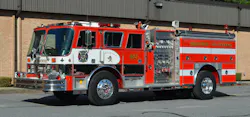
As cab-forward apparatus designs were embraced by departments, the typical pumper gravitated to a wheelbase of 150 inches, an overall length of 25 feet, 4 inches and a width of approximately 93 inches. Standard configurations included a 1,000-gpm, two-stage fire pump and a 300-gallon booster tank.
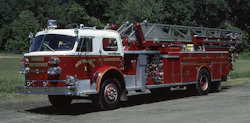
Aerial rigs trended to a 100-foot midship design that was built on a 220-inch wheelbase and had an overall length of 43 feet, 5 inches. All aerials were outfitted with 228 feet of ground ladders.
Quint apparatus gravitated toward dimensions that were similar to those of aerial rigs and used the space that was the under the aerial turntable for the fire pump and were equipped with a 200-gallon booster tank.
As rear-mount aerial ladders were developed, these designs enabled departments to acquire a 100-foot vehicle that has an overall length of a little more than 35 feet and travel heights that range from 120–129 inches, depending on the style of cab. (Many of these rigs were built with open cabs, aka no roof, to permit lower overall travel heights.)
The fallout
Today, because apparatus designs offer multiple options for cab and body features and aerial device components, fewer base model apparatus are being procured. Over a period of years, the apparatus industry migrated away from single design builds for pumpers and aerials, to meet the perceived needs of departments that have multiple cab configurations, pump panel widths, body lengths and water tank configurations. This produced an almost infinite number of combinations for the overall design, with each unit requiring engineering effort to integrate the various components into a buildable vehicle. This production process provides one-of-a-kind apparatus design to meet the needs of each department. However, often, this results in a higher cost for the completed unit.
In response to the longer build times for new apparatus—which in some instances extend beyond three years—there are alternative programs to acquire stock models, or program apparatus, that have limited option content that can be delivered within a shorter duration.
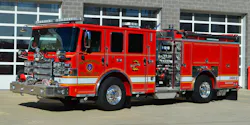
Particular to pumpers, these are configured to meet the widest range of commonly built units for both rural and urban departments. One frequent design combines a 1,500-gpm, single-stage fire pump, a 1,000-gallon water tank, and an extended-length body to accommodate enclosed ground ladders and rollup shutter doors. The pump panel instrumentation and piping arrangements are preengineered, which permits manufacturing efficiencies.
Dimensionally, these pumpers have wheelbases that are in the 180–200-inch range and an overall length of 32–33 feet, which often is larger than the older vehicle that’s being replaced. In some respects, if the new rig fits the bay space in the station, there’s little to worry about.
Response area & equipment
Early on in the acquisition process, defining the mission of the apparatus should include a detailed review of the first-due area for obstacles that could inhibit response patterns and placement of the apparatus on the fireground. These include roadway widths, access to garden apartments and townhouse complexes, traffic-calming devices, points where there would be angle-of-approach concerns and overhead obstructions. In addition, the apparatus committee should consider the staffing and training levels for the personnel and the desired tools and equipment to be carried.
NFPA 1900: Standard for Aircraft Rescue and Firefighting Vehicles, Automotive Fire Apparatus, Wildland Fire Apparatus, and Automotive Ambulances stipulates that the authority having jurisdiction is responsible for providing the listing of tools and equipment that will be carried on the apparatus. This equipment inventory, which should include the weight of these items, enables the manufacturer to choose the appropriate chassis components, including axles, wheels, tires and suspension, to carry the intended load.
With this information, a detailed weight analysis should be requested from the vendor to verify the components that were selected for the vehicle. This is important for apparatus of all types, but critical for any type of combination unit, including rescue-pumpers and quints, for which the tool and equipment weight might exceed the minimum allowances that are detailed in Table 9.1.2 in NFPA 1900. Depending on the planned life cycle for the apparatus, additional margin for weight and space within the compartments should be provided for future expansion as new equipment and procedures are developed.
Length
The title of this article was selected to align with the thought that apparatus should be viewed from overhead, similar to a shoe box with the top removed. The packaging of the body, water tank, ground ladders and hose load configuration all must fit into this space.
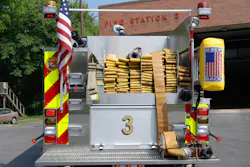
Changing one component affects the overall configuration. For example, if an apparatus committee desires to have a low rear hosebed by which attack lines can be deployed without a member having to climb onto the rear step or a higher position, this goal should be a priority when compared with maximizing rear body compartment space. Rear body discharges and large-diameter intakes also affect the height of the hosebed, particularly when this piping must be sleeved through the water tank.
When considering cab configuration and seating arrangements, a department’s past experience can provide guidelines with respect to the equipment that must be carried inside of the cab and whether the unit will be ALS capable; the location of the equipment and the degree of accessibility take precedence. Space within the cab or body for forcible entry tools, water extinguishers and room for the crew’s PPE must be determined, with this equipment weight affecting front axle weight ratings. All chassis and apparatus manufacturers offer different lengths of cabs; the critical dimension that affects vehicle length is from the centerline of the front axle to the rear of the cab.
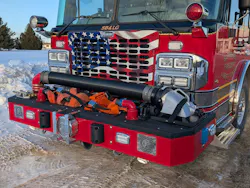
Choosing which components and equipment will be provided in the area of the front bumper and specifying the depth of the rear step are variables that not only affect the overall length of the apparatus but the angle of approach and departure. Incorporating a front intake and space for a bumper-mounted attack line can be provided within an 18–22-inch extension. Extrication equipment or transverse attack lines require additional space.
Back when personnel rode the tailboard, the rear step was 24–26 inches deep. Today, the standard rear step is 8–10 inches, which doesn’t allow personnel to safely operate on this space, even when racking hose after an incident.
Although maintaining a reasonable vehicle overall length is important, safe stepping surfaces around the vehicle are critical for operating personnel, including having appropriate designs for step and handrail locations to access the top of the vehicle. If you can’t safely access the apparatus in street clothes, the rig probably is poorly designed for personnel who are wearing their PPE.
Examples of well-designed pumpers include a 2022 Sutphen Monarch that was built for Kennebunk, ME, Fire Rescue. Engine 2 is built on a 185-inch wheelbase, has an overall length of 31 feet, 4 inches, and is equipped with a 2,000-gpm pump, a 1,000-gallon, low-profile water tank and a 30-gallon foam cell. The 147-inch-long aluminum body has full-height compartments on each of its sides, using drop-down racks for easier access to the hard sleeves and ground ladders.
The Mechanicsville, MD, Volunteer Fire Department operates a 2024 Pierce Enforcer pumper that was designed with a short wheelbase and a short overall length for its response district. Engine 22 carries a 1,250-gpm pump and a 750-gallon tank and has a low rear hosebed, four discharges and a 5-inch rear intake. The 22-inch front bumper extension accommodates a front intake with swivel and bumper attack line.
Meeting your needs
Apparatus continues to be produced in many configurations. There is a trend in some areas to reassess the size of replacement apparatus because of the increased congestion and build out in communities. At a recent apparatus fleet seminar, a presenter mentioned that the vehicle blueprint of every apparatus project that he worked on fit onto an 11½ x 18-inch piece of paper. Carefully consider all of the aspects that affect the proportions of your next apparatus. Decisions that you make during the design process will affect your operations for many years.
About the Author
 Tom Shand
Tom Shand
TOM SHAND, who is a Firehouse contributing editor, is a 36-year veteran of the fire service. He works with Michael Wilbur at Emergency Vehicle Response, consulting on a variety of fire apparatus and fire department master-planning issues. Shand is a member of the Firehouse Hall of Fame.