Understanding Equality in Public Safety: Three Perspectives on Value, Risk & Compensation
Key Takeaways
- When a balanced approach to the three theories of equality—spiritual equality, occupational equality and risk-based equality—is applied to compensation for firefighters, police officers, paramedics and telecommunicators, two mistakes are avoided: everyone is treated identically regardless of risk and rigid hierarchies that are based solely on rank are created.
- Firefighters, police officers, paramedics and dispatchers should earn notably more than city employees who have similar education but aren’t exposed to danger, violence, disease exposure or vicarious trauma.
- Research consistently shows that the public, including government employees who don’t face the risks that, say, a firefighter faces, supports higher compensation for higher-risk positions.
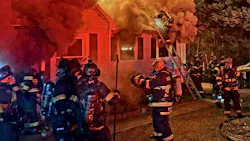
When we talk about equality in public safety, we explore a complex idea that has multiple meanings. As fire service leaders, understanding these perspectives helps us to make better decisions, particularly regarding compensation. There are three theories of equality and their relationship to fair pay for public safety personnel:
- Spiritual equality. All people have equal worth in God’s eyes.
- Occupational equality. All jobs contribute to society.
- Risk-based equality. Some jobs involve more danger and deserve higher compensation.
These perspectives work together. We can value every person equally while recognizing that not all jobs carry the same risks. Importantly, research shows that lower-risk employees support better pay for higher-risk public safety workers because of the real dangers that those jobs involve.
Spiritual equality: We are all equal in God’s eyes
Spiritual equality teaches that every person has equal value simply because they’re human. Our fundamental worth doesn’t depend on what we do or how much we earn.
In local government, firefighters have the same inherent worth as a city planner. A police officer has the same value as a finance director. A paramedic has the same equality as a Parks Department employee. A 9-1-1 dispatcher has the same worth as a human resources (HR) specialist.
This perspective is crucial for building healthy workplace cultures. When leaders believe that every employee has equal inherent worth regardless of position or salary, it transforms organizations. It creates a culture in which everyone feels respected and all voices matter.
However, spiritual equality doesn’t mean that we ignore differences in roles or risks. What it ensures is that differences in roles don’t translate into differences in basic human worth. The fire chief isn’t a better person than the firefighter; they just have a different job.
This foundation allows honest conversations about risk-based compensation while maintaining respect for all employees. We can acknowledge that, although all people have equal worth, some jobs require greater compensation for the risks that are involved.
Occupational equality: All jobs are essential
Occupational equality teaches that all jobs are important to a community. In local government, every role plays a crucial part. Think of city government as a complex machine of which every part matters.
Firefighters depend on public works employees who maintain roads and water systems. Police officers depend on dispatchers and IT staff. Paramedics depend on mechanics and supply staff. Public safety can’t function without support from other departments.
Other departments are equally essential. Public works maintains infrastructure. Planning ensures safe construction. Finance manages taxpayer money. HR recruits employees. Administrative staff handle communications and paperwork.
Occupational equality doesn’t mean that all jobs carry the same risks. A firefighter who enters a burning building faces dangers that a finance analyst doesn’t face. These differences are real and important.
What it means is that we shouldn’t look down on any work that contributes to the community. Understanding this is essential for conversations about compensation. When we recognize that all jobs contribute, we can discuss why some should be paid more. The answer isn’t that some people are more important; it’s that some jobs involve greater risks and deserve additional compensation.
Risk-based equality: Hierarchy of danger and compensation
Risk-based equality acknowledges that some jobs are more dangerous than others are, and this difference should be reflected in compensation. This isn’t about one person being better; it’s recognizing that people who face greater dangers than others do deserve higher pay.
Compensation question
One contentious issue in local government is determining fair compensation. Often, salaries are compared within the organization, but this can miss a critical factor: significant differences in occupational risk.
Consider this: A firefighter might earn a similar salary to a senior administrative analyst. On the surface, this seems fair, but the firefighter faces risks of cancer, heart disease, traumatic injury and death, which the analyst doesn’t face.
Public support for risk-based compensation
Research consistently shows that the public, including government employees who don’t face the risks that, say, a firefighter faces, supports higher compensation for higher-risk positions. When city employees who serve in lower-risk positions are surveyed, most support public safety earning more. They understand that these colleagues face dangers that they don’t face. This means advocating for appropriate public safety compensation isn’t divisive; most people agree that higher risk should result in higher pay.
Specific risks
Firefighters face immediate risks, including burns, smoke inhalation and building collapse. Long-term, firefighters have higher cancer diagnosis rates and higher cancer mortality than the public has. City planners and HR specialists, for example, don’t face toxic chemical exposure or elevated cancer risk.
Police officers face constant violence risk. Tens of thousands are assaulted yearly, with thousands suffering serious injuries. The psychological effect contributes to high rates of post-traumatic stress disorder (PTSD), depression and anxiety. Building inspectors, for example, don’t face the constant threat of violence that police officers face.
Paramedics and EMTs face exposure to infectious disease, including HIV, hepatitis and tuberculosis. They’re assaulted by patients and bystanders. They suffer back injuries from lifting patients. The mental health effect of witnessing trauma is substantial. Finance employees and IT specialists, for example, don’t face infectious disease exposure or violence from the public.
9-1-1 telecommunicators face vicarious trauma and secondary traumatic stress. They listen to people in the worst moments: children in danger, people dying, victims of violence. Research shows that dispatchers experience PTSD, depression and anxiety at rates that are similar to or greater than other first responders. Records clerks, for example, don’t listen to people dying or carry the weight of life-or-death decisions.
Economics of risk-based compensation
Risk-based compensation makes economic sense.
- Recruitment and retention. To attract qualified people to dangerous jobs, compensation must reflect risks.
- Fairness and morale. When compensation doesn’t reflect risk, it creates resentment.
- Sustainability. Public safety careers take serious health tolls; higher compensation offsets long-term costs.
- Market reality. Cities compete for qualified personnel; those that pay appropriately attract better candidates.
What it looks like
Risk-based compensation includes higher base salaries than comparable positions that are outside of public safety; enhanced benefits, including better health insurance and retirement; presumptive coverage for occupational diseases; hazard pay for dangerous assignments; and career longevity incentives.
The principle is clear: Compensation should reflect risk. Firefighters, police officers, paramedics and dispatchers should earn notably more than city employees who have similar education who work in safe offices and aren’t exposed to danger, violence, disease exposure or vicarious trauma.
Balancing the three perspectives
Good leadership requires holding all three perspectives simultaneously. The spiritual lens reminds us that every person has inherent worth. The occupational lens helps us to appreciate everyone’s contributions. The risk-based lens ensures that we appropriately compensate those who face the greatest dangers.
In practical terms, this means treating everyone with respect while recognizing differences in risk and compensation. When developing budgets, leaders should ensure that all employees receive fair compensation but recognize that public safety workers who face life-threatening risks should earn more. When developing benefits, leaders should provide good benefits to all but recognize that public safety needs enhanced benefits for occupational health risks.
This balanced approach avoids two mistakes: treating everyone identically regardless of risk (ignoring important differences) and creating rigid hierarchies that are based solely on rank (violating spiritual equality). Good leaders recognize that all people have equal worth, that all work contributes to the community, and that some work involves greater risks that require higher compensation.
The bottom line
Understanding equality in public safety requires holding three truths simultaneously: All people have equal inherent worth, all jobs contribute to the community, and some jobs involve greater risks that deserve higher compensation.
These perspectives work together. We can value every person equally while paying some more based on risks. We can appreciate all contributions while recognizing that some jobs require greater sacrifices. We can treat everyone with respect while acknowledging fair compensation doesn’t mean identical compensation.
The research is clear: Firefighters face elevated cancer and heart disease risks, on-scene danger and PTSD. Police officers face violence and PTSD. Paramedics face infectious diseases and assaults. Telecommunicators face vicarious trauma. These dangers justify higher compensation compared with other local government positions.
Importantly, surveys show that other city employees and the public support higher compensation for higher-risk positions. People recognize that it’s fair to pay more for jobs that involve greater danger.
As leaders, we must advocate for appropriate salaries that reflect these risks. We must ensure that public safety workers have enhanced benefits, including presumptive coverage for occupational diseases, better health insurance and retirement benefits that recognize health problems. We must provide robust mental health services. We must have honest conversations about why risk-based compensation is both fair and necessary.
By understanding spiritual equality, occupational equality and risk-based equality, we can lead with compassion and wisdom and honor every person’s worth while recognizing higher risk deserves higher compensation. Public safety personnel deserve leaders who advocate for appropriate compensation—not because public safety personnel are better people, but because the risks that they face are real and deserve recognition.
About the Author
 Tracy Winecoff
Tracy Winecoff
Tracy Winecoff began his fire-service career in 1989 as a junior firefighter and Explorer Scout in Rowan County, NC. After high school, he worked as a full-time paramedic with Rowan County EMS before joining the Kannapolis, NC, Fire Department (KFD) in 1999. At the KFD, Winecoff advanced through the ranks—captain, battalion chief, division chief and deputy chief—before he was appointed fire chief in April 2020. He also volunteers with the Locke Township Fire Department, which is in Salisbury, NC, and serves as president of the Rowan County Fire & Rescue Association. Winecoff also is a member of the executive board of the regional special operations task force and several local, state, and national fire and emergency management associations. He is an adjunct instructor for the ALERRT (Advanced Law Enforcement Rapid Response Training) Active Shooter Program at Texas State University and teaches at Rowan-Cabarrus Community College.