Don’t Let Just Any Voice Shape You: Firefighters, Take Criticism Only From Those You’d Ask for Advice
Key Takeaways
- To avoid letting unwarranted criticism weigh on their mind, firefighters only should heed criticism from those who they would trust for advice.
- Three filters for criticism are check the source, check the intent and check the value.
- Firefighters who want their own criticism to matter should give it in private, not public; tie it to safety and growth; and offer a path forward.
Every firefighter has been there: You’re sitting at the kitchen table after a long shift, and a comment cuts deeper than it should. Hours later, you’re staring at the ceiling, replaying it in your head.
Have you ever lost sleep like that? I have.
Here’s the truth that hits the hardest: The voices that keep us awake usually don’t come from the mentors who we admire or the leaders who we’d run through fire with. They come from people who never earned the right to shape our confidence.
That realization changed the way I handle criticism and the way that I lead.
The noise around us
In the fire service, criticism is everywhere:
- Around the station, often wrapped in jokes that don’t feel funny.
- From officers who see only a slice of the whole picture.
- From the public, who watch without understanding.
- From social media, where armchair quarterbacks break down every move.
I’ve watched motivated firefighters shrink in seconds because of one careless comment.
Furthermore, today, the noise isn’t confined to the kitchen table. It’s on the internet, where a 10-second video clip of a fireground can go viral in minutes. People who weren’t there and who don’t know the conditions, risks or decisions that were made feel free to weigh in.
The comments often sound like this:
- “They stretched too slow.”
- “They should’ve gone interior.”
- “Why didn’t they vent sooner?”
None of those critics were on the line, breathing the smoke, making the call.
If you don’t learn to filter that noise, you’ll drown in it. Yes, I know that there will be criticism of this article, too. That’s fine, because the principle still stands: I only will carry the voices of those who I trust for advice.
Filter principle
Here’s the principle that I’ve built my leadership on: Don’t take criticism from someone you wouldn’t go to for advice. That’s it.
Think about the fireground. When the hallway is lit up and conditions are changing fast, whose input do you trust? The veteran nozzle firefighter who’s seen it all? The driver/operator who knows the pump panel better than anyone? Absolutely.
What about the bystander who’s across the street shouting their opinion? Not a chance.
So, why do we let bystanders in life, in the station or online be the voices that keep us awake at night?
Damage of wrong voices
When we let unearned voices take up space, there’s a real cost.
In the case of rookies: I’ve seen young firefighters freeze after being torn down. They hesitate on the fireground, second-guess every decision and stop taking initiative. That’s dangerous for them and for the crew.
In the case of mid-career firefighters: Negative voices can breed cynicism. One firefighter carrying bitterness is bad enough. Put that bitterness at the kitchen table, and suddenly the whole crew is poisoned. The energy shifts, motivation dips and culture suffers.
For the officer: Even leaders aren’t immune. If you allow unearned criticism to take root, doubt creeps in, and hesitation at the wrong moment can cost lives.
We already carry enough weight in this profession: trauma from calls, physical strain, the stress of family life. Adding unnecessary baggage from the wrong voices doesn’t make us better. It makes us weaker.
Three filters for every criticism
When criticism comes—and it always does—I run it through three filters.
- Check the source. In the station, did the criticism come from a respected mentor or from the member who complains about everything? On the fireground, did the criticism come from a seasoned officer who’s been in the heat or from someone who wasn’t even on the line? If I wouldn’t trust that person’s advice in a crisis, I’m not giving the individual’s criticism room in my head.
- Check the intent. In the station, did the individual pull me aside privately, because the goal is for me to succeed, or was a jab thrown in front of everyone to get a laugh? On the fireground, did the individual offer input to make us safer or just to prove that he or she is smarter? Constructive criticism sharpens. Destructive criticism just cuts.
- Check the value. In the station, does the feedback actually help you to improve, or is it just noise? On the fireground, does the comment make you a better firefighter today, or is it a distraction that you don’t need? If it doesn’t move me forward, I leave it at the table.
Criticism that passes all three filters? Take it, apply it and grow. Everything else? Let it go.
When you’re the one giving criticism
When you’re the one who’s doing the criticizing, here’s the mirror check. Before you speak, ask yourself:
- Have I earned the right to speak to this person’s growth? If you haven’t invested in that individual, don’t expect your words to carry weight.
- Am I trying to build up that person or cut down the individual? The fire service doesn’t need more noise. It needs mentors, not hecklers.
If you want your criticism to matter, follow three simple rules, aka your leadership code for feedback:
- Give it in private, not in public. Embarrassment doesn’t make better firefighters.
- Tie it to safety and growth. If your words don’t make them sharper or safer, don’t speak them.
- Offer a path forward. Criticism without direction is just noise. Feedback always should point the way to improvement.
Used wisely, criticism shapes futures and saves lives. Used carelessly, it destroys trust and morale. Choose which kind of firefighter you want to be.
Leading by example
Leaders don’t just teach their crew how to pull lines and raise ladders; they teach those people how to process voices.
If leaders collapse every time that they’re criticized, their crew learns fragility. If leaders ignore all feedback, their crew learns arrogance. However, when leaders filter wisely, taking in the good and discarding the useless, they teach resilience.
That’s leadership. It isn’t perfection but modeling how to stand firm in the face of both criticism and counsel.
Building a circle of trusted voices
Every firefighter needs a circle of trusted voices, a small group of mentors, peers and friends whose advice actually matters. For me, those voices have included seasoned Marines who taught me about discipline, veteran firefighters who showed me the reality of the job, and peers who weren’t afraid to call me out when I needed it.
This circle wasn’t random. It was intentional. I sought them out, built relationships and gave them permission to speak into my life. That circle is my filter. When outside criticism comes, I measure it against what my trusted voices would say. If it doesn’t line up, I don’t lose sleep over it.
Mental health connection
This isn’t just about leadership; it’s about survival. We lose too many brothers and sisters to the silent weight of this job. A big piece of that weight is the internal pressure that we carry, which often is fueled by words that never should have mattered in the first place.
Protecting yourself from unearned criticism is protecting your mental health. Leaders who teach their crew to do the same protect those individuals’ mental health. That isn’t weakness; it’s wisdom.
Closing the loop
Criticism always will be part of this profession. Some of it sharpens us. Some of it wounds us. The difference is knowing which voices deserve our attention.
So, the next time that you’re lying awake replaying someone’s words, ask yourself, “Would I go to this person for advice when it matters most?” If the answer is no, then that person’s criticism doesn’t deserve to shape your confidence.
Our job is too important to carry the wrong voices. Filter wisely. Be intentional about the circle that you trust. When it’s your turn to speak into someone else’s life, make sure that your words are worthy of the weight that they’ll carry.
Here’s my challenge: Tonight, when your head hits the pillow, think about the voices that you let shape you today. Were they the ones that you’d seek for advice, or were they just noise? Tomorrow, when you open your mouth to critique someone else, ask yourself whether your words are worth keeping another firefighter up at night. If they aren’t, don’t speak them. In the fire service and in life, you don’t have time to let just any voice shape you.
About the Author
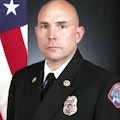
Ian Voisine
Ian T. Voisine is a station captain for Navy Region Mid-Atlantic—NSA Crane. He has 24 years of leadership and expertise in the fire service. Voisine's career spans rural, suburban, industrial and military firefighting. He holds a Bachelor of Science in public safety and emergency management from Grand Canyon University and is a credentialed Fire Officer through the Center for Public Safety Excellence. In addition to his certification as a paramedic, Voisine is a hazmat technician and technical rescue specialist, with expertise in confined space, trench and high-angle rescue operations.