What Makes a Good Firefighter?
Key Takeaways
- Good firefighters are loyal to the job, loyal to the moral compass of the profession, and loyal to the traditions and spirit that define the fire service.
- Good firefighters desire to learn, not only new things but also in the effort to perfect old things, which is everlasting.
- Good firefighters have the persistence to show up with the right attitude, the right mindset and the intensity that the job requires every time.
- Good firefighters foster, grow and embrace whatever “it” separates them. When each person’s individual skills come together, a winning team is made.
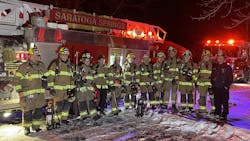
When I got home after my last shift, as always, I kissed my daughter and my wife. My wife asked how my shift was, and I answered. Inadvertently, we began to discuss some of my coworkers. She began to ask about one coworker in particular: “Is he a good firefighter?” I answered the question. She then asked a follow-up question: “What makes someone a good firefighter?” Originally, I looked at her with the face of a man who was asked a rhetorical question. Quickly, though, my face changed as my mind processed the question. I became perplexed. What makes a good firefighter? Someone who can stretch a line fast? Someone who can throw a 35-foot ladder? Someone physically fit? I realized that the question was a loaded one.
I spent the rest of the day thinking about the question, asking myself what the right answer was. Of course, all of the immediate answers about the practical aspects of the job came to mind, but at its core, what really distinguishes good firefighters? I reflected on all of the good firefighters who I encountered, all of the podcasts I listened to, the books that I read and the courses that I sat through for the past 10 years of my fire service journey. Below is my conclusion: the four core characteristics that make a “good firefighter.”
Loyalty
Loyalty (noun): the action of being loyal; loyal (adjective): giving or showing firm and constant support or allegiance to a person or institution.
Sure, loyalty in its traditional sense is what makes good employees at any job—loyal to their employer, loyal to their coworkers and loyal to the mission statement of the organization. I’m not referring only to this loyalty, though.
Yes, good firefighters must be loyal to their department, coworkers and/or fellow members. They also must be loyal to the citizens who they swore to protect.
However, first and foremost, good firefighters are loyal to the fire service and what it stands for, to the moral compass that’s guided it for its rich history, to the traditions of the profession, to the brotherhood and sisterhood that it’s developed and fostered for years, and to the humanity that it’s born out of. Good firefighters must be steadfast in showing every new firefighter that loyalty is crucial to being a good firefighter and define what that loyalty entails. If firefighters are loyal to things that are constant, such as the tradition of an organization and the moral and ethical values that have guided the fire service, they can remain grounded and guided in an ever-changing landscape of change in the fire service and its organizations.
Desire to learn
Desire (noun): a strong feeling of wanting to have something. Learn (verb): gain or acquire knowledge of or skill in (something) by studying, experiencing or being taught.
I recall as a young boy being around the volunteer firehouse with my dad. I remember what I perceive as a simpler time, when fire departments only responded to structure fires, automobile accidents, fire alarms and cats in trees. The fact of the modern fire service is that, if law enforcement can arrest the problem, the fire department must solve the problem.
Between EMS, fire response, technical rescue, public service, fire safety, public education and a plethora of other duties, the fire service has a lot of responsibility. No single firefighter can master all aspects of the job; the technical knowledge and skill that are required make it physically impossible. However, a constant desire to learn is required to be a good firefighter. All firefighters start their career with a desire to learn; they must, or they wouldn’t succeed in the fire academy, paramedic school or any other initial training that’s required. The key is to keep this desire to learn and to expand on it. A good firefighter doesn’t only have a desire to learn new things but also a desire to learn better ways to do things that firefighters have been doing for years.
Good firefighters want to be a better truck company operator; they want to stretch a hoseline more efficiently; they want to throw a ladder more quickly.
Good firefighters don’t want to know only how; they also want to know why.
Good firefighters want to know the science behind the tactics and the reason the tricks of the trade work.
In a profession that demands so much of individuals, it’s easy to accept mediocrity and serviceable knowledge for aspects of the job, but good firefighters always have a desire to learn more and perfect their craft.
Persistence/work ethic
Persistence (noun): firm or obstinate continuance in a course of action in spite of difficulty or opposition.
It’s difficult to be a good firefighter. It’s difficult to show up every day with the right attitude. It’s difficult to train when you’re tired, sick or just flat out overwhelmed. Good firefighters do it anyway.
Good firefighters know the value of continuing education and continuing effort. Despite attempts that are brought on by life to yank from them that passion, optimism and dedication that they showed up with on their first day, good firefighters foster it throughout their career.
The simple fact of the matter is no one becomes a firefighter hoping that they’re bad at it. No one starts the profession hoping that they get ground down and sick of their job. Good firefighters keep a spirit of knowing that the only thing that truly matters is the job. Sure, they probably complain about aspects of the job, but that’s because they care about the job, the organization and their fellow members.
Good firefighters never complain about training. They never, never complain about work, though they might take issue with the process that surrounds it.
The act of doing their job consistently is always a point of pride. Good firefighters show up with the same mentality each shift. In spite of an ever-changing environment, they keep the main thing the main thing: the job. Rarely do all good firefighters have the same personality, but all good firefighters have the same mentality, which is one that’s rooted in consistent action and a persistent attitude.
"It"
It (pronoun): exactly what is needed or desired.
All good firefighters have the “it” factor. All good firefighters have an aspect of their job performance that separates them. Often, it is intangible. For some good firefighters, it’s a blue-collar background that makes them mechanically inclined, which makes them the go-to firefighter when saws and other gasoline-powered equipment aren’t running well, or in early fall, when on a furnace malfunction, they’re asked how HVAC units work.
For other good firefighters, it’s qualities that are derived from character, leadership, interpersonal skills, understanding or any other quality that can be beneficial to the function of the job.
As noted above, all good firefighters might not have the same personality, but they all have the same mentality. So, whatever the “it” factor is for each good firefighter, that individual fosters it, making it the cornerstone of job performance, and uses it for not only personal betterment but also the benefit of the job and the organization.
About the Author
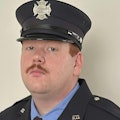 Tyler Whittredge
Tyler Whittredge
Tyler Whittredge is a firefighter/paramedic with the Saratoga Springs, NY, Fire Department who has 12 years of experience in the fire service. He has served in a variety of roles, including volunteer firefighter and firefighter/EMT with the U.S. Department of Energy. Whittredge is an adjunct instructor, a certified Confined Space Technician and an ITRA Level 2 rope rescue technician with Capital Technical Rescue. He holds an associate degree in fire science from Onondaga Community College.