Emotions Rise as Salisbury, MD, Officials Discuss Axing Collective Bargaining
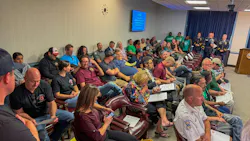
SALISBURY — Emotions ran high this week as the Salisbury City Council took a first step toward ending collective bargaining rights for most city workers — including police and firefighters — with critics warning the move could undermine public safety and worsen staffing shortages.
Mayor Randy Taylor, who introduced the proposal to repeal a 2022 charter amendment granting those rights, said Monday that the city’s deteriorating finances left few options. He blamed prior administrations for what he described as unsustainable spending, and he criticized former Mayor Jake Day and some developers for benefiting from favorable deals.
A three-fifths majority of the council voted to advance the measure, sending it to a future meeting for a first reading.
Taylor and City Administrator Nick Rice said federal COVID-19 relief funds had buoyed the city’s finances since 2020, but those one-time revenues have dried up. Rice warned that, at the current pace, the city’s surplus could be depleted by 2030.
Taylor said Salisbury already has the third-highest municipal tax rate in Maryland and argued that even a 10% increase would not cover the long-term costs associated with union contracts.
“We are fans of public safety … but, unfortunately, we were handed a set of cards we’ve got to play,” Taylor said.
Council members Michele Gregory and Angela Blake opposed the measure. Gregory argued the city should focus on expanding its tax base through development rather than cutting worker protections.
“There have been multiple developments that this administration has firmly been against, worked against, stopped cold,” she said. “Those are places where we could have expanded our tax base and brought in extra revenue.”
Gregory also pointed to potential legal costs tied to halted projects, calling the situation “mismanagement at the mayoral level.” Taylor fired back, accusing her of spreading misinformation and being “part of the problem.”
Wicomico County State’s Attorney Jamie Dykes warned the proposal could have lasting consequences for public safety, saying police and firefighters would likely seek better pay and protections elsewhere.
“Whether or not it is the mayor’s intent … that will be the effect,” Dykes said. “This city will suffer — and it is unlikely to recover.”
Residents and public safety officials echoed those concerns. Salisbury resident Jared Schablein cited recent firefighting rescues and a major drug bust as examples of the workforce at risk.
“Please don’t do this,” he said. “This is the dumbest thing you could possibly do.”
Firefighters said collective bargaining has helped improve pay and conditions but that progress remains incomplete. Sgt. Ben Koons said eliminating those protections would reverse hard-fought gains and damage morale.
Others proposed alternatives, including annexation and tax restructuring. Molly Hilligoss, president of Habitat for Humanity of Wicomico County, suggested accelerating housing development to grow revenue, estimating thousands of new homes could generate millions annually.
“It’s a math problem,” she said.
Taylor dismissed that approach as unrealistic. “We’re dealing with reality,” he said.
Gregory cautioned that even advancing the proposal sends a damaging signal.
“This isn’t a procedural step without consequence,” she said. “Advancing this tells our workforce their voices are negotiable.”
Council President April Jackson acknowledged the emotional testimony as the meeting closed.
“Maybe we will come to some conclusion where it does work out,” she said. “But I appreciate every one of you.”
©2026 Baltimore Sun. Visit baltimoresun.com. Distributed by Tribune Content Agency, LLC.