Court Tosses Sexual Assault Conviction of Ex-Cumberland County, PA, EMS Chief
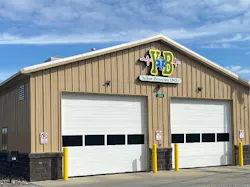
A teenaged girl took the witness stand in September 2024 to tell jurors how Douglas Shields molested her at the former Yellow Breeches EMS station, and two other women also testified Shields touched them inappropriately to bolster the first girl’s credibility.
Jurors believed the trio and convicted Shields of statutory sexual assault of the teen trainee. Then, Cumberland County Judge Albert Masland sent the former EMS chief to jail for 6.5 to 17 years.
But on Monday the Superior Court of Pennsylvania ruled the two other women’s testimony unconstitutionally tainted that verdict against Shields and cleared his conviction. If prosecutors take Shields to trial again, they’ll need to rest a second case with only the testimony of the teen, now an adult.
It’s a winnable case even without the two women, according to Cumberland County District Attorney Sean McCormack, who told PennLive his office intends on trying the case again once they check in with the girl, now a woman.
Police accused Shields of sexually abusing the girl multiple times through 2021. The girl told them Shields urged her to spend the night at the station with him for the more “interesting” calls, isolated her around the EMS headquarters in closets and behind sheds, and eventually crawled into her bed, police said.
“It was five or six hours of torture,” the girl previously testified at a March 2023 preliminary hearing.
At trial, Shield’s attorney, Elizabeth Pasqualini, assailed Shields’ testimony, telling jurors the girl fabricated the story because she was falling behind in her EMT training course which the company could seek reimbursement for in the amount of $900. Prosecutors countered at trial the girl was falling behind on her courses because of the sexual abuse.
Shields is now represented by Joshua Yohe, a county public defender who did not return PennLive’s requests for comment Monday. Pasqualini lauded the ruling as the right step forward.
“I’m very happy for Mr. Shields, whom I firmly believe is innocent” Pasqualini said. “I’m so glad he’ll have the opportunity for another trial.”
It will take around 30 days for the record to return to Cumberland County court, which gives prosecutors breathing room to figure out next steps. McCormack said his office will consult with the victim and consider next steps.
If they took the case to trial again, the woman would need to testify again — and relive something she may have already processed.
In theory, the office could appeal the decision to the Pennsylvania Supreme Court, but McCormack said it’s unlikely the appeal would gain traction because the appeal was based on that court’s January 2026 ruling where it tightened the rules on what testimony of “other bad acts” can be put in front of a jury.
Under the state rules of criminal procedure, prosecutors cannot show evidence of other prior bad acts, like crimes, just to show a defendant is the type of person to commit crimes. But there are exceptions: One is to show a common plan, scheme or design.
Over time, the rule was watered down with exceptions that defeated its own point, the Superior Court wrote, and allowed outside evidence of prior bad acts when there are simply “shared characteristics” between crimes and the victim.
So the state Supreme Court tightened the rules back up in Commonwealth v. Walker this year: To bring in “other bad acts,” prosecutors must establish either the crimes are so unique and distinctive they must have been committed by the same person, or the person committed the offenses to achieve the same goal. There must be a “signature” between each event.
It’s a ruling that’s attracted ire. Adams County Judge Shawn Wagner wrote he disagreed with the analysis when ruling on motions in the cases against Chad-Alan Carr, former mayor of Gettysburg.
Carr is accused of various sex crimes related to four male victims, three of whom were minors during the incident. Wagner ruled the two original cases needed split into four separate ones.
The ruling has made prosecutors in other counties across the state more cautious about using other bad acts as evidence, according to Jennifer Gettle, an attorney at the Dauphin County District Attorney’s Office who specializes in sex crime prosecutions.
Instead of using other bad acts to prove a common plan, scheme or design, Gettle said her office has been leaning on other exceptions, such as exceptions that allow other bad acts to show an “absence of mistake or motive.”
The first witness, TB, was a 14-year-old junior member of the West End Fire Company in 1998. She testified Shields groped her chest under her shirt “to keep his hands warm” then, a few months later, tried again.
TB testified she told Shields “15 will get you 20,” — a reference to a possible sentence for molesting a teen — and he threatened to throw her out for insubordination and threatening an officer, she said.
The second witness, AB, said Shields never molested her but when she was 19 and working for him at the EMS company, he touched her more than necessary and it made her uncomfortable.
On one occasion, he placed his hand on the inside of her thigh too high up for her comfort while putting a split on her during a training exercise, she told jurors.
Those facts don’t establish a “signature” to the level the Supreme Court is looking for when bringing in “other bad acts.” In fact, they’re common in most sexual harassment cases that arise in the workplace, the Superior Court wrote.
“There is simply not enough evidence to fulfill the demanding standards articulated in Walker,” the Superior Court wrote.
Instead, the testimony could have improperly bolstered the credibility of the girl who reported Shields, and improperly required Shields to have to defend against allegations of acts against other people he was not charged with committing.
“It is also noteworthy that the Commonwealth presented AB’s and TB’s testimony before AR’s testimony. The effect of this strategy was to portray (Shields) as a serial abuser and to bolster AR’s credibility before AR took the stand,” the Superior Court said.
The Commonwealth further “exploited” the witness’ testimony during closing arguments by “suggesting improperly” that Shields should be found guilty of victimizing all three girls, not just AR, the Superior Court wrote.
The judge in the case, Masland, cautioned jurors to only use AB and TB’s testimony to determine whether there was a common plan or in the absence of any mistake or accident. But even so, the witness sequence, content of their testimony and prosecutors’ “misuse” of the testimony during closing arguments may have resulted in Shields’ conviction, the Superior Court wrote.
Shields has not yet been released. McCormack did not share his position on whether he’d ask the court to set bail for Shields.
The woman is also suing Yellow Breeches EMS, Inc. on negligence claims saying the ambulance company turned a blind eye to Shields’ sexual abuse of her.
The lawsuit, still pending, was the latest in a string of reasons South Middleton Township unanimously voted to terminate its contract with the company in May 2025.
Yellow Breeches placed Shields on administrative leave when the ambulance company learned of the accusations.
©2026 Advance Local Media LLC. Visit pennlive.com. Distributed by Tribune Content Agency, LLC.