My firefighters have always been important to me. Whether I was a fellow firefighter, a company officer or a chief, my highest priority was always to keep them safe and alive. Having said that, I want to talk this month about our fireground priorities and how they relate to each other. You may recall one of my previous articles where I talked about a book titled “The Mission, The Men and Me.” In that book a military officer talked about his battleground priorities and how they related to his success there. I mention the book again because I too hold those beliefs about our fireground operations.
When I attend a conference and sit through a presentation or read a column or feature in this magazine that is discussing our internal priorities, I hear over and over again that our safety and survival are the #1 priority, that our safety and survival trumps all others. Well that certainly is true when there is no risk or threat to anyone else, but once we arrive at an incident where citizens—our customers—are in danger, we quickly step, or even run, out of that safety zone. We have even created written guidelines describing it. And how about our risk vs. reward decision-making phrase? We risk a lot to save a life, we risk a little to save property, and we risk nothing to save what is already lost. There are several versions of that phrase, but that covers it clearly. Once we have a report of a trapped child at a house fire, even a serious and challenging fire, our work is cut out for us, and the people of our communities deserve and are expecting action.
I remember as a young firefighter in the FDNY it was made quite clear to me that there are times when we needed to back off or slow down and consider our safety above everything else that was happening around us. That’s the “we risk nothing to save what is already lost” operational mode. But I also remember the discussions and operations where there was a civilian’s life at risk, and it was explained to me that this is what we get paid for. That is why firefighters exist. That is why we respond at all hours of the day and night in all sorts of weather to calls for help.
If you want to memorize and post the risk vs. reward phrase on the firehouse wall and print it on your coffee cups in the kitchen, you better be ready to perform step one, which is “we risk a lot to save a life.” When we say risk a lot, we are talking about your life—the firefighter’s life. Sure we can surround a vacant building with master streams and retreat from the collapse zone. Sure we can stop a half-mile from a leaking hazmat tank and examine it with binoculars for 20 minutes. Sure we can do a 360 walkaround at a house fire with no outward signs or indications of occupants inside. But when we receive radio reports from our dispatcher of trapped or missing civilians, or when we hear a mother screaming that her little boy is still in their burning home, or even when we arrive at a scene where everything indicates that lives are in danger, we must act. This is when we slip from being #1 to #2. Make no mistake, when we say “risk a lot” we mean it. If you are an interior structural firefighter you better understand what “risk a lot” means. It means that there is a fellow human being trapped or lost or injured and their life is in immediate peril. One of your neighbors or members of your community is immediately in harms way, and what you do or don’t do at that moment will decide their fate. If this is sounding a little dramatic at this point, it should. This is the moment that your safety and even survival, to varying degrees, gets downgraded to the #2 position. While this may be a rare occasion in your career, you need to be aware of this possibility and you must be ready, willing and able to perform. Ready, willing and able! The vital element here is you.
So remember, firefighters are important and sacred and irreplaceable. But also remember that we share top billing with the people who we exist to protect. Depending on the conditions encountered, the risk we are required to face and the potential reward, we occasionally must risk it all to save a life. If not us, then who?
About the Author

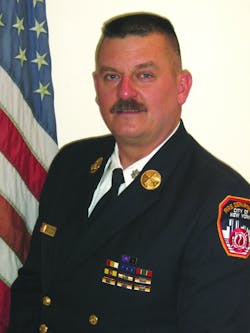
John J. Salka Jr.
Battalion Chief
JOHN J. SALKA JR., who is a Firehouse contributing editor, retired as a battalion chief with FDNY, serving as commander of the 18th battalion in the Bronx. Salka has instructed at several FDNY training programs, including the department’s Probationary Firefighters School, Captains Management Program and Battalion Chiefs Command Course. He conducts training programs at national and local conferences and has been recognized for his firefighter survival course, “Get Out Alive.” Salka co-authored the FDNY Engine Company Operations manual and wrote the book "First In, Last Out–Leadership Lessons From the New York Fire Department." He also operates Fire Command Training, which is a New York-based fire service training and consulting firm.