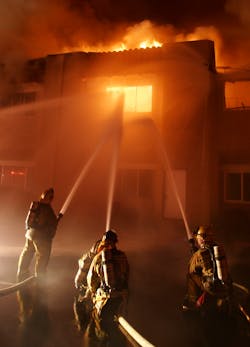
Even if you tried to ignore what has been going on in the fire service the last several years, you could not have avoided hearing about the National Institute of Standards and Technology (NIST) and UL firefighting research. It’s everywhere. Open a firefighting publication or visit a website and there it is. Turn on the evening news and you might see your local newscaster encouraging you to “close your door” to prevent a fast-moving fire burning hotter and faster than ever before. What we do and how we do it are hot topics.
Opposing viewpoints
Unfortunately, in some cases, it seems that the local morning newscaster understands modern firefighting technique better than some firefighters, especially those who are resistant to new ideas. Even though federally funded research proves that some of our past tactics do not improve our ability to save lives and property, some firefighters still cling to the “old ways,” digging in their heels, waving the flag of treason and decrying the absurdity of it all. More troubling are the vocal skeptics who actively discourage their fire departments from implementing the research findings into their tactics.
Of course, there are many more who are eager to accept and implement new approaches. Many firefighters recognize the validity of the research and have seen the positive results of the new tactics on the fireground. The debate, however, is far from over. Factions with differing beliefs stand in direct opposition with one another, and they are poised to bring progress in the fire service to a standstill.
With this in mind, now put yourself in the fire chief's shoes. On one hand, there is all this research informing us how fires behave in enclosed structures and how we can fight them more effectively. And on the other hand, there are firefighters convinced they know better. Adding to the complexity of the issue is that the opponents are sometimes respected members of the department. They are the “movers and shakers” of the organization, the individuals who train recruits, who write policy and who work at the busy stations.
A fire chief who doesn't have these key individuals on his or her side will be unable to implement a change in tactical engagement, no matter how much better the new tactics are. In many organizations, this is a culture change, and we all know changing culture is not easy. As renowned management guru Peter Drucker once said, “Culture eats strategy for lunch.” Failure to get the individuals who represent and encourage the culture of your organization involved in moving your plan forward is a lunch date with failure as the main course.
So how do you do it? There is no one “right” way to introduce change into the rank and file; however, there are elements of every plan that will work for any organization. Pull from this list to develop your strategy to implement NIST and UL research findings into your organization.
Engage movers and shakers
First things first, get the movers and shakers on your side. In his book The Tipping Point, author Malcolm Gladwell talks about three different archetypes of people: mavens, connectors and salespeople. These are the people you need on your side to push change department-wide. You know these individuals. They are the engaged firefighters who are at the tip of the spear. They like to be involved. They are not the individuals who prefer to passively sit on the sidelines and watch others do the work.
Mavens like to know the details of specific issues. They prefer to analyze data to get a quantitative view of problems. Salesmen are just that—the individuals who will sell others on the idea that a new product, program, concept or policy is a good thing for the organization. Connectors are the individuals who have established relationships with many groups within the department. They make connections with these groups to encourage compliance with a new strategy, tactic or procedure.
Get your movers and shakers on the same page by educating them first. Require them to review the new research on fire dynamics. Require them to complete the UL online courses and attend a class taught by a high-level chief. The classroom session should be demanding, as this group includes your high-level folks. The classroom should be their opportunity to gain a deeper understanding of the content from the high-level chief officer facilitating the instruction.
Gain chief officer understanding
All chief officers review and understand the research. Before the rank and file is trained, train the bosses. The chiefs should know the material well enough to be able to explain and defend every graph, data table and statement within the research. This is an essential step because one rogue chief can lead to mutiny within the ranks. Consider testing them to be sure they understand the material.
Involve labor
Meet with labor to create the message to your fire department. In some fire departments, incorporating some or all of the new research will require the inclusion of new structure firefighting tactical procedures. If firefighters were not previously taught to perform exterior water application, door control and/or gas cooling, and now they are, include the local union early to work through the process of developing the training content and designing an implementation strategy.
Assign SMEs to write policy
Assign a multidisciplinary group of subject-matter experts (e.g., fire behavior specialists, hose and nozzle experts, recruit training cadre members, training captains, ventilation and forcible-entry experts) to write the policy and procedure. Before they get started, make sure each member of the group has an excellent understanding of the research and knows their role in creating the policy. The policy-writing can happen concurrently as the training is being developed.
A few words of caution: Writing policy that includes the new research is easy; it's getting the policy approved and implemented that is usually the hard part. How do you fast-track the policy so it hits the streets when the training is ready to go live? Simple, the fire chief needs to own it. Policy always moves faster through the approval process when it’s on the top chief’s to-do list. The fire chief can delegate another chief to be sure the details are covered, but ultimately, it is the fire chief who will ensure that the new tactics are published and implemented. This policy is too important to have it languish on someone’s desktop for months (OK, maybe even years) for some of those highly bureaucratic departments.
Customize the message
Design instructional materials addressing key principles in the research. The UL Firefighter Safety Research Institute (FSRI) and NIST have excellent training resources available on their websites. Fire departments can use these trainings free of charge and can also develop their own customized message. A department’s own firefighters explaining the research findings or demonstrating a specific tactic, like exterior water application or door control, shows that the department “owns” the new tactical procedures. Watching a reputable member of the department explain how this new tactic will make them better is more believable.
Connect with tactics
Tie in research to other firefighting tactical actions. Forcible entry, rapid intervention, ventilation, search and rescue and other firefighting disciplines are intimately connected with the research. Personnel performing in these assignments are often asked to create openings for ventilation purposes or to provide means of egress if emergency rescue is needed. Be sure to revise policy and accompanying training that was previously developed so the new training is consistent with the new research. Having your fire attack information parallel the research, while your ventilation training does not, puts your personnel at risk.
Identify methods for training distribution
Instructional materials can be distributed in different ways. Large fire departments, or departments covering large geographical areas, may be best served by distributing training content online. Using the Internet to deliver videos, PowerPoint presentations, and links to other training resources (e.g., UL FSRI, Turnout, NIST, Modern Fire Behavior) allows each firefighter to receive the same message. If using a learning management system, online delivery also provides an easy way to track completion of the assigned lessons.
Provide hands-on training
Conducting live-fire training is not always possible due to not having the facilities or trained instructors. If your department is not able to perform live-fire training where firefighters can practice controlling the flow path, cooling the smoke layer, and coordinating vertical and horizontal ventilation, create training environments where these skills can be practiced without fire.
Design hands-on training where individuals get multiple repetitions performing specific tasks identified in the research. Firefighters should learn how best to control an inward and outward swing door as hoselines are extended inside, how to coordinate ventilation of horizontal openings when interior attack crews are controlling the energy produced by the fire, and how to use their hose stream to effectively cool the smoke layer and extinguish the fire.
Incorporate research into the promotional process
If you really want your firefighters to know the UL and NIST research findings, use promotional exams to give them the opportunity to demonstrate their understanding of the material. Nothing motivates firefighters more than wanting to promote and having to prepare for a written exam. The bottom line is that lieutenants, captains and chiefs need to have a deep understanding of the research, and how the tactical recommendations can be used to improve the saving of lives and property.
Require reports on new tactics
Another method is to require company officers and chiefs to report how new tactics were used during structure fires. The organization needs to know if the training made a difference. Require first-in company officers and chiefs to report on specifics about the fire and the tactics used to extinguish it. The cursory National Fire Incident Reporting System (NFIRS) report stating E1 Fire Attack, E2 Search and Rescue, T1 Ventilation, blah, blah, blah, is worthless to ongoing efforts to improve training and performance. Make a new requirement for officers to describe the fire and smoke characteristics (volume, velocity, density and color) in detail at different phases of the firefight, and make the report required reading for all officers in the department.
What did the fire and smoke look like upon arrival, when inside, and once controlled? The report should take the reader to the incident. All tasks completed should be documented so the strategy and tactics are clearly communicated to the reader. Terms like “flow path,” “door control,” “exterior water application” and others indicate the tactics employed were consistent with the new research.
These details force the officer to relive the incident while searching for the right words to describe what was seen, what was done, and in what order it all happened. The writing exercise and the distribution plan serve multiple purposes: 1) Makes the officer accountable for the decisions made and the execution of strategy and tactics chosen at the time; 2) Officers can learn from each other’s fires and 3) Individuals responsible for designing training programs can review reports to determine the effectiveness of training programs and find where modifications are necessary.
Deliver year-round training
Deliver more training on the topics throughout the year. Changing behaviors doesn't happen after exposure to one training or even a few trainings. Sustained behavioral change requires frequently revisiting topics your organization wants to reinforce. Steady, consistent, high-quality training is required to keep interest in the topic high over time. Infrequent training on the NIST and UL research results in the tactics being forgotten, and even worse, unused on that next fire where they would have made a difference in saving a life or protecting more property.
It’s your job to be prepared
It is not only the fire chief who will take the heat if it is discovered that firefighters employed strategies and tactics that were inconsistent with the new research. The whole team will be under the microscope. This is serious business.
Never before has firefighting research data been more available. Civilian injuries and fatalities, and excessive content and structural damage caused by fire, will receive more attention from family members, homeowners and insurance companies than ever before because there is federally funded research data that shows how structure fires should be fought. One doesn't have to look far to find the information. Turn on the news, your evening newscaster will tell you all about it. Do a simple Google search and you will have more data points to analyze than you have time. The information is free for the taking. Don't think for a moment that the attorneys and insurance companies are not studying every graph and data table to find what your firefighters should be doing on the fireground. It is their business to be sure someone is always at fault when things go bad. It should be our business to be sure we are well informed, well trained and dedicated to providing the high level of service this scrutiny demands.
About the Author
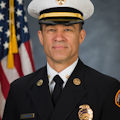
Derek Alkonis
Derek Alkonis is an assistant chief for the Los Angeles County Fire Department. Over his 27-year career, Alkonis has been instrumental in establishing the Los Angeles County Fire Department as a leader in fireground safety and fire service wellness/ fitness. A firm proponent of training, Alkonis has developed and implemented innovative programs supporting fireground tactics, survival and firefighter health. He is a member of the IAFF/ IAFC Fire Service Joint Labor Management Wellness-Fitness Initiative Technical Committee and UL’s Firefighter Safety Research Institute Advisory Board. Alkonis holds a bachelor’s degree in biology from the University of California, San Diego.