Skip to main content
Serving America's Bravest Since 1976
Ops & Training
Leadership
Technology
Stations
Apparatus
Sections
Ops & Training
Leadership
Technology
Stations
Apparatus
Safety & Health
Rescue
LODDs
Special
Podcasts
Videos
Magazine
Product Guide
Shift Calendar
From the Industry
Special Content
Forums
Contact
Contact Us
Advertise
Magazine Subscription
Newsletter Subscription
Advisory Board
Submission Guidelines
Affiliated Brands
STATION DESIGN CONFERENCE
FIRE CHIEFS SUMMIT
THE EMS SUMMIT
STATION DESIGN AWARDS
Follow us on
https://www.facebook.com/firehousecom
https://www.instagram.com/firehousemagazine
https://www.linkedin.com/company/firehouse-magazine
https://twitter.com/FirehouseNews
https://www.youtube.com/@firehousecom
Home
Quick Guide For Responders
Ted Jarboe and Bob Stephan outline the command action guidelines that can be used to manage the consequences of a chemical attack.
Source
Ted Jarboe & Bob Stephan
Feb. 1, 2002
Add Us On Google
Article Available Online Soon!
Sign up for our eNewsletters
Get the latest news and updates
Sign Up
Related
Images courtesy of U.S. Department of Transportation Pipeline and Hazardous Materials Safety Administration
Every four years, the U.S. Department of Transportation updates the Emergency Response Guidebook (ERG) and distributes it to emergency responders across the United States. Among the sources of information that are listed in the ERG is CHEMTREC, which is provided by the chemical industry. Resources from the chemical industry can be notified by CHEMTREC, including having strike teams dispatched from companies that are familiar with the hazardous materials that were spilled. Several other private sector agencies are also mentioned on the inside of the back cover. Page 396 lists information for contacting the National Response Center (NRC). The NRC is operated by the U.S. Coast Guard and is the main contact point for hazmat releases to activate federal assistance for a chemical release anywhere in the United States. The NRC’s capabilities include the computerized version of the Coast Guard chemical data base, which is the largest collection of safety data sheets (SDS) in the world.
Safety & Health
2024 Emergency Response Guidebook
Photo by Brandon Fletcher
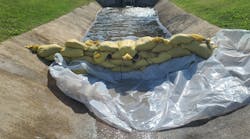
Sandbags won’t always be a practical solution for a quickly constructed dam in close proximity to a spill. However, they are well suited for lengthy operations downstream of an incident when there’s time to prepare. If your jurisdiction keeps prefilled sandbags in storage for flood response, it might be beneficial to coordinate their availability for hazmat response.
Rescue
Technical Rescue: Hazmat Product Control for the Operations-Level Responder
An Unwavering Commitment to Public Safety
Sponsored
An Unwavering Commitment to Public Safety
Experts and Former First Responders Dedicated to Serving You
Sponsored
Experts and Former First Responders Dedicated to Serving You
Voice Your Opinion!
To join the conversation, and become an exclusive member of Firehouse, create an account today!
Join today!
I already have an account
You May Also Like
Hazardous Materials
Technical Rescue: Using Physical and Chemical Properties to Guide Hazmat Response
Incident Command
Being Better Prepared for Hazmat Incidents
Chemical & Hazmat Gear
Boston FFs Respond to Chemical Spill
Sponsored Picks
Sponsored
Spokane Fire Department's Expanded Response Capabilities
Sponsored
Dedicated to Public Safety
Sponsored
Connecting Teams for Disaster Response
Load More Content