Key Takeaways
- The mission of a fire service leader is like the mission of a religious leader. For example, almost all religions encourage daily prayer or scripture study. Fire service leaders need daily reminders to lead them to good action.
- Fire service leaders might have to do without some of the things that they desire. Such sacrifice might be necessary for their team to experience success.
- When fire service leaders support the mental, physical and professional health of their crews—and even their peers—those individuals provide an environment in which everyone is fulfilled.
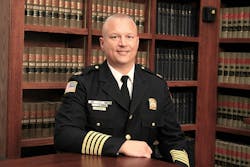
Our paths, often unique, influence our leadership lens. My path wasn’t linear, moving from rural America to the seminary, to the priesthood and then to the fire service. What became apparent during my journey is that faith and fire service share similar key values. I’m guessing that’s why I was so attracted to the fire service—and why some have said that I sound like a preacher when I talk about it.
Mission
Whether discussing religion or the fire service, mission is everything. It provides direction and purpose. Everything that we do and say should support the mission. In public, the best religious and fire service leaders focus solely on the mission and not on self.
Simplified, religion’s call to action is to “do good and avoid evil.” The fire service’s call to action is “saving lives and protecting property.” Each has a “written word” that speaks to the mission. The Bible’s stories of tragedy and triumph provide teachings to lead followers to God. The fire service’s “word” is expressed in fire codes, standards, policies and standard operating guidelines (SOGs), coming together as chapters in the “fire service bible.” Codes express our history, often born out of tragic deaths that could have been prevented. Policies and SOGs are rooted in lessons learned from tragedy.
It’s important for us to understand our fire service bible to avoid future tragedy. As leaders, we teach, preach and promote our mission. Be proud of your mission. It saves lives.
Focus
Understand the importance of your mission. Avoid complacency. Officers have the responsibility to manage their focus and the focus of staff. Promotion isn’t graduation; it’s a call to work harder.
If the focus of the crew has turned to negativity or trivial chatter, the focus must be redirected to support the mission. Erosion of focus is a genuine threat. We must not stop serving the mission until we leave the service. Think about who you serve and why.
Almost all religions push daily prayer or scripture study. Fire service leaders need daily reminders to lead them to good action. There are so many good daily actions, videos and readings for daily reminders and inspiration for how to be a good leader in the fire service.
Self-awareness
Consider this: It isn’t all about you, but yet it is. Fire service leaders must be aware of their core values.
Know why certain words or actions bring you anger or joy. Emotion is tied to your core values. Understanding them helps you to manage your response, to help you to avoid overreacting or underreacting.
A good mentor or coach can help to support you and yet challenge you in a safe environment, to aid you to understand yourself.
It’s very important to pay attention to triggers that affect you. It’s equally important to know your “why.”
Sacrifice
The fire service refers to the “ultimate sacrifice.” Fortunately, all of us won’t be called to that level of sacrifice. That said, sacrifice manifests into the daily life of our family, crews and department.
Sacrifice is tied to mission and purpose. You might have to do without things that you desire. (For example, if you’re saving for a house purchase for your family, buying a new vehicle might be counterproductive.) Thus, understand the team(s) that you serve and realize that sacrifices might be necessary for the team(s) to experience success.
I’ve worked with many officers who worked with the crew all day and burned the midnight oil to do their paperwork. Daily sacrifice brings success for the team.
Purpose
When I entered my department, I wanted to join a special team that had high-risk rescue opportunities. No positions were available immediately. Although not as attractive nor as glamorous, I was given the opportunity to lead public education. A path might be chosen for you.
Many of us know of deeply religious people who lived in poverty, serving in undesirable circumstances to help others. In faith and in the fire service, people are needed to fulfill all roles. Your purpose and your choice won’t be obvious always. Regardless, it’s important to find value in fulfilling needs for the organization, for the people. Everyone can serve a purpose leading to a successful team. The team will struggle to be successful if people don’t fulfill all roles. Make purpose your passion and personal fulfillment.
Empathy, compassion, caring
As with those of other religions, as a Christian, my faith is rooted in compassion that transcends individual experience. As a leader in the fire service, this manifests as mentoring others on my team and seeking opportunities to learn from them, too.
People who have varied backgrounds and levels of maturity and experience will enter your organization. Understand and accept people. Some come ready, and others will need to grow. Be a champion of growth. It’s a privilege to mentor or coach a younger member, knowing that your reach just expanded. A skill that you teach might save several more lives.
When we enter the fire service, we want to have a significant positive effect. You will have the greatest effect by being a great teacher/mentor/coach. Expect to be patient. Support the mental, physical and professional health of your peers. That provides an environment in which everyone is fulfilled.
Truth
Be honest in your interactions, with yourself and others. That’s integrity. What do you do when no one is watching? Are you building the team or tearing it down? Are you working to be a better servant?
Your honesty with yourself regarding your own path likely will lead to more patience for others. Nobody is perfect. Faith and the fire service are two of the most trusted professions because of their respective missions. Those missions are emboldened by truth in word and actions.
Courage
Whether in faith or the fire service, one must be bold when bold actions are needed. Most of us recognize what’s wrong. It’s easy to be complacent, to cheat, to skip or neglect duties, and to allow someone to be bullied. Negativity is contagious. Choose the often unpopular path to positivity.
Embrace the difficult path until habit transforms positivity as an easier path. Remind others of the mission: The mission is why your team exists. There’s nothing negative about the fire service mission. Your words and actions should reflect that.
Leadership isn’t easy
There are great fire service leaders and great religious leaders. Find someone who exemplifies the greatest qualities of leadership and learn from them. Understand their actions and words. Recognize their struggles and successes. Recognize their focus, self-awareness, sacrifice, purpose, empathy, compassion, care, truth and courage. Then, become that leader for others.
About the Author
 Joe Schrage
Joe Schrage
Joe Schrage is a 29-year veteran of the fire service who currently serves as the fire chief for the Highland Park, IL, Fire Department (HPFD). He began as a chaplain and a paid -on-call firefighter prior to his current 22-year tenure at the HPFD. Schrage serves as a member of the executive boards of the Illinois Fire Chiefs Association and Northern Illinois Public Safety Training Academy and as vice president of Division 3 of the Mutual Aid Box Alarm System. He served as a trustee for the Warrenville, IL, Fire Protection District and as a peer assessor for Center for Public Safety Excellence (CPSE). Schrage received an associate degree in fire science from Southwestern Illinois College, a bachelor’s degree from Loyola University Chicago and a Master of Divinity from University of Saint Mary of the Lake. He completed the Chief Fire Officer program, attained multiple National Fire Academy certifications, and was awarded the Chief Fire Officer designation from the CPSE.