Destructive Leadership and Resource Depletion in the Fire Service
Key Takeaways
- The Job Demands-Resources model is useful for the fire service, because it counters leadership that, even unknowingly, drains the psychological and organizational resources that firefighters rely on to do their work.
- The fire service is particularly vulnerable to destructive patterns, because high standards and difficult conditions can be used as camouflage. For example, when leadership punishes those who speak up, ask questions, report hazards and admit mistakes, people can mistakenly view it as respect for authority.
- Fire department leadership behaviors and systems that restore psychological safety treat psychological safety as a standard, reduce organizational friction, build structural supports (e.g., protected time to train, real mentorship and transparent promotional systems), and train leaders to recognize destructive patterns early and to intervene quickly.
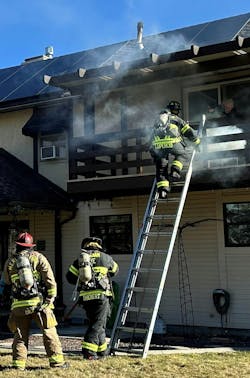
Firefighters understand resource management. We count air. We manage water. We watch heat. We pace the push. We don’t have to like the environment to respect what it does to the human body. If you spend faster than you replenish, you eventually fail, no matter how tough you are.
What many departments underestimate is that the same rule applies to the human system that carries the mission. You can have the best apparatus, the cleanest hose loads and the sharpest tactics, but if leadership steadily drains the psychological and organizational resources that firefighters rely on to do the work, the organization will burn down from the inside.
This is where the Job Demands–Resources (JD-R) model becomes useful for the fire service. As explained by Arnold Bakker and Evangelia Demerouti in “The Job Demands-Resources Model: State of the Art” (Journal of Managerial Psychology, April 2007), JD-R divides the work environment into two broad categories: job demands and job resources. Job demands are the aspects of work that require sustained effort and come with costs (i.e., fatigue, strain and depletion). Job resources are the aspects of work that help people to meet demands, accomplish goals and grow (i.e., support, autonomy, learning, feedback, fairness and recovery). The model proposes two parallel tracks that often run at the same time, Bakker and his co-authors wrote in “Job Demands-Resources Theory: Ten Years Later” (Annual Review of Organizational Psychology and Organizational Behavior, Volume 10, 2023). One is the health-impairment process, where chronic demands erode energy and coping capacity until exhaustion and cynicism set in. The other is the motivational process, where resources fuel engagement, learning and performance.
The fire service never will be a “low-demand” occupation. Risk, urgency, uncertainty and consequence are built into the mission. That said, JD-R offers a clear reality check: When demands are high, resources matter more, not less. The problem is that destructive leadership doesn’t merely stress people out. It increases demands while simultaneously removing the resources that keep those demands sustainable. That double hit is how good firefighters burn out, disengage and leave.
Destructive leadership
Destructive leadership isn’t the same as accountability, standards or a difficult conversation. It’s a sustained pattern of leader behavior that harms people and performance. Bennett Tepper, in “Consequences of Abusive Supervision” (Academy of Management Journal, November 2017), writes that, sometimes, destructive leadership looks like abusive supervision: public humiliation, threats, intimidation, contempt and a constant posture of suspicion. Sometimes, it looks like manipulation (e.g., favoritism, scapegoating or moving goalposts that make success impossible). Sometimes, it shows up as chronic unfairness, in the form of rules that apply differently depending on the individual or to whom the individual is connected. The most dangerous form often isn’t loud; it’s routine. It’s the daily drip that trains firefighters to protect themselves instead of improving the work.
The fire service is particularly vulnerable to destructive patterns, because high standards and difficult conditions can be used as camouflage. If an officer is cruel, people can call it toughness. If discipline is inconsistent, people can deem it “the way that it is.” If leadership punishes voice, people can call it respect. Those labels don’t change the outcomes. As reported by multiple experts, destructive leadership has measurable consequences across workplaces, including reduced well-being, lower performance and higher turnover intentions. In a high-reliability profession, those consequences aren’t just cultural; they’re operational.
JD-R helps fire service leaders to name the problem precisely. Destructive leadership functions like a force multiplier in the wrong direction. It creates extra demands that don’t improve service, and it strips away resources that make the job survivable over time.
Leaders & extra work
Most firefighters accept the inherent demands of the profession. They expect difficult calls, trauma exposure, disrupted sleep, physical risk and the mental load of making decisions when the picture isn’t clear. Those demands are real, and they often are manageable when the organization supports the member.
What firefighters don’t sign up for is the added burden of leadership-created demands that provide little or no public value. Micromanagement is a demand. Constant second-guessing is a demand. Role ambiguity—never knowing what the standard is today—is a demand. Emotional labor that’s spent managing an officer’s volatility is a demand. Social conflict that’s fueled by favoritism and division is a demand. The paperwork is rarely what breaks firefighters; it’s the message behind it. When the organizational climate communicates “We don’t trust you,” every administrative action becomes heavier.
JD-R distinguishes between demands that feel like meaningful challenges and demands that function like hindrances or stressors that block performance and breed frustration, Bakker and Demerouti argue. Firefighters will push hard for a meaningful mission. They won’t endure endless friction that’s created by unstable leadership without paying a price.
What’s removed
If leadership only increases demands, crews still might survive through strong internal cohesion. However, destructive leadership tends to remove resources as well, particularly the high-leverage resources that allow firefighters to learn, adapt and recover.
The most critical resource in high-reliability work is psychological safety. Psychological safety isn’t softness; it’s operational readiness. As Amy Edmondson writes in “Psychological Safety and Learning Behavior in Work Teams” (Administrative Science Quarterly, June 1999), it’s the shared belief that people can speak up, ask questions, report hazards and admit mistakes without being punished or humiliated. In environments that have psychological safety, weak signals get surfaced early. Near misses are reported. After-action reviews become learning tools. People ask for help before small mistakes compound into big ones. In environments that lack psychological safety, people go quiet. Errors get hidden. Learning slows or stops. Trust erodes. Risk increases.
Destructive leadership is a psychological safety killer, because it teaches a simple lesson: Silence is safer than honesty. In the fire service, that lesson gets firefighters hurt. It also starves the organization of the information that it needs to improve.
Beyond psychological safety, destructive leadership commonly strips away autonomy, fairness, support and recognition. Autonomy matters because control over how to do the work helps people to regulate demands. Fairness matters because predictable, consistent standards reduce stress and cynicism. Support matters because high demand requires backing, coaching and protection, not isolation. Recognition and development matter because firefighters can endure difficult work when they believe that they’re growing and that their effort is seen.
Empty-tank burnout
Burnout isn’t a character flaw. It’s a predictable result of prolonged strain without adequate replenishment. As Michael Leiter and Christina Maslach write in “Understanding the Burnout Experience: Recent Research and Its Implications for Psychiatry” (World Psychiatry, June 2016), classic burnout research describes a pattern of exhaustion, of cynicism (or depersonalization) and of reduced efficacy.
In the firehouse, burnout often wears a uniform. It looks like the firefighter who used to mentor other but now avoids the probie. It looks like the company that used to train but now just runs calls and sleeps. It looks like the officer who used to care but now hides behind policy and sarcasm. It looks like short-cuts, irritability and “survive the shift” thinking. It looks like emotional numbness after difficult calls and a growing sense that nothing matters because nothing changes.
Destructive leadership accelerates burnout, because it removes meaning and adds friction. The work doesn’t just take energy; it takes dignity. It isn’t only the trauma exposure that wears members down; it’s the chronic experience of feeling unsafe in one’s own organization.
Motivation & what breaks it
The fire service attracts mission-driven people. Many firefighters can tolerate significant demands when they believe that the work is purposeful and that the organization supports them. JD-R explains why this matters: Resources fuel engagement, and engagement predicts performance, persistence and growth, Bakker and Demerouti contend. When leadership provides a stable climate of support, fair standards, coaching and learning, firefighters often interpret high demands as meaningful challenges. When those resources disappear, the same demands feel like punishment.
This is how a dangerous split forms. Firefighters still care about the mission, but they develop contempt for the organization. They still fight fire for the public, but they stop investing in the department. That split often is the beginning of exit behavior: leaving the department, leaving the profession or “quitting in place.” The department might keep the body, but it loses the heart.
Loss spirals & turnover
One of the most practical insights from modern JD-R work is the idea of loss cycles. When people are strained, they might engage in behaviors that unintentionally create more demands: more mistakes, more conflict, more miscommunication and more breakdowns, which lead to even more strain over time, Bakker asserts. In fire service terms, fatigue and distrust degrade teamwork. Degraded teamwork increases friction and errors. Errors trigger more scrutiny and discipline. Scrutiny increases silence. Silence reduces learning. Turnover increases the workload on those who remain, and the cycle repeats.
This isn’t a resilience problem. It’s a leadership and systems problem. When the environment produces resource loss faster than it produces recovery, the organization eventually collapses into chronic instability.
In “Conservation of Resources: A New Attempt at Conceptualizing Stress” (American Psychologist, 1989), Stevan Hobfoll reinforces the same point: People strive to obtain, retain and protect valued resources, and resource loss is disproportionately harmful. In other words, once firefighters start losing sleep, trust, time with family, dignity and voice, the cost compounds, and rebuilding takes longer than leaders expect.
Interventions that work
Departments don’t need a new slogan about wellness. They need leadership behaviors and systems that build resources, reduce avoidable demands and restore psychological safety.
Start by treating psychological safety as a standard, not a vibe. This means that officers openly invite bad news early, protect reporting of hazards and near misses, and keep critiques focused on decisions and behaviors rather than character. It also means that the organization enforces a real no-retaliation posture. If people believe that speaking up will cost them an assignment, a promotion or social standing, they will choose silence. In a high-reliability organization, silence is failure.
Next, replace gotcha leadership with learning discipline. The fire service already has a built-in learning mechanism: the after-action review. The problem is that too many reviews either become blame sessions or become vague, feel-good conversations that don’t change standards. A disciplined review reconstructs expectations, what happened, what worked and why, what didn’t and why, and what changes next time. The point isn’t to prove who was right. The point is to become better. Psychological safety makes that possible, Edmondson says.
Then, reduce hindrance demands that your organization created. Leaders can’t eliminate the inherent hazards of firefighting, but they can reduce organizational friction that adds workload without improving readiness. This is where senior leadership earns trust by removing redundant processes, clarifying standards, enforcing discipline consistently, protecting training time and designing schedules with recovery in mind. If a demand doesn’t improve readiness, safety, service or accountability, it might be organizational drag. Removing drag is leadership.
Build replenishment into the week in concrete ways. Resources aren’t posters. They’re structural supports (e.g., protected time to train, real mentorship, meaningful feedback, fair assignments, transparent promotional systems and credible processes for reporting concerns). When resources are real, firefighters can carry the mission’s demands for decades. When resources are performative, firefighters eventually stop believing.
Finally, train leaders to recognize destructive patterns early and to intervene quickly. Many destructive behaviors survive because they are mislabeled as standards. Standards are clear, consistent and behavior-based and are enforced through fair process. Destructive control is vague, inconsistent, personal and retaliatory. It often uses humiliation as motivation. It treats voice as insubordination. It uses discipline to settle scores. The results of multiple research efforts consistently link destructive leadership to harm for both people and organizations. In the fire service, that harm shows up as errors, silence and departures.
Company and chief officers
Company officers and chief officers are different levers who have the same mission.
Company officers are the resource climate. They translate organizational pressure into daily experience. In practical terms, they decide whether firefighters walk into a station that feels stable and developmental or unstable and punitive. Company officers build resources when they provide clarity, coaching and protection. Clarity means that the crew understands intent and standards. Coaching means that firefighters know what good looks like and how to improve. Protection means that honest reporting is safe.
Chief officers are the system designers. They shape the larger ecosystem: policy consistency across battalions, staffing rules, complaint pathways, learning systems and fair-process discipline. Chiefs build resources when they ensure that standards don’t depend on which battalion is working. They also guarantee that discipline is transparent and proportional and that voice is protected as aggressively as any operational safety rule is.
The fire service always will demand courage on the fireground. The leadership challenge is ensuring that firefighters don’t have to spend courage just to survive their own organization.

High reliability & resources
We signed up for meaningful, difficult work. We didn’t sign up for destructive leadership. Destructive leadership isn’t part of the mission; it’s an avoidable hazard that drains the very resources that are required for high reliability.
If you want firefighters who stay engaged and keep learning and performing under pressure, build an environment in which demands are mission-relevant, resources are real and accessible, and psychological safety is protected as aggressively as any operational standard. On the day that your department needs voice the most—someone noticing the weak signal, reporting the near miss, admitting the mistake before it becomes a mayday—only a psychologically safe culture will deliver it.
High demand is inevitable. Resource depletion isn’t.
About the Author
 Kristopher Blume
Kristopher Blume
Kristopher T. Blume is the fire chief of the Meridian, ID, Fire Department and has more than two decades of fire service experience. He is an author, lecturer and independent consultant. Blume is a graduate of the Executive Fire Officer (EFO) program and is an instructor at the National Fire Academy. As a student of the fire service, he is focused on values-driven, mission-focused leadership for the profession. He is the author of "Carry the Fire: The Crucible of Leadership in the Fire Service".