Hidden Fatigue: How Firefighters' Secondary Employment Quietly Increases Fireground Risk
Key Takeaways
- Although fire departments employ shift schedules that are meant to minimize member fatigue, the second jobs that many firefighters and officers work to help to make ends meet can cut into their recovery time, which can create operational risk when they’re on scene of an emergency.
- Firefighter and company officer fatigue can lead to delayed or incomplete size-ups, missed hazards, poor prioritization and breakdowns in communication.
- Firefighters who are paid well are more likely to use days off for recovery, family time and rest rather than additional employment.
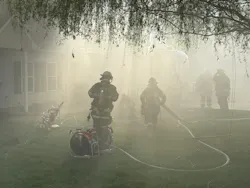
Fatigue has been a long-standing issue in the fire service. Most departments acknowledge it, and many took steps to manage it through shift schedule changes, wellness initiatives, and education on sleep and recovery. We often compare schedules, such as 24/48, 48/96 or 1-3-2-3, and debate which one best reduces fatigue and improves readiness.
What we talk about far less, however, is secondary employment and the role that it plays in quietly eroding the recovery time that these schedules are designed to provide. Although second jobs are common and often financially necessary, they create an operational risk that many departments fail to recognize or address.
When time off isn’t time off
On paper, most department schedules appear reasonable. A 24/48 schedule limits consecutive duty days. A 48/96 schedule provides extended recovery time. Even the 1-3-2-3 schedule attempts to balance workload with rest. The assumption that’s behind all of these schedules is the same: that days off are used for recovery.
In practice, that isn’t always the case. Firefighters frequently work second jobs in EMS, construction, industrial settings or other public safety agencies. Many of these jobs involve long shifts, physical labor and/or overnight hours. When secondary employment overlaps with fire department schedules, particularly when both operate on a 24-hour shift, firefighters can work unintentionally four, five or more consecutive days with little meaningful rest.
From a policy standpoint, the firefighter still might appear compliant with departmental scheduling rules. From a physiological standpoint, however, fatigue is accumulating with no real opportunity for recovery.
A decision-making problem
Fatigue often is discussed as a wellness issue, but on the fireground, it primarily is a decision-making issue. Sleep deprivation and cumulative fatigue impair reaction time, situational awareness, memory and judgement. These effects develop gradually and often are difficult for individuals to recognize in themselves.
For company officers and incident commanders, this presents a serious concern. Fatigue can lead to delayed or incomplete size-ups, missed hazards, poor prioritization and breakdowns in communication. It also can affect emotional control, frustration levels and focus at exactly the wrong time.
Many near-miss events and close calls are attributed to “human factors.” In reality, fatigue, which often is driven by secondary employment, frequently is part of this equation.
Culture silence & second jobs
One of the most difficult aspects of addressing this issue is cultural. Secondary employment is ingrained deeply in the fire service. For many firefighters, it isn’t optional; it’s how bills are paid and families are supported. Because of this reality, leaders often are hesitant to address the issue directly.
The result is a quiet assumption that fatigue is an individual responsibility rather than an organizational concern. Officers might assume crews are rested, because the schedule indicates that they should be. Firefighters might downplay fatigue or feel pressure to push through it. That silence doesn’t eliminate risk; it simply shifts it to the fireground.
Uncomfortable connection
Compensation rarely is discussed in the context of operational safety, but it deserves attention. In many departments, secondary employment exists not out of preference but necessity. When base pay doesn’t meet the cost of living, firefighters are left with few options.
Departments that offer competitive wages often see a different pattern. Firefighters who are paid well are more likely to use days off for recovery, family time and rest rather than additional employment. Although higher pay doesn’t eliminate fatigue entirely, it reduces the pressure to work excessive hours elsewhere, which allows schedules to function as intended.
This matter isn’t an argument for eliminating second jobs nor criticism of firefighters who work them. It’s a recognition that pay, staffing and fatigue are interconnected. Leaders who ignore that connection miss an opportunity to reduce risk before it reaches the fireground.
A leadership issue
Fatigue management can’t stop at shift schedules alone. Leaders must recognize that actual workload, not schedule workload, determines readiness.
Although departments might not be capable of restricting secondary employment outright, they can acknowledge its effect and factor it into training, supervision and risk assessment. That starts with honest conversations.
Officers should understand how cumulative fatigue affects decision-making. Command staff should consider fatigue when evaluating near-misses, injuries and operational errors. Firefighters should feel supported in speaking honestly about fatigue without fear of judgement.
This isn’t about limiting opportunity or questioning commitment. It’s about recognizing human limits in a profession that regularly demands more than most.
Bridging policy and reality
Many departments believe that fatigue is under control because policies look good on paper. The reality is that policies often fail to account for what happens outside of the firehouse. If leaders only evaluate fatigue through schedules and staffing models, they miss the larger picture.
Addressing secondary employment as a fatigue factor doesn’t require punitive measures. It requires awareness, education and leadership engagement. Incorporating fatigue discussions into officer development, acknowledging secondary employment during risk assessments and promoting honest self-evaluation can make a meaningful difference.
Consequences
Firefighters pride themselves on resilience and work ethic. Those traits serve the fire service well, but they also can mask real risk. Secondary employment isn’t inherently bad, but its effect on fatigue is real and increasingly relevant.
If we are serious about safety, performance and sound decision-making, we must look beyond schedules and acknowledge how our people actually are working. Fatigue doesn’t announce itself on the fireground, but its consequences often do.
Recognizing and addressing the hidden fatigue problem isn’t about members doing less. It’s about ensuring that when the call comes in, firefighters and officers are rested enough to make the decisions that matter most.
About the Author
 Philip Burns
Philip Burns
Philip Burns is a career fire officer in South Carolina who currently serves as assistant chief with the Mayo Area Fire District and as a training officer with the Boiling Springs Fire Department. He has experience in rural and combination department operations, officer development and incident command. Burns is pursuing a doctorate in emergency management and serves on a national fire service training committee.