Fire Chiefs & the Weight of a Folded Flag
Key Takeaways
- A folded flag that's presented to the family of a fallen firefighter serves as a reminder that the true measure of leadership lies in what's done to prevent the next flag presentation.
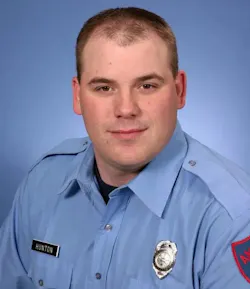
- New members of the Amarillo, TX, Fire Department learn about AFD Firefighter Christopher "Brian" Hunton—who died when he fell from a moving ladder truck as he was donning his SCBA while not wearing his seatbelt in an effort to save a few seconds—as a man whose loss reshaped the department.
- For too long, firefighters have been taught not to admit problems. Few fire departments have resources for psychological recovery for their people. Leadership means recognizing struggle before it becomes a crisis.

In my journey to fire chief, I often heard from mentors about the burden of pinning the fifth trumpet on your collar. That weight shows up in many forms: difficult conversations, disciplinary decisions and the constant question of which ideas deserve limited resources. The pressure never leaves. It lingers in the quiet moments when you second-guess your choices, knowing that they shape organizational safety and culture.
Over time, you learn that leadership rarely is about tactics or operations. It’s about people: their safety, their growth and the unseen weight that they carry. From the outside, a leader’s confidence might seem effortless, but few witness the sleepless nights that follow difficult decisions without clear answers. After years of working beside my predecessor, Chief Jeff Greenlee, I believed that I understood the burden ahead. I didn’t. The fifth trumpet is one thing, but nothing prepares you for the weight of a folded flag.
Symbol of honor and loss
Like the military, the fire service presents a folded flag as a symbol of honor and gratitude on behalf of the department and community to the family of a fallen member. That gesture is a silent promise that their loved one’s sacrifice won’t be forgotten.
For the presenter, handing that flag is among the heaviest moments of a career. Its weight isn’t in fabric but in the realization that something went tragically wrong. With every flag handed over, a piece of the presenter’s heart goes, too.
Most flags that I presented were for retired firefighters who lived a full life. Even then, the flags were heavy. However, two flags were for firefighters who we lost to suicide, men who I once served beside. No matter how reverently a flag is given, it can’t fill the void that’s left behind.
I have observed that a folded flag does little to bandage broken hearts or bring comfort to grieving loved ones. It serves instead as a reminder that the calling of a firefighter carries risk and that the true measure of leadership lies in what we do to prevent the next flag presentation.
Lesson from a tragedy
For the Amarillo Fire Department (AFD), that lesson runs deep. Our department has laid to rest five members who died in the line of duty. However, on April 25, 2005, the loss of Firefighter Christopher “Brian” Hunton brought a new urgency to what safety truly means. Brian fell from a moving ladder truck while he was responding to a structure fire. Although policy required it, he wasn’t wearing his seatbelt as he tried to don his SCBA to save a few seconds. Those seconds never paid off.
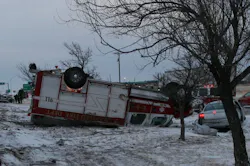
That belief was tested in 2008 when one of our pumpers rolled over during a response. The apparatus was destroyed, but every firefighter walked away uninjured. All four were wearing seatbelts. That day proved that our lessons had become part of who we are.
Since then, the AFD has worked to make safety proactive, not reactive. Every response, gear inspection and drill reflects that commitment. New firefighters enter a culture in which seatbelts are nonnegotiable. They learn about Brian, not as a distant story from the past but as a man whose loss reshaped the department that they joined.

Still, the folded flag reminds us that vigilance fades easily. The greatest danger is believing that a lesson is achieved fully, as if safety is a book to be shelved once read.
Invisible weight
There’s another kind of weight in this profession, one that no ceremony can honor. It’s the silent burden that firefighters carry, the calls that replay in their mind, the guilt that lingers, the exhaustion behind tired eyes.
We train firefighters to face heat and collapse but not the silence that follows when the sirens fade. The fire service values toughness, yet that same toughness can become a trap. Real progress in mental health requires vulnerability, the willingness to ask for help in a profession that’s built on helping others.
If we measure wellness with the same precision as response times, we finally might grasp its effect. Firefighter wellness is operational readiness. For too long, firefighters have been taught to fix problems, not admit them. Too many stay silent, afraid to seem weak, and that silence costs lives.
At the AFD, we built a peer support team, partnered with professionals and made mental wellness part of readiness, because our members and families depend on it. Progress takes courage, and leaders must go first. When it becomes normal to say, “If the chief can get help, maybe I can, too,” that will be true progress. Vulnerability isn’t weakness; it’s strength. Courage isn’t being unbreakable but rebuilding when life falls apart.
We have policies for heat, rehab and physicals. Yet, too few departments established resources for psychological recovery for their people. The incident that breaks one person might not break another, but both deserve support. Leadership means recognizing struggle before it becomes a crisis.
We are our brothers’ and sisters’ keepers. Peer support isn’t the job of a few; it’s the duty of all. Sometimes, it begins with a simple question: “Are you okay?” Our profession is strongest when we look after one another.
Courage to confront compromise
The truth is the fireground isn’t our most dangerous place; the comfort zone is. Brian’s tragedy taught us that culture isn’t defined by what we say but by what we tolerate. True leadership isn’t about reminders; it’s about living the standard with the courage to confront compromise and the discipline to uphold the expectations that we set.
A challenge given
A folded flag is heavy for a reason: to ground us in the privilege and consequence of this calling. Every flag that I presented reminds me of the same message: Never let the lessons fade. Each tells its own story but asks the same question: “What will we do differently now that we know better?” We honor our fallen not only through ceremony but through consistent culture, ownership and action.
That’s a burden that doesn’t rest on the chief alone. It rests on every firefighter who takes the oath, on every leader and instructor who sets the standard, and on every family who hugs their firefighter goodbye and prays that person comes home after the shift.
Whether you aspire to pin the fifth trumpet or are content in your current role, my challenge is this: Look into your organizational mirror. Are you making assumptions, tolerating shortcuts or overlooking the invisible wounds of your people?
We at the AFD learned the most difficult way. How will your department learn?
About the Author
 Jason Mays
Jason Mays
Jason Mays serves as fire chief of the Amarillo, TX, Fire Department, where he has dedicated more than 26 years of service. He holds degrees in fire science and organizational leadership and earned Chief Fire Officer and Chief Training Officer designations from the Center for Public Safety Excellence. A graduate of the Texas Fire Chiefs Academy, Mays continues to champion firefighter safety, mental health awareness and leadership accountability throughout the fire service.