A Lesson for Fire Chiefs for Trusting Your People
Key Takeaways
- When fire chiefs trust their officers, departments run smoothly, morale is high and everyone grows as leaders.
- To build trust among officers, fire department chiefs must give clear expectations, including the why, the what and the when behind directives.
- Fire department chiefs develop future leaders among their officers when they delegate, allowing officers to take responsibility for a problem and to solve it how they see fit.
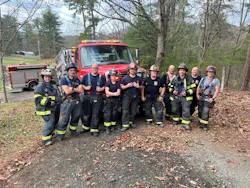
Trust on the fireground. Trust in the training room. Trust between yourself and your officers. Firefighters love to talk about trust. Trust is important. Without trust, firefighters wouldn’t walk into burning buildings, conquer fiery roads and work around hundreds of pounds of high-pressure explosives while focusing on the task at hand. Trust your partner to have your back and yourself to have theirs.
Trust between firefighters, particularly those who work on the line, tends to get most of the spotlight. What about trust between an organization’s leadership?
Trust your officers to do their job
When fire chiefs trust their officers, departments run smoothly, morale is high and everyone grows as leaders. When fire chiefs don’t trust their officers, development stagnates, frustrations are common and things tend to fall apart.
Trust is something that fire chiefs must learn how to do if they don’t already how to trust. Trusting your people doesn’t mean that you don’t care about the job or that you’re failing as a leader. Trusting your people allows you to be a better leader by empowering your officers to do their job.
How do you learn to trust?
Trust starts with competence and character. As a chief, you must trust that the officer to whom you’re assigning a task has the skill set and knowledge to get it done. You must trust that person will use good judgment when making decisions. You must trust that individual will meet your expectations.
If you find that you don’t trust your officers, it’s because one or more of these things are lacking. The easy way out is to micromanage your officers until you retire. The better solution is to teach them what they’re missing.
Be clear about expectations
A common reason that trust isn’t given is a lack of clear expectations, such as officers being told to do something without a firm deadline or an exact picture of what leadership expects. As a result, chiefs check in daily, change the scope of plans midway through or change the game, so to speak—not because the officer can’t do it, but because the expectations never were communicated.
I learned this lesson the hard way as an officer. On several occasions, clear expectations weren’t established by our chief about standard operating procedures and departmental policies. Those expectations would vary day to day and, sometimes, hour to hour. An easy example of this was uniform expectations: One day, it was acceptable for firefighters to wear department T-shirts while they did truck checks and morning duties; the next day, the chief was livid because crews weren’t in Class B uniforms while they checked the apparatus; soon after that, it was changed again. This type of leadership created confusion and frustration up and down the chain of command. As a battalion chief, I struggled to hold my crews to a standard, because our standard as a department changed daily.
I wasn’t the only one who felt this way. Trust issues flowed down to the captains and the firefighters. When expectations constantly shift, officers feel unsupported and apprehensive when they make decisions. They never know whether leadership will stand behind their choices or abruptly change direction.
Good leaders are clear about what they want. They communicate the why, the what and the when. Leaving room for creativity is fine, but you should have a meeting after delegating a task to ensure that you and your officers are on the same page. When you are detailed in these conversations, you’ll spend less time wondering what your crewmembers are working on.
Delegate
Delegation isn’t passing work off to your officers because you don’t want to do it. Delegation allows others to lead, so your organization can grow.
If you tend to take back assignments or weigh in on every decision that your officers make, you aren’t delegating.
I learned what true delegation was from one of my officers. I delegated the task of furthering his education by having him enroll in classes that would help him to improve his communication skills and overall knowledge of our profession. He didn’t take this news very well. He struggled through the courses and, honestly, seemed angry that I pushed him to expand his abilities. He was very comfortable with the operations side of firefighting and had become stagnant when it came to his professional growth.
However, as time went on, I saw a change. By allowing him the opportunity to grow through education and leadership opportunities, he became a much better officer. His communication skills got noticeably better. He became more confident in his ability to lead his crew and more efficient at handling situations that came his way. To this day, he encourages the members of his shift to not only take every training opportunity that they can but to continue their education to better themselves professionally.
That change didn’t happen because the officer was afraid that I’d take his position away if he didn’t take the opportunity to grow. His transformation occurred because he was trusted and allowed to grow as an officer. Leaders develop future leaders by trusting them with responsibility and challenging them to grow uncomfortable.
Trust your officers to finish a task that you give them. Allow them to take responsibility for a problem and solve it how they see fit. Provide officers with as much or as little direction as you believe that they need but let them do their job.
Check in
Just because you trust your officers to do their job doesn’t mean that you should have no idea what they’re doing.
As a fire chief, you’re responsible for your department’s performance. You always should know what’s always going on. You just don’t have to micromanage how it gets done.
I saw the value of this when I worked on a preplan and inspection project. One of my officers was delegated the task of ensuring that all preplans were updated and ready to go before we were inspected. During one of our check-in conversations, I inquired about the progress of the project. The officer explained to me that he got caught up working on something else and fell behind on updating some preplans. Had I not checked in with him that day, we very well could have lost points during inspection. Not only does that affect how a department fares, but it also puts the public at risk. That check-in wasn’t me micromanaging the officer or taking the project away. I was holding him accountable while trusting that he would complete the task. Once we identified the problem, he took care of it and got the preplans updated, and we were ready for inspection.
Give your officers deadlines for updates or schedule weekly check-ins to discuss the progress of certain projects. Create milestones that they can meet. Provide your officers with the freedom to do their work and let them know that you trust them to do so.
Release the need to be perfect
I know that firefighters, officers and fire chiefs love to do things perfectly. We like to triple and quadruple check everything. In the fire service, this is understandable, but sometimes, you must trust that your officers can make decisions.
If you require that every task that you assign be completed to your exact specifications, your officers never will learn how to lead. They constantly will look for guidance when they encounter a problem.
Leaders trust their officers to make decisions. Leaders delegate problem-solving. When your officers make a mistake, teach them about it. Don’t spend extra time making something “perfect” at the expense of trust.
Start building trust today
Once you start to trust your officers, you will notice a change—not just in them but throughout your department. Your officers will trust each other, your teams will work better, and you won’t have to do everything yourself.
Trust your officers to communicate with their teams. Be transparent with your decisions and share information with your officers. When your officers succeed, celebrate their victories. Do these things and you will earn the trust of your officers and staff.
What happens when you don’t trust your officers?
I have been both on the giving and receiving end of a trustless relationship with a superior. It’s no fun. Officers stagnate, and their development grinds to a halt. They wait to be told what to do, because they don’t want to take the initiative and do something that their chief doesn’t like.
As a fire chief, your officers reflect on you. Build leaders by trusting your officers to do their job.
About the Author
 Bennie Gaddy
Bennie Gaddy
Bennie Gaddy is a dedicated fire service leader who has more than 33 years of experience in emergency services, fire suppression, training and organizational leadership. He serves as deputy chief of the Mars Hill, NC, Fire Department. Gaddy has built a career through progressive leadership roles, including firefighter, captain, battalion chief and assistant chief. His expertise includes emergency management, fire service training, communications systems and personnel development. Gaddy currently co-leads a $4 million countywide radio communications upgrade project. He holds Fire Officer, Qualified Instructor, Fire Inspector, Emergency Management Coordinator and Incident Command System certifications.