Applying the OODA Loop to Professional Growth in the Fire Service
Key Takeaways
- The same tactical thinking that guides firefighters' and company officers' decision-making during a fire also can help them to craft a career plan.
- Real professional growth in the fire service begins with brutally honest observation and evaluation of oneself.
- Firefighters' and company officers' application of the "orientation" element of the OODA Loop in their pursuit of career and professional development helps them to understand their position within the evironment, their department's culture, external opportunities and personal motivations.
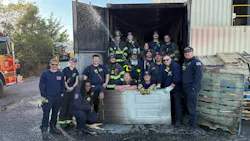
Decision-making is a skill that the public rightfully sees firefighters as experts in, because firefighters at all levels are trained to assess situations, develop an incident action plan (IAP) and carry it out. We often do this in seconds without consciously thinking, drawing on previous experience and lessons learned.
A tool that sometimes is used is the OODA Loop, which is the framework that was created by U.S. Air Force Col. John Boyd. It stands for Observe, Orient, Decide, Act. It helps us to make quick, informed decisions under pressure and adapt as conditions change. We apply this process on the fireground: size-up, develop an IAP, execute and reassess. However, what if we used that same deliberate thinking in our career and professional development?
Tactical thinking
Setting goals is an essential part of professional growth, but many of us approach it much less intentionally than we would approach a working fire. We begin our career with a clear path: complete initial training, learn the apparatus and finish probation. Departments usually outline this path for us. Even the steps to advance to engineer and company officer often are defined through policy or job descriptions. However, once those milestones are reached, the plan often becomes unclear. Many drift through the rest of their career without a strategy, relying on luck rather than deliberate action.
It mustn’t be that way. The same tactical thinking that guides our decision-making during a fire also can help us to craft a career plan. By applying the OODA Loop to career development, we can identify where we are, identify where we want to go and create a plan to reach it, with intention and care.
Observe
Every incident starts with a size-up, and our professional development should follow the same approach. This part can be challenging. It requires an honest evaluation of ourselves, including our skills, knowledge, certifications, experience and areas for improvement. Just as we never would make tactical decisions without understanding fire conditions, we shouldn’t make career decisions without assessing our current situation.
This is where humility matters most. The Dunning-Kruger Effect often distorts our perception of our own ability. This psychological phenomenon shows that beginners tend to overestimate their competence while experts tend to underestimate theirs. The most dangerous place to be is when we know enough to feel confident but not enough to recognize what we don’t know.
To truly observe and evaluate ourselves, we must be brutally honest. That’s where real growth begins, and we can discover things that we don’t know and areas in which we can improve.
- Evaluate your technical knowledge and leadership skills against your current role and the one that you want next.
- Seek mentorship from those who achieved what you want to achieve in your career.
- Reflect on times that you felt unprepared or without experience and take note of them.
- Identify blind spots and areas that you avoided because they challenged you.
If you take an honest look at yourself, you should feel accomplished by what you achieved and experience discomfort when you discover areas that need improvement.
Orient
Orientation provides context for our observations. It helps us to understand our position within the environment, our department’s structure, external opportunities, limitations and our personal motivations.
Start by defining your destination. Where do you want to be in 5, 10 or 20 years? Maybe it’s a company officer’s seat, the training division or a position in community risk reduction. It doesn’t have to be rank-based at all but a position of influence or technical expertise.
Then analyze your environment.
- Identify opportunities. Look for areas in your department or region where you can contribute or grow.
- Evaluate training and educational resources. Explore state training programs, conferences, professional credentialing and private sources.
- Acknowledge barriers. Be realistic about time, family needs, finances and other things that might limit your progress.
This also is where you search for your “why.” Consider what motivates you and gives you a sense of accomplishment. Is it climbing the ranks and achieving personally? Is it mentoring and training others to help them to reach their potential? Improving your department’s operations or culture could be a motivator. Consider times in your career when you felt fulfilled and happy at work. This could help to point you to your own “why.” Understanding your “why” gives you clarity when you face burnout, politics, failures and roadblocks. Use this as your personal North Star to guide you through adversity.
Decide
Deciding in the OODA Loop involves developing a plan and setting goals that are based on our observations and orientation. This is when we use that information to create a plan to move forward. SMART (specific, measurable, achievable, relevant and time-bound) objectives often are used in the fire service to provide clear, measurable targets over time.
Examples might be:
- Complete Fire Officer II by the end of the year.
- Become qualified to drive the aerial apparatus before July 1.
- Attend three technical rescue courses over the summer.
Objectives help us to stay accountable and build momentum. Be cautious not to focus solely on stacking certifications. Too often, firefighters rush through certifications and miss the opportunity to develop the skills and knowledge that they signify. Be purposeful about the courses that you choose and the knowledge that you acquire.
An effective plan includes short- and long-term goals. Completing task books, gaining specific knowledge and 1-2-week courses might be considered short-term depending on your situation. Long-term goals might include obtaining an associate or bachelor’s degree, developing a curriculum to present or earning a position on a specialized team.
Act
Assessment and planning prepare us to execute. This is where we turn our goals into results, and discipline becomes necessary to achieve. In the fire service, we are good at taking action and producing results, but career results come from daily, often unseen effort over long periods to see the results that we want.
We must channel our inner David Goggins and the mindset of pushing through pain, fatigue and self-doubt. Talent doesn’t matter here, but consistency and personal accountability become the driving factors. His quote, “You are in danger of living a life so comfortable and soft that you will die without ever realizing your true potential,” might come off as dramatic, but it describes the mindset that we must push ourselves. It can be easy to settle into a routine, but this can kill progress.
To act efficiently:
- Execute aggressively but sustainably; consistency beats intensity.
- Track your progress and objectives regularly.
- Adjust as life changes; make your plan work for you.
- Recognize wins but stay driven.
Remember, the OODA Loop is cyclical. We must observe our progress, reorient our goals and refine our decisions continually.
Size up your future
The OODA Loop is used here as a career progression tool, but it also can guide our decision-making in many other areas of life. Honest self-observation, aligning goals and environment, deciding on a plan, and acting with discipline build momentum and purpose.
This tool can help us to stop drifting through our career (e.g., taking classes and opportunities as they pop up) and instead start to lead ourselves with intentionality. Fireground success depends on preparation and situational awareness; our professional development is no different. If you can size up a building, you can size up your future. If you can write an IAP, you can write a career plan.
About the Author
 John Partridge
John Partridge
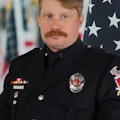
John Partridge is a lieutenant with the La Vergne, TN, Fire & Rescue Department and the fire chief of the Alexandria, TN, Fire Department. He has 17 years of experience in the fire service, serving in both volunteer and career departments. Partridge holds an associate degree in fire science and earned the Fire Officer designation from the Center for Public Safety Excellence (CPSE).