What You Need To Know About 'Rising From Ground Zero'
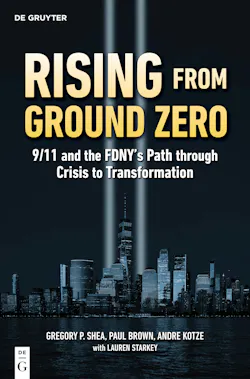
The voices of people who responded to the Sept. 11 attacks on the World Trade Center, primarily FDNY members, are presented in Rising from Ground Zero: 9/11 and the FDNY’s Path through Crisis to Transformation.
This book takes a lengthier view of Sept. 11 than the majority of stories, which concentrate on the day itself. The first-person narratives start on the morning of Sept. 10 and continue through the attacks, the tower fall and the next months and years of healing and reconstruction.
This book tells the tale of overcoming the crisis, handling the fallout and building the future through more than 90 hours of never-before-published author-conducted responder interviews, primarily with FDNY firefighters.
The interviews offer an essential oral history of managing the FDNY's journey through the crisis and decades-long organizational restructuring, which is still ongoing today. Additionally, they serve as the foundation for the authors' lessons—which are frequently strikingly concrete—that they impart to everyone, particularly leaders, who are going through a crisis or are looking to make significant organizational changes.
Few organizations will ever have to deal with what the FDNY did. However, most leaders will encounter an issue. The lessons learned from the FDNY's response go well beyond the fire service and will be crucial for leaders of almost any kind of organization, particularly those dealing with crises, protracted hardship and significant change.
Leaders will learn from the FDNY's example:
- How to respond to a crisis or even a disaster
- Being able to dissect chaos into manageable chunks
- The significance of applying hard-won experience to future endeavors
- How to put crisis management principles into practice
- How to lead during protracted difficult times
- How to make organizational change successful
There is still plenty to learn about Sept. 11. For the FDNY, the day and its lengthy shadow hold fundamental narratives about who we are and who we hope to become.
Charities that assist FDNY members and their families will get 51 percent of net proceeds. Over 400 FDNY firefighters have passed away from illnesses linked to the World Trade Center, and 343 firefighters lost their lives on Sept. 11.
Discussion topics
- Why Sept. 11 wasn't just one day for firefighters
- The Rescue Operation for Memory: Why remembering matters for future generations
- Recovery versus transformation
- What the FDNY looks like after the last 25 years of change and growth
- How lessons learned at the WTC facilitated more than two decades of post traumatic growth for the FDNY.
- Organizational redesign, communication improvements and training evolution after a catastrophe
- How to make decisions in a chaotic environment and lead without certainty
- Leadership beyond the formal chain of command
- Trust after trauma - how leaders helped people continue to serve, even though nearly 88 percent of FDNY firefighters lost a relative or close friend at the World Trade Center
- Long-term sacrifice and living legacy
- Cross-industry learning - why the FDNY’s partnership with the U.S. Forest Service was so significant
- Why accepting help is often one of hardest leadership skills
- How organizations can learn lessons from collaborating during crisis
- Why Paul Brown stayed 13 years past retirement - the debt of honor to the lost and obligation as an experienced leader to give back and make the department better
Sample questions
- One lesson from the book is, "Whatever your job was yesterday, it's not your job today." What does that teach leaders?
- What can executives learn from firefighters about making decisions under pressure?
- Many organizations recover after a crisis. You argue the FDNY transformed. What's the difference?
- What universal leadership principles emerge from this story?
- What does transformation look like in any organization?
- How can leaders turn tragedy into meaningful change without minimizing the loss?
- Why is the FDNY's story especially relevant in today's leadership environment?
- How do you lead people carrying unimaginable grief?
- What does healing look like inside an organization?
- Why is the goal integration rather than closure?
- Many of the biggest changes weren't driven from headquarters. Why?
- How did firefighters, company officers, and battalion chiefs reshape the organization?
- What does the FDNY teach us about leadership from the middle of an organization?
- Why is leadership bigger than rank?
Reviews
“Rising from Ground Zero: 9/11 and the FDNY's Path through Crisis to Transformation belongs on every leader's bookshelf. It presents FDNY responder, on the ground, personal stories of 9/11 and what followed. Moving and inspiring, it is a story of crisis, endurance and healing. It is also a story of transformation, of how to transform even the most elite of organizations. Any leader navigating stormy seas or facing the daunting task of organizational renewal should read Rising from Ground Zero - carefully," said Admiral James Stavridis, 16th Supreme Allied Commander of NATO and author of 2084: A Novel of Future War.
“A powerful and fully immersive narrative, Rising From Ground Zero chronicles the most tragic event in the storied history of the FDNY. Through a gripping reconstruction of that fateful day - and the critical decisions that followed - the book offers a rare window into leadership under extreme pressure. Drawing on firsthand accounts and rigorous analysis, the authors illuminate the sacrifice, bravery and resilience of one of the world's premier first responder organizations. Both a tribute and a study in crisis management, Rising From Ground Zero is essential reading for leaders and aspiring professionals across public safety, government, the military, and beyond," said John Sudnik, FDNY chief of department (2018-2021).
“Rising from Ground Zero preserves what must never be lost: the lived truth of those who answered the call on September 11 and in the long decades since then. Some books inform. Rising from Ground Zero transforms. The unvarnished words of the 9/11 FDNY responders show us what leadership looks like when the ground itself gives way. This book is honest, humane, and quietly devastating. Read it slowly. Listen to the people's voices, their pain, their grief, their strength and their hope. If you lead anyone - a team, a company, a family - open this book, let these firefighters speak and take to heart what only they can teach us," said Annie Mckee, bestselling author and leadership expert; co-author of Primal Leadership.
“A deeply human account of 9/11 and its aftermath, told by those who lived it. Rising from Ground Zero is as much about leadership, trust and resilience as it is about tragedy - and offers enduring lessons for anyone leading through crisis," said Laura Kavanagh, 34th FDNY commissioner (Ret.), distinguished visiting urbanist, New York University.
“Rising from Ground Zero is a masterful account of the response of New York firefighters to the calamitous events of 9/11 and the later rebuilding of their decimated ranks. Drawing on in-depth interviews with those who rushed to the World Trade Center on that fateful day, Greg Shea, Paul Brown, André Kotzé and Lauren Starkey provide a graphic and compelling account of the firefighters' 'lived experience' and the enduring lessons for crisis leadership at its best," said Michael Useem, professor of management emeritus, Wharton School, University of Pennsylvania and author of The Leadership Moment.
Authors
Gregory P. Shea is a Senior Fellow at the Wharton Center for Leadership and Change Management. Lead author of Leading Successful Change: 8 Keys to Making Change Work and Your Job Survival Guide. His writing has appeared in Harvard Business Review and the California Management Review.
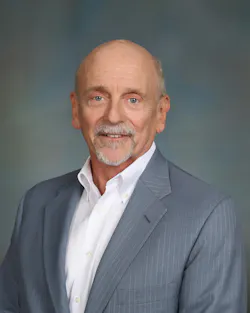
Paul Brown is a retired New York City Fire captain and educator. A third-generation firefighter, Brown spent over thirty years as a first responder. While a member of the FDNY Incident Management Team, he deployed to numerous disasters and wildfires throughout the nation. He speaks regularly on managing crises, high-stakes decision making and organizational change.
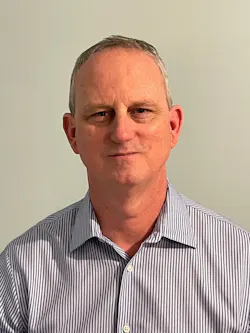
André Kotzé is the CEO of AirtimeBA and an executive coach with more than three decades of experience in organizational development and crisis leadership. A South African Defence Force veteran and former mountain-rescue operator, he works globally with institutions including the World Economic Forum and the Wharton School.
About the Author
 Ryan Baker
Ryan Baker
Associate Editor
Ryan Baker is a writer and associate editor with prior experiences in online and print production. Ryan is an associate editor for Firehouse with a master's degree in sciences of communication from the University of Wisconsin-Whitewater. He recently completed a year of teaching Intro to Public Speaking at UW-Whitewater, as part of his graduate program. Ryan acquired his bachelor's degree in journalism in 2023 from UW-Whitewater, and operates currently out of Minneapolis, MN. Baker, also writes freelances for the Ultimate Frisbee Association (UFA) in his free time, while also umpiring baseball for various ages across the Twin Cities Metro Area.