Fireground Incident Action Plan: Time Is Your Enemy
Key Takeaways
- Time delays that occur between the moment that dispatch receives a 9-1-1 call reporting a fire, crews’ arrival and water on the fire allow a structure to be further compromised, occupants to be placed in elevated danger and the environment to become more dangerous.
- Changes that occurred during the COVID years changed the way that the potential for finding fire victims as it relates to time of day must be viewed.
- Exceptional engine and truck companies that understand that reducing the time that it takes to put water on the fire and search occupiable spaces are created through hours of dedicated training and an obsession to be elite at their craft.
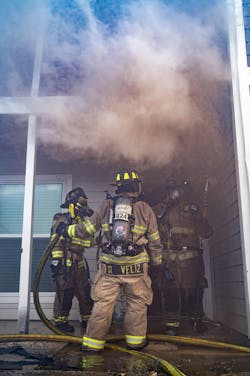
Fireground experience and recent studies tell us that time has a direct connection to multiple fireground factors. Unfortunately, we often find this prominent operational influence tucked toward the end of whatever size-up acronym that we use, which allows it to become a discounted piece of intelligence in the puzzle that we call the fireground.
Neglecting to acknowledge and understand the multiple elements of crucial information that’s hidden inside of the acronym can have significant negative effects on a fire suppression operation and firefighter safety. The fireground clock starts ticking well before dispatch receives the 9-1-1 call reporting a fire. Time delays that occur between that moment, crews’ arrival and water on the fire allow a structure to be further compromised, occupants to be placed in elevated danger and the environment to become more dangerous.
On arrival, it’s essential to focus on critical fireground factors, such as life hazard, fire extent and location, building construction, and occupancy during initial size-up of the building. However, it also is important to recognize that time also must be viewed as a key component of this process. The fireground is a dangerous and dynamic environment that requires fast-paced operations and prompt decision-making within extremely limited periods of discretionary time. Time isn’t your friend, and if its importance is disregarded, you will lose the battle. To gain a better appreciation of the significance of time, one must examine the consequences that can result from failure to recognize the prominent role that time plays in fireground operations.
NFPA standards
NFPA 1710: Standard for the Organization and Deployment of Fire Suppression Operations, Emergency Medical Operations, and Special Operations to the Public by Career Fire Departments and NFPA 1720: Standard for the Organization and Deployment of Fire Suppression Operations, Emergency Medical Operations, and Special Operations to the Public by Volunteer Fire Departments contain benchmarks for response time and resource deployment at fires and EMS incidents. These performance objectives vary in the geographic form of your community (urban, suburban, rural, remote) and type of department.
Time-related recommendations that are included in the standards encompass call-taking and call-processing; turnout time (firefighters dressed and in responding units); travel time for the first-arriving pumper and full first-alarm assignment; travel time and service levels (first responder/advanced life support) for emergency medical response; and staffing levels for fire apparatus and fire responses that are based on the occupancy and hazard type of the building.
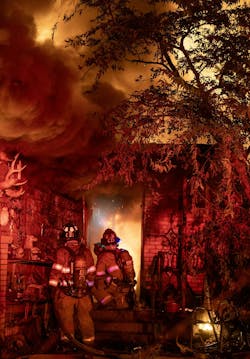
The standards also stipulate that departments should meet these time frames 90 percent of the time, with flexibility once again given based on the demand zone (geographic area) and type of department.
These benchmarks were developed to support operational effectiveness, adequate staffing and firefighter safety and to defend the level of resources that are required to mitigate emergency incidents. It’s a valid goal for which every department should strive.
However, experience tells us that it takes years of consistent work at the administrative level to gain the support and the budgetary resources that are needed to implement these response and staffing standards. This is time that mission-driven firefighters who encounter the dangers that are associated with fireground operations daily don’t possess.
Turnout/travel time
The time that it takes fire units to travel to the site of an incident and for firefighters to respond from elsewhere to their respective firehouses can be affected negatively in a variety of ways.
Turnout time is the time that it takes for firefighters to dress and be seated in their assigned vehicle. This start of response plays a critical role in the overall time that it takes to arrive at an incident. Complacent, apathetic firefighters move slowly; firefighters who are committed to the mission understand that quick turnout times can mean the difference in occupant survival.
Call volume and limited staffing also delay response to incidents. Urban departments that have high run numbers can be overwhelmed daily. Use of off-duty callback and mutual-aid units might be the norm, which adds several minutes to on-scene time. Volunteer departments that have limited available staff, particularly during daytime hours, experience increased response times. This also might occur during nighttime hours as members respond from home. Many communities experience heavy traffic volume daily, while others might face seasonal increases in population that result in heavier than normal traffic. For example, the roads of one community that’s located on the main corridor to the George Washington Bridge become deadlocked every weekend, virtually shutting down any travel on local roads.
Response to incidents that are in rural and remote areas require increased travel time that has a negative effect on operations.
Weather can be another major contributor to response delays. Just like the postal worker, we are expected to do our job regardless of conditions. However, snow, heavy rain, wind, flooding and severe storms, such as hurricanes and tornadoes, adversely affect our ability to respond to and operate on the fireground.
Reaching the incident safely and in a timely manner is the first step in response.
Time of day/week/year
For years, the time of day was correctly linked with the potential for victims being present within a fire building. Common sense and search and rescue statistics indicate that fires that occur during the nighttime hours carry a much higher potential for occupant rescue.
Equally, it also is important to remember that the changes to individuals’ work and sleep patterns that occurred during the recent COVID years changed the way that the potential for finding fire victims as it relates to the time of day is viewed. Before COVID, during weekday hours, individuals typically were found at their place of employment, which increased life-safety issues in commercial and business-type occupancies. After COVID, an increase in home-based employment resulted in countless residential structures being occupied during daytime hours.
Weekends suggest the possibility of increased occupancy levels from overnight visitors in both residential and commercial (hotel/motel) settings.
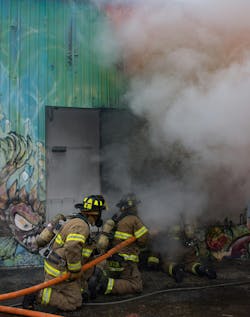
The time of year also might provide some clues as to the occupancy of a structure.
Summer implies increased occupancy levels in homes that are in popular vacation rental and second home locations. During the winter season, an increase in vacant structures in these locations might be seen because of the many homes that sit seasonally unoccupied, which increases the potential for fires to be well involved on arrival.
Fireground time
The time that a structure is allowed to burn has a direct effect on fire development, temperature, heat release rates, and the potential for flashover and backdraft. Studies reveal that time from onset of fire to flashover in the modern environment is less than five minutes. Of course, fire grows quickly and with complete disregard of the time that it takes for crews to arrive. Depending on response time, this creates a situation in which fireground operations are in either pre- or post-flashover condition. Recognizing that there is a meaningful difference between these two conditions is a key factor in selecting the correct strategy and tactics.
Extended burn time also leads to a prolonged period during which the structural components of the building are being attacked and rapidly compromised, to create heightened opportunities for early collapse. Many of the structures of today are composed of lightweight wood components and other engineered products. Studies and fireground experience show that these building materials can collapse within six minutes of direct flame impingement, which makes this a significant factor in selecting the appropriate incident action plan (IAP).
Although issues that surround the use of engineered lightweight systems in building construction are constant in our minds, don’t discount concerns with the other four building construction types and the many hybrid buildings that are common today. The key takeaway here is that, regardless of the material that’s involved, the longer that the fire is allowed to attack the building, the more compromised and hazardous the operating environment becomes.
First-arriving units are obligated to conduct an initial size-up of the fire scene. Relaying this information and painting a picture for other incoming apparatus is essential to setting the foundation for the entire operation. Many firefighters and fire officers communicated to us that these reports take too much time and are a disruption to their initial operations. This is far from the truth. The information in this initial report can be gained and verbalized by a competent individual sitting in the front right seat of the apparatus in no more than 30 seconds, offering adequate time to begin tactical operations. Although the situation that’s found (occupant rescue, fire load, exposure issues) might not allow this initial narrative to include information from the rear of the building, a more in-depth 360-degree size-up can be completed and transmitted by the next-arriving unit, officer or firefighter who’s assigned to complete this task.
The fireground is a dynamic and hostile environment where most, if not all, decisions are made in less than one minute. As a result, time becomes a vital element in the decision-making process. Rapidly forming solutions and making sound decisions in this brief period with limited information generates greater risk and creates a more dangerous fireground; added discretionary time can reduce these threats and allow the development of more thorough and rational decisions.
During a structure fire, these critical decisions are made at three levels: task (firefighter/crew assigned), tactical (supervising company/division officer) and strategic (incident command). To support a safe and efficient operating environment and maintain strict command and control of the incident, all three levels must be in sync with the established strategic and tactical objectives and be capable of making prompt decisions under adverse conditions within extremely limited time frames. Any time that’s lost to indecision places firefighters and occupants in greater peril and has a negative effect on the fire suppression operation.
As noted above, extended burn times reduce the potential for victim survival and increase the risks that are found within the operating environment. Stretching and advancing attack lines, establishing a water supply, extinguishing fire, forcing entry, searching for victims and throwing ladders take time. Exceptional engine and truck companies acknowledge this fact and understand that reducing the time that it takes to put water on the fire and search occupiable spaces leads to saving lives and property. However, these rockstar companies don’t materialize overnight. They are created through hours of dedicated training and an obsession to be elite at their craft. They recognize that seconds count and that enhanced preparation is key to completing their assigned fireground tasks swiftly and with purpose.
Time saved equals lives saved. This fact is indisputable.
NFPA standards also provide career and volunteer fire departments with recommended staffing levels for individual fire apparatus and for response to various building types. In addition to these standards, numerous studies that are related to determining the level of staffing that’s required to initiate a safe and effective fire suppression operation are available. Although these standards and studies provide us with minimum staffing numbers, common sense and experience tell us that greater amounts of responding firefighters equal a safer and more efficient fireground, eliminate task saturation, increase firefighter safety, reduce the time to complete assigned tasks and improve the level of victim survivability. Conditions that are found on arrival dictate the need to secure additional resources. First-arriving officers must be given the ability to request additional alarms without hesitation; incident commanders (ICs) must be given the ability to ensure that on-scene staffing matches their chosen strategy and tactics.
A tactical staging area of two engine companies and one ladder company (with appropriate staffing) should be on scene and ready for immediate deployment. In addition, the time that members can operate on the fireground before being assigned to rehabilitation/medical monitoring should be incorporated into the decision to request additional resources.
Rotation of on-scene personnel should be viewed as a temporary solution to the problem, particularly during extreme weather conditions. Companies or individual members who are removed from service for extended recovery periods or medical conditions should be replaced immediately.
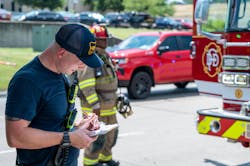
In career departments, budget concerns are a typical excuse for reduced staffing levels. In volunteer departments, the availability of responders is a common source of concern. An example of the challenges that are involved in staffing occurred during a July 2025 fire in Massachusetts where 10 residents of an assisted-living facility perished during a structure fire. This was a tragic loss of life that would have been higher if not for the heroic efforts of on- and off-duty firefighters.
Immediately after the incident, on-duty staffing levels that didn’t meet national standards were brought to the forefront by union and fire department officials, including the fire chief. Several days after the incident, after recognizing the multiple advantages that additional staffing would bring to the fireground, city leaders announced an increase in on-duty staffing, and the commonwealth awarded funding to support additional hires.
If your department suffers from this condition, it’s time to be creative and make every attempt to fix it. Automatic aid, mutual aid, resource-sharing, regionalization, budget increases, enhanced recruitment and transition to a combination department might be the answer for ensuring that an appropriate number of firefighters will show up when someone calls 9-1-1.
Prompt and effective fireground communication during the early phases of an incident is essential to firefighter safety and command and control of the incident. Based on multiple fireground injury and fatality reports, the first 15 minutes of a fire suppression operation are identified as the most hazardous period for operating members. Paying attention to fireground benchmarks, such as firefighters exiting with low-air alarms (increased potential for a mayday), fire extension, increasing smoke conditions, delayed forcible entry, difficulty finding the fire, and conflicting interior and exterior conditions, also might provide some indication of time on scene and the potential for increased threats.
The roof, rear and interior of a structure are three locations on the fireground that the IC is unable to view. Timely situational or CAN (conditions, actions, needs) reports from firefighters who are operating in these positions are critical to the operation. Any disruption in obtaining this information negatively affects the IC’s ability to make sound decisions. Urgent messages must be transmitted without hesitation. This vital intelligence is a major ingredient in the decision-making process and the safety of operating members. If you see something, say something.
Mayday messages should be transmitted immediately upon recognition of a problem. Alerting the IC of your problem early is essential to timely RIC activation and detailed management of the rescue operation. The seconds that are saved by promptly transmitting a mayday could be the difference between a life saved and a failed rescue attempt. Don’t be the firefighter who hesitates.
Losing track of time on scene is extremely easy for all involved members. To resolve this issue, many departments have standard operating guidelines or standard operating procedures that require dispatch centers to notify the command post at specific intervals when operating at an incident. This keeps the IC focused on time on scene, allows an assessment of the ongoing strategy and tactics, and provides an opportunity to communicate required progress reports.
Another common solution to identifying time on scene that we observed is attaching a stopwatch or clock to vehicle-mounted and mobile command boards. The key is keeping the clock’s battery charged and remembering to use it.
Firefighter time
One key point that might not be recognized as an element of time as it relates to the fireground is the time that responding members have been in their assigned position, their time on the department and their level of experience. More experienced members bring more knowledge, skill and ability to the fireground. This experience supports a measure of operational intelligence that enables these firefighters and fire officers the capacity to operate more effectively and efficiently and with more confidence. At this level, reading the fireground becomes habitual, completing assignments is speedier, recognizing hazards is easier and decision-making is more composed. This degree of operational experience can save valuable seconds on the fireground.
Experience and intellect
When we consider what time represents in the size-up acronym, we habitually focus on time of day and the potential for trapped occupants. Yes, these are valid concerns that shouldn’t be overlooked. However, time has a significant and acute negative effect on multiple fireground disciplines in a pattern that isn’t conducive to occupant survivability, firefighter safety, and effective and efficient operations. To meet the presented challenges, ICs must utilize their experience and strategic and tactical intellect to incorporate these influential factors into the overall IAP. Failure to do so results in substandard management of the fireground and a less than successful outcome. The clock is ticking, and time isn’t on your side.
About the Author
 Robert Moran
Robert Moran
Robert Moran served as fire chief of the Brewster, MA, Fire Rescue Department from 2010–2024. Prior to that, he served 26 years with the Englewood, NJ, Fire Department, retiring in 2010 after 12 years as chief of department. Moran holds a master’s degree from Fairleigh Dickinson University, is a certified public manager, and has a Chief Fire Officer (CFO) designation from the Center for Public Safety Excellence. He serves as an adjunct instructor for Kean University and the New Jersey Division of Fire Safety and lectures at numerous regional and national fire service conferences. Along with his training partner, John Lewis, Moran writes the back page of the New York State Association of Fire Chiefs' Size-Up magazine and operates Jersey Guys Fire Service Training.
 John J. Lewis
John J. Lewis
John J. Lewis is a retired lieutenant from the Passaic, NJ, Fire Department, formerly assigned as the training and safety officer. He remains active in fire service as a 20-plus-year instructor at the Bergen County, NJ, Fire Academy and as an adjunct instructor for Kean University/New Jersey Division of Fire Safety. Along with his partner, Robert Moran, Lewis has written and presented training programs throughout the country and co-authored many articles for fire service publications.