Carbon Monoxide Risks in Gas-Fired Wall Heaters & Response Procedures for Firefighters
Key Highlights
- On arrival at a reported carbon monoxide (CO) incident, responding fire department personnel should speak with available occupants to determine whether everyone evacuated the structure, whether anyone currently feels ill or recently felt sick, where CO detectors were triggered into alarm, and the presence and recent use of any combustion equipment or appliances.
- Firefighters who respond to a reported CO incident always should wear full PPE, including SCBA.
- Fire department personnel who respond to a CO incident must be aware that windy conditions can cause backdrafts, particularly when the flues of gas-fired wall heaters aren't appropriately capped.
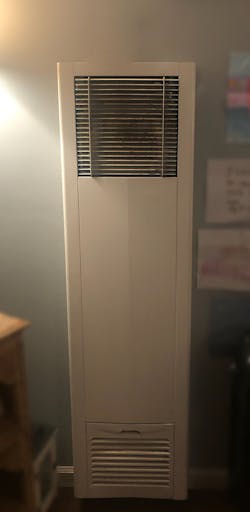
During winter, many people rely on fuel-fired wall heaters in hopes of keeping the harsh cold at bay. Unfortunately, the heating appliances are one of the most notorious emitters of carbon monoxide (CO).
Fire department personnel must follow evidence-based procedures to investigate and mitigate CO incidents, including using detectors, checking appliances and educating residents. Ultimately, awareness, routine maintenance and adherence to safety protocols are vital for protecting families from CO poisoning.
What is CO?
CO is odorless, tasteless and colorless and stems from the incomplete burning of fuels, such as gasoline, diesel, wood, charcoal, propane and natural gas. CO has approximately 250 times greater affinity for hemoglobin than oxygen. It binds to hemoglobin on red blood cells to form carboxyhemoglobin and reduces the amount of oxygen that’s available to the heart, brain and lungs. Depending on the concentration and duration of exposure, effects can vary from headache to death. This range illustrates the challenges in diagnosing cases and identifying the source of CO within a structure.
Potential sources of CO in the home include gas clothes dryers, gas ranges, gas water heaters, gas space heaters and gas wall heaters. The latter are common in older and low-income properties. Often, they fall into a state of disrepair and might leak CO.
Properly maintained gas-fired heating appliances produce little CO. However, incorrectly tuned burners, a circumstance that can be prevalent with gas-fired wall heaters, can produce CO in extremely high concentrations.
Types, features and operation
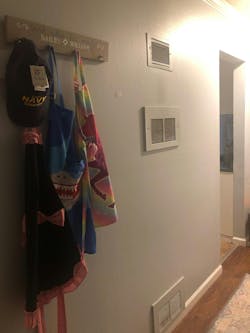
A close cousin of the floor furnace, the ubiquitous gas-fired wall heater can be found in hallways, living rooms, bathrooms and bedrooms. Their ease of operation, perceived low maintenance and economic benefit make them a go-to choice for landlords. Furthermore, since the appliance is located within the stud bay of a wall, it can enhance efficiency by heating two areas at once, known as double siding. One type of double-sided device simply employs vent grates attached to the other side of the wall.
Typically, it’s recommended to have 20 BTUs per square foot for comfortable heating. For example, a 20 x 20-foot room would need an 8,000 BTU wall heater, which is a common size in many apartment buildings. However, using this heater to warm additional rooms might require running it for longer periods, which increases the potential exposure to CO, because 8,000 BTUs are insufficient to heat an entire unit.
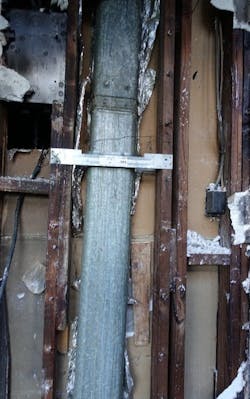
Temperature controls might be found on the unit itself or a short distance away in the form of a remote thermostat. Older units might have a hand-operated valve that has settings, such as “off-low-medium-high.” The gas shut-off valve and piloting structures usually are located at the bottom of the unit. As such, the products of combustion are vented upward, utilizing a between-wall vent pipe that has a clearance of 0–1 inches. The vent is oval-shaped to allow residence between the compact wooden wall studs. Legacy structures or older devices might use asbestos flues, which can deteriorate/separate in the concealed space, allowing CO to seep out unchecked.
Another type of system, the direct-vent wall heater, exhausts products of combustion through a horizontal vent that passes through the wall to the exterior of the building.
Less common are wall heaters that are designed to vent heated gases into the room itself. Building codes might disallow this type of installation.
Most gas-fired wall heaters employ a metal heat exchanger that transfers heat from combustion to the surrounding air for heating purposes.
Protecting families from CO poisoning
Gas-fired wall heaters are significant sources of CO. The units, particularly those that are in older or poorly maintained homes, are particularly risky when they aren’t properly serviced. Regular inspection, maintenance and safe operation of gas-fired heating appliances are essential to prevent CO exposure. Ultimately, awareness, routine maintenance and adherence to safety protocols are vital for protecting families from CO poisoning.
Essential field checklist for CO incident response
- Always wear full PPE, including SCBA. (Concentrations may reach 4,000 ppm or more.)
- Address any medical issues that resulted from exposure.
- Check all floors for recent use of gas-fired devices when applicable.
- Look for rags or other materials that were stuffed into flue openings to block drafts.
- Ensure that the flame in appliances is a deep blue, because a yellow flame may suggest improper fuel-air mixture.
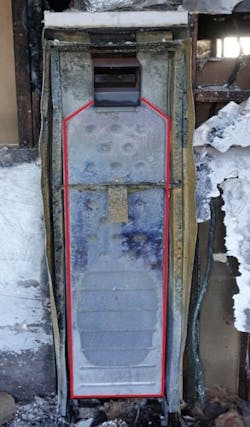
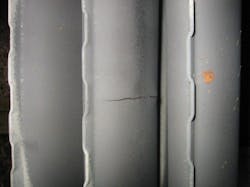
- Shine a light through the heater grills to look for cracks that were caused by heat exchanger expansion and contraction.
- Verify that the flue passes through and extends above the roof; it often can be damaged at attic level or between floors.
- Be aware that windy conditions can cause backdrafts, particularly when flues aren’t appropriately capped.
- Shut off malfunctioning devices and contact the utility company.
- Educate the public on the importance of smoke and CO detectors.
If CO readings are within normal limits based on local policy and the structure is deemed safe, inform residents about CO safety and provide instructions for detector location, operation and testing. Even when appliances appear to be in normal working order, advise residents that they can contact the utility company for a further evaluation if they have any concerns.
Evidence-based response procedures
Fire department personnel are tasked with responding to a variety of hazards. It’s essential that evidence-based practices are employed when managing CO incidents.
Numerous types of atmospheric monitors are utilized by departments; therefore, it’s critical to adhere to the manufacturer’s instructions for each device to ensure optimal safety and minimize liability. The Oakland, CA, Fire Department (OFD) uses MSA’s Altair 4X detector, which is configured to detect lower explosive limit (LEL), oxygen and CO.
The American Society of Heating, Refrigerating, and Air-Conditioning Engineers has set 9 parts per million (PPM) of CO as the maximum allowable concentration for short-term exposure within residential environments. Accordingly, the OFD’s devices are calibrated to a 9 ppm threshold.
The following provides general guidelines for investigating and mitigating CO incidents.
When a call for service is placed, the dispatch center should instruct occupants to leave the building and inquire whether anyone is feeling unwell.
Before testing the structure’s air for CO, the monitoring device must be calibrated to manufacturer specifications and turned on in fresh air. This step aids in ensuring that the sensors are present and ready for reading.
On arrival, fire department personnel should speak with available occupants to determine:
- Whether everyone evacuated the building.
- Whether anyone currently feels ill or recently felt sick.
- Where homeowner CO detectors were triggered into alarm.
- The presence and recent use of any combustion equipment or appliances.
All interviews should take place outside of the suspected contaminated areas.
Once PPE, including SCBA, is donned, members should use the monitor to inspect the property and confirm whether dangerous CO levels exist. Take the initial reading just inside of the doorway to assess the starting level of CO.
A systematic search for people and animals should begin and include looking in bedrooms prior to appliance evaluation, given that victims might be present.
It’s important to remember that CO can exist at any level or height within a building, because its vapor density is 0.97. (Vapor density refers to how dense a gas is compared with air, which has a value of 1. Because CO’s vapor density is close to that of air, it mixes easily throughout a space.)
Once the structure is cleared for victims, appliance evaluation can occur.
Maintenance and safety concerns
When the thermostat signals for heat, the wall heater burner turns on and warms the air that’s inside and around the heat exchanger. This heated air spreads to the surrounding space, and combustion gases are safely vented outside. The enclosed nature of both the heat exchanger and the flue prevent CO from entering the habitable zone.
Unfortunately, many appliances have exceeded their useful service life and are showing signs of deterioration. According to one report, Northern California’s Pacific Gas & Electric (PG&E) found that one in five heaters that it inspected had some type of hazardous condition brewing. For example, expansion and contraction (as a result of thermal properties) occasionally produce cracks that allow products of combustion into the room.
Ultimately, many defects go unnoticed for long periods. As a result, owner manuals recommend wall heaters be inspected by a licensed HVAC contractor annually and cleaned/cleared to avoid CO production.
About the Author
 Jerome Hathaway
Jerome Hathaway
Jerome Hathaway is a battalion chief with the Oakland, CA, Fire Department and oversees the its carbon monoxide response program. He has taught building construction for more than 15 years. Hathaway is a California State Fire Marshal Certified Training Instructor and Fire Prevention Officer. He holds associate degrees in fire science and paramedic education and a bachelor’s degree in fire investigation/administration. Hathaway is a Certified Fire and Explosion Investigator and owns Built Environment Performance, which is a home and commercial inspection company.