Firefighting Challenges: Modern Half-Story Construction
Key Takeaways
- Understanding the link and similarities between the traditional 1½-story house and the 2-story bonus house is key for the fireground incident commander, the officer of the first-arriving engine company and the truck officer, to stay ahead of circumstances and avoid unexpected changes in conditions.
- The half-story room of a house creates three separate voids that run the entire length of the residence, oriented either Alpha-to-Charlie or Bravo-to-Delta, depending on the orientation of the ridge.
- Although a house might appear from one or two sides to be a one-story structure, firefighters can suspect the presence of a finished attic space when they see gable windows, window air conditioners, steep roof pitches and/or doghouse-style dormers.
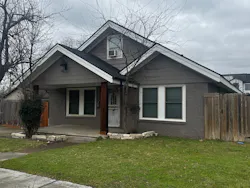
I noticed that the structure had a second story when I found the stairs. From the front, it simply looked like another one-story structure that had a tall attic space.
I moved upstairs to search and found a noticeable heat change—not the heat that tells you where the fire is, but heat that told me that the area that I was in had fire all around, like being in an oven. It was saturating.
I requested a second line to the second floor and searched the two rooms and the bathroom. By the time that I finished, my gear was completely inundated with heat. Every part of me felt hot and like I couldn’t get away from it. I remember thinking, “This is the hottest fire I ever searched.”
What I didn’t realize at the time was that I was experiencing the hallmarks of knee wall fires: high heat, low visibility and no fire. It turned out that the fire surrounded the second floor from all sides via the interconnected void spaces. The knee walls allowed for unmitigated travel between void spaces and created an oven-like condition in the interior spaces.
Avoid unexpected changes
Knee walls—short walls that are built around knee height in areas that have limited space to serve as the boundary to the room—are the common construction feature that bridges the legacy half-story with the modern-day two-story. In the southern part of the United States, the 1½-story house is much more common than the 2½-story house that’s found in the Northeast. The lessons applied with the 1½-story house aren’t the same as with a 2½-story house. With the addition of the third floor, a tactical problem that goes beyond this article is created.
A half-story results when a finished attic functions as additional living space, which commonly is understood as a bonus room. The traditional 1½-story house that we’re most familiar with is a legacy construction that was built anywhere from the 1930s to the 1980s. What’s more recent and presents very similar tactical challenges is the 2-story ranch.
A 2-story house in which the second floor is a bonus room is referred to here simply as a 2-story bonus. This style of house presents many of the problems with void spaces that are encountered in the smaller scale 1½-story house, but the residences cover a significantly larger footprint. (It isn’t uncommon to find a 2-story bonus that averages 2,000–5,000 square feet of floor space.) The two types of construction both contain knee walls, and knee walls should be associated with interconnected void spaces.
Understanding the link and similarities between the traditional 1½-story house and the 2-story bonus is key for the incident commander, the first engine officer and the truck officer. This allows them to stay ahead of circumstances and avoid unexpected changes in conditions.
Half-story tactical basis
The very basic description of a half-story is a room that’s built into a void space. What normally would be seen as the attic includes a walled-in, finished space: Rather than finishing the room all the way to the smallest corner, the room stops at a point, and a knee wall is built, thus creating a void space on the other side. In true 1½-story houses, the voids run parallel to the ridge and usually the length of the home.
The top plate to knee walls is fastened to the underside of the roof rafters, thus lacking any fire stops between each. Similar to balloon-frame construction, the areas that are inside of the void are interconnected, and fire can travel from void to void unabated. Because there isn’t a top plate to a knee wall, all three voids are connected by the spaces that are between the roof rafters unless extra steps are taken to put in fire stops between each rafter. There’s space that’s equal to the height of the rafter multiplied by the spacing on center for each rafter bay for fire to travel from one void to the next.
The half-story room creates three separate voids that run the entire length of the home, oriented either Alpha-to-Charlie or Bravo-to-Delta, depending on the orientation of the ridge. From the exterior, the house might appear from one or two sides to be a one-story structure; however, gable windows, window air conditioners, steep roof pitches and doghouse-style dormers that are in the roof line reveal the presence, or suspected presence, of a finished attic space. Whether the space truly is built out or not, if size-up tells you that this is a possibility—or the presence of these voids is even suspected—that information must be relayed to command. This makes a 360-degree size-up incredibly important for everyone involved.
Tactical considerations
If the fire involves a single half-story void space, the potential for travel to the other voids is significant. For companies that operate on the upper floor for extinguishment or search operations, that space must be thought of as a room that’s surrounded by fire on at least three sides, most notably on the same level and possibly hidden.
In the “Recognizing and Combating Fires in Knee Walls” episode of his Combat Ready Fire Training webcast, Chief Nick Martin relates that the fire condition hallmarks to look for when knee walls are encountered are “high heat, low visibility and can’t find the fire.” With fire potentially on three sides of a room, it’s no surprise why we have these three conditions. The temperature increase is from the multiple areas of heat buildup; the low visibility is from the smoke accumulation in the room and surrounding spaces; and the failure to find—and, therefore, suppress—the fire is because of its presence in the void spaces that usually isn’t encountered.
As the presence of balloon-frame construction diminished, platform framing taught firefighters that if there’s high heat, the fire is in the room with them; and if it isn’t there, then the fire is above them. With knee walls and half-stories, the fire is in voids that are around you. When you search voids above and find some fire and heat, you assume that you’re in the right place, so you stay on that track. As conditions worsen, you either figure out that you must look in the walls or end up getting driven out by conditions.
The 2-story bonus
Knee walls and the creation of interconnected but not easily accessible void spaces create challenges in smaller 1½-story houses. Taking this same concept, very similar challenges are found in many modern 2-story houses. New construction 2-story houses rarely are built as a box on top of another box. For a more accurate description, think of the modern 2-story house as a box on top of a box with a shell around the outside. This shell creates a large void space that adheres to the same principles as noted above in the 1½-story house: Knee walls that have no fire stops are created in large open attics. Even where there are no discernable knee walls, triangular voids can be present and connected to the voids that are above and around. This leads to the same tactical problems of high heat, low visibility and inability to find the fire.
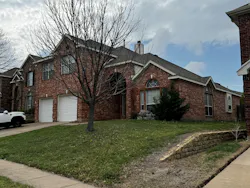
Equating a 2-story bonus room with a 1½-story house allows the mind of the officer(s) who is on scene to stay ahead of how the incident will progress. To generalize, any 2-story house that has a roof line that extends from above the second floor to the roof line of the first floor should be expected to have knee walls and interconnected void spaces throughout the attic.
With the contemporary examples, the void spaces are even larger than those that are in the 1½-story house, which usually has a much smaller footprint. It’s the choke points that are around the knee walls that allow for significant transmission of heat and smoke that don’t allow for sufficient extinguishment with hose streams.
Possibly the greatest challenge with these 2-story bonus examples is that, with a true 1½-story structure, it’s much easier to identify the construction features and to combat the tactical problems, but with the 2-story bonus, it isn’t as easy. The first engine’s size-up rightfully will call it a 2-story but in doing so will overlook the features that identify the knee walls and void spaces.
Tactical recommendations
The discovery of a half-story changes tactics tremendously. An additional floor means much more area to search for victims, at least one additional hoseline and the requirement of additional ladders. The need to recognize the presence of a half-story and communicate that finding to command or incoming companies is of utmost importance. As noted above, even suspecting that a half-story is present requires investigation, clearing for victims, and hose teams and ventilation teams to work in concert with each other. In regard to the latter, either task requires an anticipation of the void spaces and how they’re connected. Hose teams must understand where to open up the walls and ceilings, and the ventilation team should communicate the location of the fire and understand when it might need to cut multiple vent holes or open multiple spaces with one hole.
Knee walls require the hose team to break from the tunnel vision that searching for fire is localized to looking only in the attic above. Focusing only above, heat and smoke will be found but doesn’t allow adequate water to reach the seat of the fire.
As visibility worsens, the use of a thermal imaging camera (TIC) assists in locating heated walls and ceilings behind which void spaces lie. A word of caution: The use of the TIC might be limited when the room is becoming thoroughly saturated with heat. Before breaching the wall for extinguishment, a hoseline must be in place to avoid a sudden rise in temperature to an already heated environment.
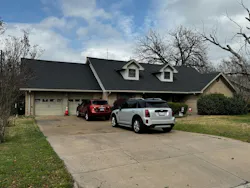
Vertical ventilation is a paramount consideration in half-story and 2-story bonus tactics.
With any delay in locating the fire, a properly placed ventilation hole relieves the heat buildup and lateral travel of the fire while the hose team makes the room and roots out any fire that’s within the voids. Ventilation teams should understand that in the case of 2-story bonus construction, the need for multiple vent holes is a strong possibility. Ventilating each separate space and communicating its orientation within the structure to interior teams relieve the high heat and low visibility and allow the hose teams to find the fire and the search teams to finish the primary. For the 1½-story house, the distance from the ridge to the soffit usually is steeper and longer than it is in other houses. Cutting a long, narrow ventilation hole from ridge to soffit, or what we refer to as the half-story long cut (similar to the Milwaukee cut), helps the ventilation team to identify whether a knee wall is present. If so, the team can identify the construction feature, communicate it and have two of the three voids vented, yielding positive results. If you get about halfway down the roof running parallel with the rafters and meet resistance, you likely hit the knee wall and will be able to see the top plate when the roofing material is louvered. This style of cut also allows for a greater surface area opening and is an easier cut to make when working from a roof ladder.
Old & new commonality
There’s a saying in the fire service that everything is cyclical. It comes back around eventually, just old tricks with new names. Half-story considerations are no different. The 1½- and 2½-story frame houses have been around since the 1930s, making these simply an old problem revisited. It’s through this old experience that you can find the commonalities and approach this more contemporary problem with an awareness of the problems and tactics that work. With new construction methods and decorative finishing techniques, we find a commonality.
About the Author
 Jake Henderson
Jake Henderson
Jake Henderson is a battalion chief for the Fort Worth, TX, Fire Department, where he has served for 20 years. Currently, Henderson is assigned to Battalion 1 after serving for nearly a decade as a truck captain. He holds an associate degree in fire protection from Weatherford College, a bachelor’s degree in emergency management administration from West Texas A&M and a Master Firefighter Certification.