Why Doing Hard Things Builds Mental Resilience in Firefighters
Key Takeaways
- What many members of the fire service only now are beginning to fully appreciate is that mental resilience is highly trainable.
- A well-conditioned nervous system is far more likely to remain composed and task-focused when conditions deteriorate on the fireground and on scene of other emergency incidents.
- Hard firefighter training doesn’t just build muscle and condition the cardiovascular system; it helps to build a more adaptable and resilient brain.
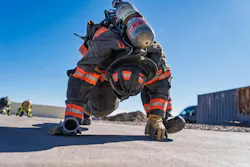
You can have the right hose stretch. You can know the building construction. You can check every procedural box in the book. However, when your body and mind get stretched to the edge of their capabilities, something deeper shows up: your nervous system. In those moments, performance no longer is just about what you know. It’s about how well your body and brain can function under stress.
What many in the fire service are beginning to fully appreciate is that mental resilience isn’t purely a personality trait. It’s highly trainable. One of the most powerful ways to build it is through difficult, consistent physical training.
This isn’t about gym culture or aesthetics. It isn’t about looking good. The connection between physical training and mental resilience is rooted in physiology and neuroscience. When understood correctly, fitness becomes far more than a wellness initiative; it becomes operational preparation.
Properly trained stress response
Every firefighter has felt the physiological shift on a significant call: breathing changes, vision narrows, time seems to move differently. This is the stress response system activating, driven largely by the sympathetic nervous system and the hypothalamic-pituitary-adrenal (HPA) axis. Stress itself isn’t the enemy. In fact, the human body is designed to perform under acute stress. The real question is whether that stress response was trained properly.
On July 20, 2012, I experienced all of this as one of the first fire medics at the Aurora Theater Shooting. I can say without a shadow of a doubt that my fitness and doing hard things previously helped me more than anything on that call. (Several active-shooter trainings as a member of two SWAT teams as a medic gave me more training on the subject than most.) The decision to push myself physically and mentally hundreds of times prior to the call is what I leaned on most.
An untrained nervous system tends to overreact. A partially trained one might hesitate or degrade under pressure. A well-conditioned system—one that experienced controlled physiological stress repeatedly—is far more likely to remain composed and task-focused when conditions deteriorate. This is where physical training becomes such a powerful tool. When done correctly, it functions as controlled exposure to stress.
Controlled discomfort
During a hard workout, the body experiences many of the same signals that appear during emergency operations. Heart rate elevates. Breathing becomes labored. Core temperature rises. Muscles fatigue. Psychological discomfort builds. From a physiological standpoint, the body doesn’t know whether the stress is coming from a stair climb in gear or a demanding training session in the bay. What it does know is that it has been here before.
This familiarity isn’t trivial. Research consistently shows that regular aerobic exercise reduces neuroendocrine reactivity to psychological stress and can blunt excessive cortisol and heart rate responses to future stressors. In practical terms, the more often that a firefighter experiences controlled discomfort in training, the less likely the body is to interpret similar sensations as threatening on calls. Over time, what once felt overwhelming begins to feel manageable. This is one of the biological foundations of what many in the fire service describe as earned confidence.
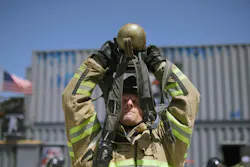
One of the most important mechanisms behind this adaptation involves brain-derived neurotrophic factor (BDNF). Often described as fertilizer for the brain, BDNF supports neuron survival, growth and synaptic plasticity, particularly in regions that are responsible for learning, memory and executive function. Exercise, particularly consistent aerobic and moderate-to-high-intensity work, has been shown repeatedly to increase BDNF levels.
For firefighters, this matters more than most realize. Elevated BDNF is associated with improved cognitive flexibility, better learning under stress, enhanced memory and stronger emotional regulation. In other words, hard training doesn’t just build muscle and condition the cardiovascular system; it quite literally helps to build a more adaptable and resilient brain.
Better-prepared physiology
Alongside these neurological adaptations are important hormonal and autonomic changes. Two physiological markers that strongly correlate with resilience are cortisol regulation and heart rate variability (HRV). Cortisol plays a necessary role in the body’s stress response, but chronically dysregulated cortisol is associated with fatigue, impaired cognition, mood instability and poor recovery. Regular physical training helps to normalize cortisol patterns over time, which reduces excessive biological reactivity to stress.
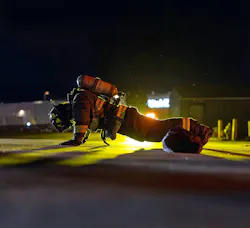
HRV tells a similar story. Higher HRV generally is associated with better stress tolerance, faster recovery and improved emotional regulation. Research that involved firefighters showed that HRV data can distinguish between normal and stressed operational states during training drills. Consistent aerobic conditioning, appropriately dosed high-intensity work and adequate recovery all contribute to improved HRV. This is one reason that physically fit firefighters often appear calmer and recover more quickly between demanding calls—not because they’re mentally tougher by default, but because their physiology is better prepared.
‘Stress inoculation’
There also is a powerful psychological component that experienced firefighters long have recognized intuitively. Structured physical training improves self-
efficacy—the belief in one’s ability to handle challenges. When conditions begin to deteriorate on scene, the brain constantly scans past experience for evidence. It asks, often subconsciously, “Have we handled something like this before?”
Every high-intensity workout that’s completed, every uncomfortable evolution that’s finished, and every moment in which a firefighter chooses to stay in the work instead of backing off becomes stored evidence. Over time, this builds a deep, embodied confidence that can’t be faked. It isn’t hype or surface-level motivation. It’s the quiet accumulation of proof that the individual can function under strain.
This process closely mirrors what psychologists refer to as stress inoculation. Just as a vaccine exposes the body to a manageable dose of a pathogen to build immunity, appropriately challenging physical training exposes the nervous system to manageable doses of stress. With repeated exposure, the brain becomes less reactive and more efficient when similar stress signals appear in real-world environments. Research on stress resilience showed that having behavioral control during stress exposure produces beneficial neural changes in the prefrontal cortex, which is the region that’s heavily involved in decision-making and emotional regulation.
The goal: adaptation
Beyond performance, the mental health implications for firefighters are significant. The profession carries repeated exposure to trauma, disrupted sleep cycles and chronic operational stress. The protective effect of regular physical activity in this context can’t be overstated. A large body of research links exercise with reduced symptoms of depression and anxiety, improved self-esteem and better overall cognitive function. Exercise influences key neurotransmitter systems, including serotonin, dopamine and endorphins, while also supporting structural brain health and reducing inflammatory processes that are associated with mood disorders.
Equally important is the cultural component within the firehouse. The fire service long has understood, even before the research caught up, that shared hardship builds stronger teams. Group physical training reduces social isolation and strengthens peer bonds, both of which are known protective factors for mental health. When crews train together—whether through structured training, gear circuits, stair climbs, etc.—they don’t just improve fitness; they build trust, cohesion and mutual accountability. Tight crews consistently perform better when situations become chaotic, because the relational foundation already was strengthened during training.
At the same time, modern life increasingly is engineered for comfort. Climate control, food delivery, automation and sedentary entertainment quietly have reduced the amount of daily physical stress that most people experience. The job, however, hasn’t become easier. If anything, the cognitive and operational demands on firefighters increased. This creates a widening gap between the comfort of daily life and the intensity of emergency response.
The nervous system adapts to what it experiences most often. If most of life is comfortable, high-stress environments feel more overwhelming when they arrive. When a firefighter’s weekly rhythm consistently includes controlled physical strain—heavy breathing, elevated heart rate, structured fatigue—the body recognizes the territory when it matters most.
None of this suggests that doing hard things means random punishment workouts or reckless overtraining. Smart resilience development is intentional. It blends aerobic base work, appropriately dosed high-intensity training, consistent strength work and periodic job-specific training in gear. The goal isn’t exhaustion for its own sake. The goal is adaptation, to build a system that is more difficult to overwhelm and quicker to recover.
Meaningful investment
After more than two decades in the fire service, one pattern continues to show up with remarkable consistency for me. The firefighters who perform best when the pressure rises rarely are the ones who rely on motivation in the moment. They are the ones whose systems quietly were prepared over months and years of consistent work. Science now strongly supports what many in the firehouse long suspected: Exercise strengthens the brain, hard training improves stress tolerance, and physical readiness directly supports mental resilience.
Every demanding workout is a small but meaningful investment in future performance. Every time that a firefighter chooses controlled discomfort, the nervous system learns something valuable: This level of strain is survivable, it’s manageable and it’s familiar territory. In a profession in which bad days arrive without warning, that familiarity is priceless.
Train hard. Recover well. Stay ready. When conditions deteriorate and the margin gets thin, you don’t rise to the occasion; you fall to the level of your preparation. Real preparation is built one hard day at a time.
About the Author
 John Spera
John Spera
John Spera has been a career firefighter for more than 23 years and currently works in the Denver metropolitan area. In 2008, he founded Fit to Fight Fire, which is a mission and community that are dedicated to showing up mentally and physically prepared. Spera is the co-founder of The Crucible, which is a 24-hour event where firefighters do 12 gear workouts to test their physical and mental limits to build resilience.