Winning on the Fireground: The Signs of Effective Suppression
Key Takeaways
- Without an understanding of both fire behavior and water behavior, firefighters aren't equipped with the tools to accurately interpret signs that they're making progress against an interior fire in the effort to support the search for occupants.
- The angle of the water that's applied to the overhead during an interior fire attack is key to how water travels along surfaces, but flow rate, stream choice and droplet size influence whether droplets will make it through the gas layer and "return," to put the nozzle firefighter in position to advance.
- More important than return to the nozzle firefighter who carries out an interior attack are the signs of winning: visible fire to which water is applied goes away; smoke changes to gray/white from black; hot gases are forced up and out, creating lift; the direction of the smoke column changes (i.e., flow path reversal); and a reduction in temperature is noticed.

Fire suppression is arguably the most critical function that’s performed on the fireground, because it supports search the most. A crew that’s on the interior that not only locates the fire but also preserves and takes back searchable space through suppression gives any trapped occupants the best chance of survival.
A key factor in the success of that support is the ability to recognize the signs of winning and losing on the interior.
Gap in initial training
Thinking back to your initial firefighter training, how much training did you receive on fire behavior? Depending on the source, the amount of training can vary. Now, compare that with the amount of training that you received on water behavior. Water behavior—and how it interacts with fire behavior—is how we gauge winning and losing on the interior. Without an understanding of both, firefighters aren’t equipped with the tools to accurately interpret signs as fire attack works to support the search.
Thanks to the work of UL Research Institute’s Fire Safety Research Institute (FSRI) and researchers, including Jason Vestal and Eric Bridge through their work on “A Quantitative Approach to Selecting Nozzle Flow Rate and Stream” (Fire Engineering, October 1, 2010), the fire service has a better understanding of water behavior. Objective data back up fireground experiences and paint a much clearer picture of why, how and when things will happen during suppression.
Moving beyond ‘checking for return’
In the past, the phrase “checking for return” was used as or part of a decision-making process to gauge whether a crew can make a push on a fire. The concept relies on the belief that when water is applied to the overhead and water droplets make it through the gas layer and fall to the floor—the return—the nozzle firefighter is in a position to win and can advance. If water droplets don’t return, more water must be applied, flow requirements aren’t met or the attack must be made from a different entry point. This analysis is one dimensional, because it only focuses on droplets, not on how they affect fire behavior. Additionally, there’s some subjectivity to it.
From FSRI studies on water mapping, we know that the angle of the stream plays a vital role in how water travels along surfaces. A steep angle that’s aimed at the overhead produces droplets that come straight down and present as return. A shallow angle either slows down and falls or hits an object and deflects down to the floor. Depending on the angle of the stream, we might or might not see droplets. Data that were collected in Vestal and Bridge’s “Quantitative Approach to Selecting Nozzle Flow Rate and Stream, Part 2” (Fire Engineering, January 1, 2011) show that flow rate, stream choice and droplet size all influence whether droplets will make it through the gas layer and return.
Another flaw is that the concept is taught as an absolute, an “always do” before making entry. What isn’t addressed is the type of construction and conditions that might give a false sense of belief of how the water is behaving. An example of this is a commercial structure that has drop ceiling tiles. A stream that’s aimed at the overhead will blow through the tiles and end up running the attic.
Another example: a well-developed fire that’s extended out of the room of origin and pushes toward the entry point. The fire seeks an area of lower pressure, which given a lack of adequate exhaust in closer proximity to the origin, will be the opening that the nozzle firefighter just created to make entry. As pressure builds and forces its way out of the room of origin and into the hallway, it speeds up. If the entry point is a door, there’ll be a header above it. This makes the door a choke point where all of the heat and pressure converges and forces its way out. This makes the drywall above the entry point incredibly weak. Water applied to the overhead might blow through the drywall and end up in the attic, preventing the nozzle firefighter from seeing droplets.
If we believe that not seeing water droplets means that we are in a position to lose and shouldn’t advance, we delay fire attack, which prolongs a potential victim’s exposure. In reality, the nozzle firefighter is in a position to win in regard to flow rate and placement; it’s just that he/she isn’t seeing droplets, because the stream is ending up somewhere other than where anticipated because of conditions.
The focus shouldn’t be on return; it should be on how the water is interacting with fire behavior and what that interaction tells us in regard to winning and losing. Having a deep understanding of what these signs are and what to look for is key to success on the interior.
Signs of winning based on conditions
Each of the following signs means that placement and gpm requirements are met.
- Fire. Water is applied to visible fire and that fire goes away.
- Smoke color. Smoke changes from black to gray/white.
- Lift. Water is applied, and because of gas contraction and air entrainment, the hot gases are forced up and out, creating lift.
- Flow path reversal. Change in the direction of the smoke column is observed. Instead of the column coming toward the nozzle firefighter, it reverses. This seals off areas that are behind the nozzle and entrains cool/clean air at the floor level.
- Temperature change. Water is applied and the nozzle firefighter notices a reduction in temperature.
These changes provide an objective, simplified approach to interpreting how water behaves in relation to fire conditions. Conditions on the interior also might change from space to space. Signs of winning in one space might disappear when entering a new one. This should trigger a reevaluation of tactics and of why the positive changes no longer are observed. Examples of this could be presence of additional sets (arson), fire below or catastrophic failure of a large opening that’s opposite of the nozzle, such as a sliding glass door.
In addition to knowing the signs of winning, it’s important to identify when to look for them. The short answer is always. As we perform any task on the fireground, our assessment of conditions should be continual. It’s similar to completing an initial size-up on arrival. The size-up doesn’t stop there; it builds and continues throughout the incident. Initial means first; it doesn’t mean last.
With suppression, the first opportunity to interpret signs of winning and losing is the initial application of water to the fire, which often is at the entry point. Again, initial means first, not last.
As fire attack progresses throughout the structure, the signs of winning and losing must be evaluated frequently. Trigger points that cue a tactical pause and reevaluation are great for maintaining situational awareness. For this, we can narrow this down to one event: each time a new space is entered. Examples of a new space would be the initial entry point, a turn or junction, or the fire room.
Benefits of pausing and reevaluating
Entry point. Allows the nozzle firefighter to gauge conditions and whether placement and gpm requirements are adequate prior to making entry. If the nozzle firefighter knows based on experience that the flow rate should be adequate and it isn’t, this might trigger a decision to address placement by choosing a different entry point.
Turn. As the nozzle firefighter becomes chest up with a turn and returns to a stationary position of flowing, pausing not only allows that person to reevaluate effectiveness but offers additional benefits, too. A pause lowers heart rate, allows for a deep breath and reduces stress. This aids in the ability to slow things down and accurately assess conditions. Furthermore, it allows the backup to redirect hose behind the nozzle firefighter to clear the turn and prepare hose to advance forward.
Junction. The benefits are similar to those that are associated with a turn. An additional benefit is that, when faced with a decision as to which direction to head to next, the signs of winning will show themselves when flowing and point the nozzle firefighter in the proper direction.
Fire room. As with a turn, a pause at the fire room also allows the backup to position hose to operate in the new space ahead. Additionally, the threshold offers the best position to provide full coverage of the room, and the pause allows for the nozzle firefighter to communicate to the backup that water is on the fire.
Signs of winning are key
With suppression being such a vital piece to victim survivability, the focus in training must be rooted in objective information that supports the best practice. Recognizing the signs of winning is key when operating on the interior and supporting the search. Flow aggressively, maintain high situational awareness and never lose sight of why you’re there.
About the Author
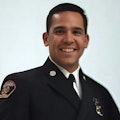 Rick Archuleta
Rick Archuleta is the owner and lead instructor of Reliant Fire Training. He began his career in the fire service in 2013 and currently serves as a captain with the Clovis, CA, Fire Department. A state certified instructor, Archuleta has developed a passion for engine company operations, search and fire behavior. He contributes to his department as the lead instructor for its Engine Company Operations cadre and is a recruit academy instructor. Archuleta has spent seven years as an instructor for California State Firefighter 1 Academies. He holds an associate degree in fire technology from Monterey Peninsula College and a bachelor’s degree in fire administration from Columbia Southern University.

