Company Officers "The True Trainers of the Millennium"
Nov. 23, 2009
5 min read
     It is imperative that we change how we do training to meet the changing needs of emergency services. Responses have changed over the years and will continue to change significantly as we move forward into the future. So who steps up to the plate on this one? Well it might be argued that it is the Fire Chief’s responsibility. Others may say it is the Training Officer’s job. This may hold some truth to each, but who truly trains the fire service today? If you guessed the training officer, guess again. No, it’s not the famous instructor at a major conference. It is the Company Officer. That’s right, the Company Officer!!!   Company Officers have more of an impact on the education of the fire service than most care to recognize. It is the day in and day out constant preparation of companies by the company officers that is the backbone of the fire service training. So how do we prepare Company Officers for this task of training the fire service for tomorrow? The base area we need to address initially is the attitude towards training. That’s right training is about attitude, but what is attitude? Lets take a close look at several areas that hold the answer to this question.
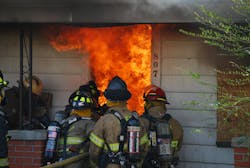
     First, we must evaluate to ensure our training is realistic. Training that is not realistic will not prepare the personnel for what could occur. They will not have the knowledge of tactics that work and don’t work; they will have not made mistakes to help develop information for cued decisions.
      Secondly, is your training progressive? To prepare personnel to respond to emergencies and properly mitigate them safely, we must provide training that will help them be prepared for the tasks at hand. Keep in mind that we can do progressive training like high angle or confined space, but is it realistic. If you have no confined spaces in your district, this training is progressive but not realistic. The other extreme is teaching the use of booster reels for vehicle fires. This is not a standard tactic any more due to the changes that have occurred to the designs and powering of motor vehicles. However, to be progressive we must cover the immediate training needs of your response area and then begin to train for the future changes that are destined to occur. As Company Officers / instructors we have to change the mindset of it has been done this way for 25 years, why do we need to change it. Good change, is excellent. No change is to regress. If it is not broke, lets break it…Lets find a better, safer and more efficient way.
     Training must be interesting or it will not be effective. So how do we make training interesting? If you ask most firefighters they will say that hands on makes it interesting. Reality is that not all training can be hands on, some must be didactic. So how do we make that interesting? First come up with different and exciting ways do cover the material. The use of digital programs and pictures enhances any lecture. The presentation of real case scenarios that have occurred where firefighters can see tangible results is a good way also. Most of all put some energy into the presentation instead of being that guy up front who really doesn’t want to be there.
    Finally every portion of your training should be centered around meeting and fulfilling the Mission Statement of the Fire Department. This mission statement gives you a direction to expand your training into new areas and programs. 
Evaluating Your Training Program as a Company Officer
     In evaluating your training program you should ask yourself the following questions.
1.      Are you prepared for the changes of tomorrow?
2.      Are you prepared for what you are destined to face?
3.      Are you willing to change to meet these new demands?
4.      Are you meeting your current training needs?
5.      Are you preparing to meet your future training needs?
6.      Are you innovative, resourceful, and willing to supersede all existing boundaries?
7.      Does your company have the right attitude?
8.      Is your training really something else…just killing time or a paper chase?
     These questions will tell you quickly if you have a training program for the modern progressive company or if your fire company is living in nostalgia. The fire service as a whole must bring training from the past to the future.

About the Author

Doug Cline

Doug Cline

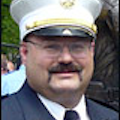
Douglas Cline, is a 28-year veteran and student of the Fire Service serving as Training Commander with the High Point (NC) Fire Department.  Cline also serves in the position of Administrative Assistant Chief with the Ruffin Volunteer Fire Department.

Cline, a former Fire Chief, is a North Carolina Level II Fire Instructor, National Fire Academy Instructor and an EMT-Paramedic instructor/coordinator for the North Carolina Office of Emergency Medical Services. Cline is a member of the North Carolina Society of Fire Service Instructors and the International Society of Fire Service Instructors where he serves on the Board of Directors as the First Vice President.  Cline also has on the FEMA grant criteria development committee, peer reviewer for the Fire Act Grants, the Northern Director for the Piedmont North Carolina Fireman’s Association, Piedmont Director for the North Carolina Fallen Firefighters Foundation and Southeastern Association of Fire Chief’s Conference planning committee.  Chief Cline also serves as Second Vice President of the Southeastern Division of the International Association of Fire Chiefs.

Cline was honored as the International Society of Fire Service Instructors (ISFSI), 1999 George D. Post International Instructor of the Year. Cline is also a member of National Association of EMS Educators (NAEMSE). He holds a Bachelors Degree in Social Services with a Minor in Education from Concord University.

Cline is a well known international speaker presenting dynamic power packed programs on instructor development, officer development, rapid intervention team training and firefighter safety and survival. Cline also is a highly published author with the most recent publications being with Thomson-Delmar Learning.  The Publications are the Company Officer Test Preparation Guide Book with a scenario training DVD.  Chief Cline is the technical content advisor for the Rapid Intervention Team Book published by Thomson-Delmar Learning and contributing author to the instructor support materials for the Rapid Intervention Team Book published by Thomson-Delmar Learning, test bank developer for the Fire Department Incident Safety Officer Book and contributing author to the instructor support materials for the Rapid Intervention Team Book published by Thomson-Delmar Learning.  Chief Cline has also been a contributing author and reviewer to several of the IFSTA and Brady Emergency Medical Technician texts.

Cline hosts the monthly “Training and Tactics Talk” pod cast on Firehouse.com.  Cline also has multiple training videos with the Fire Emergency Training Network (FETN) and American Heat to include, Rapid Intervention Team Training, Vehicle Fires, Hose line Management, Emergency Vehicle Operations and Fire Ground Safety and Survival.  Cline is also a contributing editor to Firehouse.com and The Pennsylvania Fireman Magazine.

Sign up for our eNewsletters
Get the latest news and updates

Voice Your Opinion!

To join the conversation, and become an exclusive member of Firehouse, create an account today!