CAN-bulance: Engine Company Ops for the First-Due Ambulance
Key Takeaways
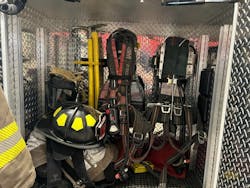
- At a bare minimum, all fire department-based EMS ambulances should be equipped with two complete SCBAs, a set of irons and a water can.
- It's an expectation of the author's fire department's firefighters that if they are riding the ambulance and arrive at a fire before the first-due pumper arrives, they search the building (assumed occupired until determined to be otherwise), locate and isolate the fire through the deployment of the water can, and close the fire room door upon their exit from the fire room.
- Too few people at the fireground (some not properly dressed) and mentally unprepared firefighters cost valuable and irreplaceable time.
Firefighters have been perfecting the art of “do more with less” since Benjamin Franklin was the chief, but the game has changed. At most departments across the United States, EMS takes up the majority of members’ time, energy and training hours.
Licensure requirements, state standards, national standards and protocol updates seem to be the only constants in our life outside of death and taxes. Call volumes keep going up while staffing levels struggle to tread water. We are forced to be a jack of all trades now more than ever.
How do we dig in to ensure that we provide our respective community with the best service that we can offer? How do we make sure that we avoid becoming a “jack of all trades, master of none?” The general public expects a fire department to show up at the incident, not an ambulance department that houses a few pumpers.
Realistic expectations of the ambulance crew
In my firehouse, we staff five on a shift. Typical assignments include a three-person pumper, an ambulance and a pumper/tanker first due. If the incident requires the pumper/tanker, it’s cross-staffed driver-only, with a member of the ambulance crew.
EMS accounts for 74 percent of our call volume, but we still average one building fire assignment every two weeks. What’s expected of my crew when a fire comes in while it’s out in the ambulance?
Up until fairly recently, EMS and fire were separate roles and entities of my department. For a long time, at a fire scene, EMS had the role of rehab and not much else. Since 2018, that no longer is the case. The town absorbed the third-party ambulance service in favor of running its own municipally funded fire and EMS department; this concept was new for some. It took some adjusting and coaching.
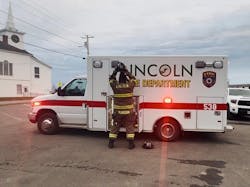
Obviously, if the crew is with a patient, that’s priority No. 1. However, there are many times that the ambulance is out of the station but still fully in service (e.g., fueling, returning from a call, running errands, getting routine maintenance done). Do we even have our turnout gear with us, or have we assumed that we’re running medical calls all shift?
Good officers make their intentions clear from Day 1 and hold their people accountable. Five members simply aren’t enough to begin with when a legitimate fire is reported, and we absolutely can’t accept an even lesser staffing scenario. I don’t want to wait for my firefighters to drop their patient, return to the firehouse, grab their gear and then finally respond.
The conversation begins with setting precedence. Regardless of one’s riding position for the day, your turnout gear is to follow you wherever you go throughout the shift. This is a fairly new concept for some.
Capabilities and expectations
Have you ever thought about what a water can actually is capable of?
It’s an expectation of my department’s firefighters that if they arrive before the hoseline, they are to search the building that’s assumed to be occupied until it’s determined to be otherwise. They also are tasked with locating and isolating the fire through the deployment of the water can and closing the fire room door upon their exit from the fire room.
Basic fire behavior tells us that one cubic foot of water expands 1,700 times when converted to steam, but how does that look in comparison to an average residential room and its contents?
- Standard refrigerator = 20–25 cubic feet
- Standard three-seat sofa = 50 cubic feet
- King-size bed = 70 cubic feet
- Average room size in a house or apartment = 200 cubic feet
- All of these things combined = 345 cubic feet
- The cubic feet of steam that you can convert from a water can = 568.1
Although it’s highly unlikely that the water can will extinguish a fire completely even with proper application and good door control, it’s safe to say that a difference can be made with 2.5 gallons of water when used appropriately, which minimizes the engine crew’s task once it arrives on the fire floor.
At a bare minimum, all fire-based EMS ambulances should be equipped with two complete SCBAs, a set of irons and a water can.
The public’s expectation and the two primary tasks of the fire service don’t waiver depending on what rig shows up first. Finding victims and fire remains the priority as soon as the red flashing lights arrive. We represent an immediate stress relief to those who need us, and that should be taken seriously.
We also have a responsibility to our brothers and sisters. We must be willing and able to do our best work for them to be successful. If we aren’t prepared to do these tasks, they won’t be forgotten or forgiven; they simply will be delayed and left for the next person in line. This job is less about what you’re able to do and more about what you’re willing to do when presented with a make-or-break or life-or-death situation. If your PPE is at the firehouse and you find yourself at a fire scene in street clothes, what good to me are you if you can’t fight? That’s the bare minimum: preparedness.
The fire department must be thought of as an insurance policy in the public eye. People really hope that they never have to use their insurance. However, stuff happens, and we all inevitably need help at some point in our life. When the citizens who you swore to protect expect the very best coverage that their tax dollars can buy, are you providing them with full coverage or are you a liability?
Changing the narrative
Some might argue that fire is the enemy, but time is what makes or breaks a lot of incidents. Seconds count when children are pushed to the floor by smoke in their bedroom. Seconds count when a woman is dangling from a second-story window by her fingertips. Seconds count when a father is shielding his family from fire that made its way into a previously unaffected space.
The seconds that we shave off anywhere help. All of the little things that we do throughout the course of a shift matter.
Many departments are plagued with a passive search culture. Every fire building should be considered occupied until proven otherwise, much like every fire alarm is considered a building fire until proven otherwise. Human life always should become (tactical) Priority No. 1, regardless of what rig you show up in.
There has been a shift in the aggressive nature of firefighters lately. A new generation is challenging the two-in, two-out narrative and putting the victims first when today’s fires are burning hotter than ever before. Groups, such as Data Not Drama, Firefighter Rescue Survey, and Project Mayday, have laid the groundwork to say that “the way we’ve always done it” simply doesn’t cut it anymore. According to the NFPA, civilian fire deaths increased 6.8 percent between 2023 and 2024, and with the rapid growth of fire spread in newer construction paired with staffing shortfalls, we can ill afford to wait.
Too few people at the fireground (some not properly dressed) and mentally unprepared firefighters cost us valuable and irreplaceable time. The odds are in our favor if we just change our way of thinking. Push your chips to the center and make a difference. It’s what the public expects of you.
Fulfill your promise
The world around us is ever-changing, and sometimes it’s on fire. We simply can’t afford to become so complacent with our daily EMS commitments that we forget that we could be on the fire floor seconds after we clear the hospital. We must train to operate in a capacity that teaches firefighters that no one is coming to help us: We have what we have, and we are left with no option but to perform our tasks flawlessly and to rescue the people who we swore to protect.
The public expects us to show up for them every single day. There’s no option of failure when the stakes are high. Regardless of whether we’re stepping off a fully staffed pumper or are just two members showing up with an ambulance and a water can, we will win. We will perform our duty to the fullest, and we will fulfill our promise.
Remember: It’s called a water CAN, not a water COULD.
About the Author
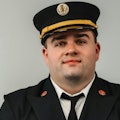 Jake Hammond
Jake Hammond
Jake Hammond is a third-generation firefighter and 13-year veteran of the Lincoln, ME, Fire Department (LFD), where he currently serves as a captain. As training officer, he’s committed to developing the next generation of firefighters while upholding the values of service, professionalism and tradition. Hammond currently is the most decorated member of the LFD, dating back to 1905.