Fire Department Engine Company Mindset & Safe, Fast, Effective Fireground Operations
Key Takeaways
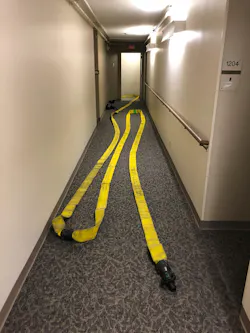
- Engine company members must develop and be able to execute critical thinking and hard skills under duress in a time-compressed environment every day and on every run. This requires mental preparation in regard to hoseline distance estimates, proper hoseline selection, fast and clean hoseline stretches, and an understanding of building construction methods and systems, among others.
- Engine company firefighters must be extremely capable of executing the basics—stretches, advancements and extinguishment—at the level of unconscious competence.
- The only way for firefighters to develop adaptability on the fireground is for them to build a knowledge bank to draw upon to be able to swiftly assess, select, apply, reassess and change tactics. That knowledge bank results from training and experience.
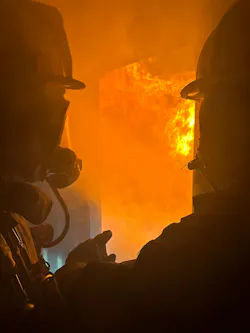
One of the most important components of any solid engine company is a good strategic, tactical and task-oriented mindset. Unfortunately, this is an area that often is overlooked in training. Engine company members must develop and be able to execute critical thinking and hard skills under duress in a time-compressed environment. The development of a strong operational mindset is the key to being safe, fast and effective on the fireground.
What is ‘mindset’?
The Merriam-Webster dictionary defines mindset as “a mental attitude or inclination” and “a fixed state of mind.” The core of a firefighter’s mindset should be the generalized mission of the fire service: to protect lives and property. However, there is much more to a well-founded mindset than just that.
Engine company members must be consummate professionals and perpetual students of the fire service. They should possess an unrivaled strategic, tactical and task-level acumen. Finally, they must be comfortable being uncomfortable in stressful, high-risk environments and be able to make arduous stretches and advance the hoseline under potentially punishing conditions to make the fireground safer for everyone.
One of the keys to a good mindset is that it must be consistent. As Merriam-Webster notes, it is “a fixed state of mind.” It isn’t something firefighters can turn on when they need it; they must have that mindset every day and on every run. Firefighters never know when they will respond to their most challenging run or have the worst fire of their career.
The winning mindset
Former U.S. Navy SEAL Kyle Defoor delivers mindset briefs in his classes throughout the country. His briefs were developed with the assistance of “Tuhon” Thomas Kier of Sayoc Tactical Group and numerous others. In one of his briefs, Defoor stated, “No matter the situation, I control it. Even if it’s a bad situation that I’m reacting to.” He further stated, “I’m going to change the situation, and I’m going to win. That’s what we do.” These quotes are the embodiment of what an engine company’s mindset should be based on.
The engine company’s goal should be to quickly create as much tenable space as possible to allow for searches to be performed and to extinguish the fire. Engine companies rapidly take control of the situation and change it to win. This requires mental preparation and hard skills, including hoseline distance estimates, proper hoseline selection, fast and clean stretches, precise pump operations, abilities to move and flow, nozzle and water mapping techniques, an understanding of building construction methods and systems, knowledge of building layouts, and comprehension of fire behavior.
Proficiency of the ‘basics’
Engine company firefighters must be extremely capable in the execution of the basics: stretches, advances and extinguishment. Although work on the basics starts in the recruit academy, it must be perfected over thousands of hours of additional training.
The goal is to be able to perform the basics at the level of unconscious competence. As U.S. Army Col. David H. Hackworth writes in his book “Steel My Soldiers’ Hearts” (May 2003, Simon & Schuster), “I stressed to all of the unit leaders that all of the drills must be executed over and over again until they became automatic.”

The ability to perform the basics without thought frees up mental bandwidth on the fireground. This increase in available bandwidth allows firefighters to better size up the situation, maintain situation awareness, monitor communications and adapt as necessary.
Adaptability
Departments should have standard operating procedures/standard operating guidelines to outline, at a minimum, basic actions on the fireground. Incident commanders (ICs) must exercise strong command and control of incidents. More importantly, ICs must make their commander’s intent known to their personnel well before an incident occurs.
In his article “Commander’s Intent Defined,” U.S. Marine Corps Capt. Michael L. Ettore writes, “Any student of maneuver doctrine will agree that to be successful in this style of warfighting, subordinate leaders must be encouraged to use initiative during the execution of any mission. Commander’s intent is designed to provide these leaders with the ability to deviate from a specific plan of attack if necessary, yet still accomplish the ultimate desires of their commander. This initiative is properly focused by a crystal clear expression and understanding of the commander’s intent.”
The ability to rapidly adapt to any situation on the fireground, based on the commander’s intent, is what defines a great engine company. Engine company firefighters must be able to quickly change their hoseline stretch and/or fire attack methodology based on conditions that are encountered.
Adaptability comes from training and experience. This builds keen observation and analysis skills and allows for faster decision-making and the mental elasticity to change course when needed. As U.S. Army Lt. Gen. Harold “Hal” Moore notes in “Hal Moore on Leadership: Winning When Outgunned and Outmanned” (Magnum Books, 2017), “There’s always a way. Either you find a way, or you make one. If you can’t think of a way, don’t hesitate to ask for help. Take counsel from those who have information and experience.”
Firefighters must have a knowledge bank to draw upon and be able to swiftly assess, select, apply, reassess and change tactics if necessary. The only way for firefighters to increase this knowledge bank is through realistic drills on buildings in their district and actual fireground operations. Firefighters must experience genuine difficulties, learn to promptly recognize them and develop alternative ways to overcome them.
As new tactics, techniques and procedures are obtained or developed, that information should be disseminated through intradepartmental memos or future trainings. Information siloing is detrimental and comes at the expense of public and firefighter safety.
Teamwork
Teamwork develops through rigorous training and frequent operational experience on the fireground. Teamwork is a major component of the operational mindset of an engine company. Members must be able to rely on their crew as well as other companies on the fireground. Having strong relationships that are built on trust, a shared mission and positional discipline allows members to perform at very high levels in ultra-high-risk environments. If everyone is working as a team, it provides members the ability to take extreme, albeit calculated, risks, knowing that their brother and sister firefighters will have their back.
In his book “Team of Teams: New Rules of Engagement for a Complex World” (Penguin Publishing Group, May 2015), U.S. Army Gen. Stanley McChrystal discusses the Black Hawk helicopter crash that occurred during the mission that killed Osama bin Laden. McChrystal concludes, “Our operators’ most useful preparation lay in the trust they had built, shared hardship by shared hardship, over years of service. It is often said that trust is learned on the battlefield. But for groups like the SEALs, the oneness imbued by trust and purpose is a prerequisite to deployment … The SEAL team in Abbottabad had not planned for the helicopter crash … but all were capable of adjusting to the unexpected with creative solutions on the spot, coherently and as a group.”
Having a strong sense of teamwork motivates all members to be proficient at their role in the operation. They learn to anticipate and support each other’s actions—knowing what others will do, when they’ll do it and what they’ll need to do it. This is vital for basic fireground operations but is absolutely essential when the team has to adapt.
Being able to adapt often requires full team collaboration. The team has to know each other’s strengths and weaknesses. Individual as well as shared experiences allow for adaptation. Members must not subscribe to rigid rank structures; they must be able to quickly discuss the operational needs, adopt a plan and carry out that plan with trust in one another.
Attention to detail
Engine company firefighters must be extremely detail oriented in everything that they do, from how the hose is loaded on the apparatus, to how the line is stretched on scene, to how the water is applied during extinguishment. This level of attention to detail may seem trivial, but it can make or break an operation when the frictions of combat are encountered.
Carl von Clausewitz in his treatise “On War” writes, “Everything in war is very simple, but the simplest thing is difficult. The difficulties accumulate and end by producing a friction that is inconceivable unless one has experienced war … Countless minor incidents—the kind you can never really foresee—combine to lower the general level of performance, so that one always falls far short of the intended goal.”
To minimize the friction, firefighters must be disciplined in all of their actions. If they can’t be trusted to properly execute small tasks, how can they be trusted with large ones? Company officers must model behaviors, set clear, exacting expectations, and hold their people accountable in the firehouse, during training and on the fireground.
Following drills and incidents, members should conduct after-action reviews to find out what went well, areas of opportunity and how to improve. Rank should be of little importance during these informal critiques. Officers should hold firefighters accountable, and firefighters should hold officers accountable. The goal should always be on perpetual improvement: identifying strengths and weaknesses, making plans for improvement, implementing those plans and reassessing to ensure the collective mission is being met.
In summation
Engine company firefighters must work to develop a strong operational mindset. This work should be a careerlong endeavor, with the goal of continuous improvement through training, gained experience and honest feedback from others. A solid mindset will allow them to remain positionally disciplined, operationally effective and mission focused.
About the Author
 Jonathan Hall
Jonathan Hall, who is a Firehouse contributing editor, has more than 25 years of fire service experience. He currently is a captain with the St. Paul, MN, Fire Department assigned to Engine Company 14. Hall also serves as a lead instructor in the department's Training Division; he teaches hands-on skills to members of all ranks. Hall is the co-owner of Make The Move Training LLC and teaches engine company operations throughout the country.