A Legacy Comes Home: 'Brady Firefighting Series' Returns to the National Fire Academy
Key Highlights
- The "Brady Firefighting Series" includes original slide programs and instructor guides, representing a cornerstone of firefighter education from the 1970s and 1980s.
- The donation was made to the National Fire Academy and the National Fire Heritage Center, ensuring the materials are preserved and accessible for future firefighters, instructors, and researchers.
- Robert J. Brady Sr. played a key role in establishing the academy's campus, reflecting a lifelong commitment to firefighter education and the advancement of the fire service.
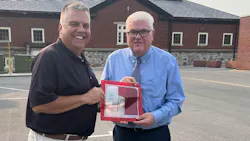
I recently had the honor of representing my family by donating one of the most significant collections in the history of firefighter training to the National Fire Academy (NFA) and the National Fire Heritage Center.
As you may know, my parents, Robert J. Brady Sr. and Catherine M. Brady, founded the Robert J. Brady Company, which became one of the nation's leading publishers of fire service and EMS educational materials during the latter half of the 20th century. The company's books, instructor guides, slide programs, and teaching resources were used by fire academies, municipal and volunteer fire departments, state training agencies, and community colleges throughout the United States and Canada during a period when the American fire service was embracing standardized education and professional certification.
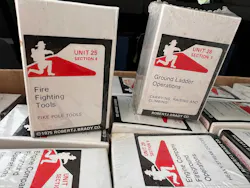
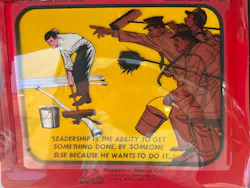
For thousands of firefighters who entered the fire service during the 1970s and 1980s, the "Brady Firefighting Series" represented the gold standard in firefighter education. Long before PowerPoint presentations and digital classrooms, instructors relied on carousel slide projectors and overhead transparencies to teach fire behavior, building construction, hose operations, rescue operations, fire prevention, hydraulics, and other subjects that formed the foundation of modern firefighter training at the time.
Foundation of training returns home
In July, a large part of that history came home to the NFA.
The historic collection, consisting of the original 35 mm slide programs, overhead transparencies, instructor guides, and the complete "Brady Firefighting Series," including the "Vehicle Rescue Series," has been permanently transferred to the National Emergency Training Center (NETC) at the NFA.
The collection is believed to be the last complete set of its kind still in existence.
I was privileged to present the collection to Eriks Gabliks, superintendent of the National Fire Academy, who graciously accepted the donation on behalf of the academy.
"I'm honored to accept these products that exemplify the legacy of excellence in firefighter training throughout the world," said Gabliks. "The National Fire Academy will proudly display these training materials in a prominent location so the new generation of firefighters can appreciate the history and evolution of firefighter education."
The National Fire Heritage Center will preserve a portion of the collection as part of the permanent historical record of the American fire service, ensuring these materials remain available to future firefighters, instructors, historians, and researchers.
A deeper connection to national firefighter training
The donation carries even greater significance because of my father's enduring connection to the National Emergency Training Center itself.
Nearly 50 years ago, Robert J. Brady Sr. helped shape the future home of the U.S. Fire Administration's (USFA) NFA. After learning that Saint Joseph College in Emmitsburg, MD, might become available, Brady alerted two fire chiefs who had been tasked with identifying a permanent location for the NFA. He later worked with the Daughters of Charity during negotiations that ultimately led to the sale of the campus to the Federal Emergency Management Agency (FEMA) and the USFA.
That campus would become today's FEMA National Emergency Training Center, which is home to NFA, the Emergency Management Institute, and today, the National Disaster and Emergency Management University (NDEMU).
My father believed that education was one of the most powerful tools for improving firefighter safety and professionalism. The Brady training materials educated generations of firefighters throughout North America. Rather than allowing this final collection to disappear into storage, our family believed it belonged where future generations could appreciate its role in the evolution of firefighter education.
The moment was especially meaningful to me personally. Nearly five decades after my father helped make the NETC campus possible, I found myself standing on that same campus—not only as a donor preserving an important chapter of fire service history, but also as a FEMA contract instructor.
During the same week as the presentation, I had the privilege of teaching the Advanced Public Information Officer (E/L0388) course. Over the past 12 years, I have been honored to instruct at NDEMU and across the country, delivering the Advanced Public Information Officer course, the Integrated Emergency Management Course, All-Hazards Position-Specific courses, and programs within FEMA's National Emergency Management Basic Academy.
Standing on the campus that my father helped bring to life, while donating the educational materials that helped train generations of firefighters, was an emotional and unforgettable experience. For our family, it represents the continuation of a lifelong commitment to education, leadership, and preserving the history of the American fire service.
What began decades ago with my parents' vision of advancing firefighter education has now come home to the institution that embodies that mission. The "Brady Firefighting Series" helped shape the education of countless firefighters throughout North America. Its final chapter will now be preserved at the NFA and the National Fire Heritage Center, ensuring that this important piece of American fire service history will continue to educate and inspire future generations.
About the Author
Mark Brady
Mark Brady is a 40-year member of the fire service, including 38 years with the Prince George’s County, MD, Fire/EMS Department. He has 23 years’ experience as chief spokesperson and PIO for the department.