Crews Lay Portage Fire Breaks in Minnesota
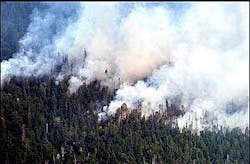
About 95 firefighters laid sprinkler lines Tuesday in a continuing effort to contain a Boundary Waters Canoe Area Wilderness forest fire.
Three retardant drops were made on the northeast side of Seagull Lake, although firefighters stopped short of a direct ground attack.
Tuesday's rain in the fire zone was just 0.1 inches but provided time for crews from Indiana, West Virginia, Ohio and Missouri to establish sprinklers at canoe portages to generate humidity and provide a fire break from Seagull Lake to Grandpa Lake and on to Gull Lake, following canoe portages between them. One sprinkler was laid northwest of the fire, the other to the south.
"This isn't over -- it's far from over," Jim Hinds, U.S. Forest Service incident commander, said at a staging area at the northern end of the Gunflint Trail, about 4 miles northeast of the Alpine Lake fire.
With the fire just 5 percent contained, officials said they may light their own fires today to rob the blaze of fuel. And direct firefighting efforts on the ground also are possible.
Hinds and others warned the fire was far from being controlled Tuesday and another unexpected weather change could intensify the blaze.
Estimates have continually differed on the exact size of the fire, but officials at the Minnesota Interagency Fire Center in Grand Rapids said Tuesday evening that the burned area probably covers at least960 acres.
Superior National Forest officials are trying to minimize the effect on the wilderness experience for people visiting the area while also limiting fears that could drive traffic away from local businesses. But the safety of firefighters and the public remains a top concern.
"We will keep our focus right there," said Dennis Nietzke, Gunflint District ranger for the Superior National Forest.
Some property owners wonder if they should keep running the fire protection sprinkler systems on their cabins and lodges, installed after the 1999 blowdown threatened a major wildfire. Nietzke said they are most effective if turned on for at least 24 hours before a fire or sparks hit a structure.
"We will just watch the weather, but we are right directly across from where it's burning, so it just feels good to keep it wet," said Seagull Lake cabin owner Ken Rusk.
About 35 property owners who attended a Tuesday briefing said they were mostly satisfied with the firefighting effort.
Dave Gerkens-Meyer, president of the property owners association, will leave his sprinkler system on until things look more predictable.
He said communication seems better than during the last big fire threat: the Sag Corridor fire of 1995. Rusk said some, himself included, would like to see a more aggressive approach towards quelling the blaze.
But Forest Service officials said after protecting people and property, their third goal is to leave wilderness, as much as possible, as nature intended.
To that point, Forest Service resource managers such as Sara Erickson and Tom Kaffine were briefing firefighters on "limited impact" fire fighting before they struck out.
"Light on the land" tactics include things such as not building excessive fire breaks by cutting unnecessary timber and simply trying to pick up garbage, including food wrappers and other trash from on-the-ground efforts.
Distributed by the Associated Press