Structural Damage Closes Burn Buildings in Boulder County, CO
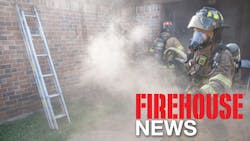
Boulder County firefighters have been unable to use the county's two burn buildings for live fire training for months, after structural damage forced the closure of the Boulder and Longmont buildings amid concerns for firefighter safety.
While there are other options for live burn training, fire chiefs in Boulder and Longmont said there has been some impact on firefighter training.
"It's really important for all of our fire crews to get that exposure, to practice in an environment that's hot, and (as) realistic as possible," said Longmont Deputy Fire Chief Scott Opie, who oversees the department's training division.
While the Longmont building is set to reopen for live burn training in January, the Boulder burn building remains out of service. Boulder Fire-Rescue and the Boulder County Regional Fire Training Centers board are looking into options, but funding is a challenge, and the future remains uncertain.
Safety concerns
An inspection in early 2025 revealed structural damage in both the Longmont and Boulder burn buildings that posed safety risks for firefighters, according to Opie.
The Longmont building, located near First Avenue and South Martin Street, had minor structural damage that could be repaired by rebuilding an interior wall, Opie said.
"Had we kept on using it, and we moved toward structural failure, we could have had parts of the block actually falling on firefighters as they're going up the stairwell," Opie said. "It was extremely important for us to ensure that that wall was identified and then repaired so we don't sustain any injuries."
Opie chalked the damage up to wear and tear. The interior walls of the Longmont burn building are lined with Padgenite, a ceramic-like material that can withstand intense heat.
"When you're constantly exposing these materials to intense heat from the fires that we build, they do degrade over time," Opie said.
The Boulder building, located just southwest of Boulder Reservoir and built in 2010, had more serious structural damage, forcing the interior of the building to close in June for the foreseeable future due to safety concerns. The exterior remains available for ladder training.
The damage was likely caused by the "misapplication of fire," according to Boulder Fire-Rescue Deputy Fire Chief Jared Ginsberg.
"If a fire is built too large within that space, then the fire and the heat is going to extend beyond the extra protected space and cause damage elsewhere," Ginsberg said.
Training impacts
With both burn buildings offline, most Longmont firefighters didn't participate in live burn training this year, Opie said. Instead, they tried to shore up training using theatrical smoke and focused on training in other areas, such as responding to medical calls.
Longmont's new recruits still received live burn training, Opie said, traveling to Greeley, Loveland and Cheyenne.
Structure fires are a small portion of the calls firefighters respond to, and thus, a smaller portion of training, Ginsberg said. Boulder firefighters, he said, conduct live burn training about once per year.
"It's very important for ongoing skills development and skills maintenance, but it's a very small portion of the incidents that we run," Ginsberg said.
Fire agencies in the area have other options for live burn training. Boulder County has two live burn trailers, one at the Boulder training center and one currently stationed in the Sugar Loaf Fire Protection District. The state also has two burn trailers that agencies can request to use.
"It's a different experience than in a concrete burn building, but it is still an experience that fully meets the training requirements and expectations of a firefighter," Ginsberg said.
While some things remain the same — heat, smoke, moving with limited visibility, pulling hose lines through tight spaces — there are differences. In the concrete burn building, for example, there is more opportunity to change scenarios, Ginsberg said.
"There's an impact. Is it detrimental? I would say no, but it's certainly not as easy as having two burn structures on site compared to only having one," said Boulder County Sheriff's Office Commander Nick Goldberger, who is on the Boulder County Regional Fire Training Centers board.
Looking ahead
Heading into the new year, the Boulder burn building will remain closed while the department explores its options.
Funding remains a challenge. Constructing a new burn building would cost over $2 million, and full repairs would likely exceed that, Ginsberg said.
As they work to secure funding for a new building, Boulder is considering purchasing smaller, modular burn buildings, similar to shipping crates. Ginsberg estimated these would cost around $200,000.
As for the Longmont burn building, repairs were finished in late 2025, and the department has scheduled live burns for January.
With the Boulder building out of commission, Opie said he expects an uptick in use of the Longmont facility.
"We're doubling down, and we're going to be holding at least two live fire training scenarios for our frontline firefighters in 2026," he said.
© 2026 Colorado Hometown Weekly. Visit www.coloradohometownweekly.com. Distributed by Tribune Content Agency, LLC.