How Fire Department Officers Who Are Assigned Ventilation Win Or Lose the Fireground Before Cuts Are Made
Key Takeaways
- Truck officers plant the seeds of success for the attack on a fire when they perform disciplined, accurate and actionable size-up.
- Truck officers should assemble a mental picture of the fire to which they’re responding by using district familiarity from previous calls, inspections and walk-throughs; mapping software that reveals building footprints, access points, hydrant locations and optimal approach routes; radio traffic; and dispatch updates.
- Truck officers never should rely solely on someone else’s 360 size-up.

In today’s fire service, truck officers’ job begins long before the first whiff of smoke hits the windshield. It begins at roll call—quietly, routinely and often overlooked. This is where the seeds of a successful size-up are planted.
Truck officers’ ability to perform a disciplined, accurate and actionable size-up isn’t a switch that flips when the bells drop. It’s a mindset, a habit and a responsibility that starts with knowing the company’s people, equipment and challenges that will be faced.
Modern fireground operations are shaped by realities that didn’t exist a generation ago. Staffing reductions, mandatory overtime, fatigued firefighters, unfamiliar details and disrupted crew continuity now are part of the landscape.
These factors don’t just affect morale; they directly influence how effectively truck companies can perform their mission. When the crewmembers who are in the jumpseat are tired, unfamiliar with the district or working together for the first time, the truck officer must compensate with sharper observation, clearer communication and a more deliberate approach to size-up.
This is why the best truck officers don’t wait until arrival to begin sizing up the incident. They start the moment that the assignment is given, and they never stop until the last tool is back on the rig.
En route: First phase of size-up
A disciplined size-up begins the moment that the wheels roll. Truck officers have access to more information today than at any point in fire service history.
The question is whether these people use it. While en route, truck officers should be assembling a mental picture of the incident using every available resource:
- District familiarity from previous calls, inspections and pre-incident walk throughs.
- Mapping software that reveals building footprints, access points, hydrant locations and optimal approach routes.
- Radio traffic that provides early clues about fire conditions, caller reports and potential hazards.
- Dispatch updates that refine the picture as new information comes in.
This isn’t busywork. This is the first step in determining where the truck will spot, how the crew will deploy and what the initial ventilation plan might look like.
Truck officers who arrive with a mental model already forming are miles ahead of the ones who wait to “see what we’ve got.” The fireground rewards anticipation, not reaction.
Arrival: Vent 360 begins
Once on scene, truck officers’ primary responsibility—particularly when assigned ventilation—is to conduct a rapid, disciplined ventilation 360.
This isn’t a luxury. It isn’t optional. It isn’t something that can be decided based on another company’s earlier walk-around.
Truck officers never should rely solely on someone else’s 360. Conditions change. Smoke moves. Fire grows. Doors are opened. Windows fail. Occupants self-evacuate. The picture that truck officers get from another unit’s report is a snapshot. The picture that truck officers get from their own eyes is the truth.
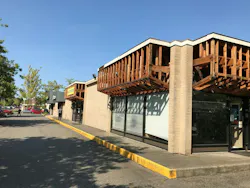
A good approach angle during arrival can provide partial views of multiple sides, and a sharp apparatus operator can be invaluable in calling out conditions as the rig positions. However, nothing replaces a full walk-around when possible.
The purpose of the ventilation 360 is simple: Identify what the fire is doing, what the building is doing and what members’ actions will cause them to do next.
What must be captured
A ventilation‑focused 360 isn’t just a walk around the building. It’s a targeted assessment that’s designed to answer particular questions that directly influence tactical decisions. Truck officers must evaluate:
- Fire location. Where is the fire on first examination? Where is the fire going? What is the smoke indicating in regard to heat, pressure and movement?
- Building features. What type of construction is being encountered?Where are the access points? What hazards (e.g., security bars, additions, void spaces, lightweight components) exist?
- Victim indicators. Are there victims at windows, balconies or other openings? Are there signs of survivable spaces?
- Flow-path conditions. How is smoke moving through the structure? Where are the potential inlets and outlets? What will happen if a new opening is created?
- Exposure risks. What structures or materials are at risk of ignition? How will ventilation influence exposure protection?
This information isn’t academic. It directly shapes the ventilation plan and determines whether members’ actions will improve conditions or make them dramatically worse.
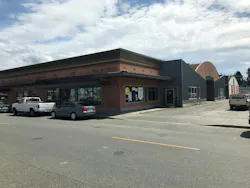
Six sides of the fire building
A complete 360 means evaluating all six sides of the structure: front, left side, right side, rear, roof and basement (if present or suspected).
Too often, the roof and basement are afterthoughts. For truck officers, they are critical. The roof tells about structural stability, fire extension and vertical ventilation viability. The basement can be the difference between a safe operation and a catastrophic collapse.
If a full 360 isn’t possible because of terrain, building size or obstacles, truck officers must communicate this immediately. Partial information still is valuable, but only if everyone knows its limitations.

Choosing vent method
One of the most misunderstood aspects of ventilation is the belief that certain methods are always right or always wrong. The truth is far more nuanced (There are very few “always” and “never” statements in the fire service.)
Vertical ventilation is a powerful, effective tactic when applied under the right conditions. It rapidly can improve interior tenability, release heat and support aggressive fire attack. That said, there are times when horizontal ventilation, or positive pressure ventilation, is the better choice—or when a combination of ventilation methods provides the greatest benefit.
Truck officers’ job isn’t to default to a favorite tactic. It’s to choose the tactic that best supports life safety, fire attack and overall incident objectives.
This decision must be grounded in the information that’s gathered during the 360. Ventilation without size-up is guesswork. Ventilation with size-up is strategy.

Flow path: Not a buzzword
Flow path has become a popular term in recent years, but the concept isn’t new. Fires always have had flow paths; it’s simple physics. The job of the truck crew is to control the flow path and not let the flow path control them. What has changed is our understanding of how dramatically the flow path influences fire behavior and occupant survivability.
The ventilation crew’s responsibility is to:
- Identify the existing flow path.
- Predict how ventilation will alter it.
- Control it in a way that benefits the operation.
Uncontrolled ventilation can accelerate fire growth, endanger interior crews and reduce survivability for trapped occupants. Controlled ventilation that’s guided by a disciplined 360 can transform the fireground.
After the initial 360
The initial ventilation 360 is only the beginning. Once operations are underway, truck officers must continue to reassess conditions and provide ongoing CAN reports. Firegrounds are dynamic.
What was true two minutes ago might not be true now. This is where the art of reading smoke becomes essential. Smoke is the fire’s voice. It indicates whether ventilation is working, whether fire attack is gaining ground, and whether conditions are improving or deteriorating.
Truck officers who continue to observe, interpret and communicate become an asset not just to their own crew but to the entire incident.
Earning the IC’s trust
Strong incident commanders (ICs) assign ventilation and trust the truck officer to execute the mission. That trust is earned through accurate assessments; clear, timely CAN reports; disciplined decision-making; and a demonstrated understanding of flow path and building behavior.
When a truck officer consistently provides reliable information and effective ventilation, the IC gains confidence in the truck officer’s judgment. This leads to smoother operations, better coordination and safer outcomes.
Why the vent 360 matters
A thorough 360 size-up isn’t a checkbox. It’s the foundation of effective ventilation and overall incident management.
It influences crew safety, victim survivability, fire attack success, structural stability, tactical coordination and incident outcomes.
When truck officers perform disciplined, informed and continuous sizeups, they elevate the entire operation. They reduce uncertainty. They anticipate problems. They create conditions that support aggressive, coordinated interior work. In short, they make the fireground safer and more effective for everyone.
Safer and smarter
The modern fireground demands more from truck officers than has ever been required of them before. Staffing challenges, unfamiliar crews and rapidly changing fire dynamics require leaders who can think, observe and act with precision.
The ventilation 360 isn’t just a task; it’s a mindset. It is truck officers’ opportunity to shape the incident from the moment that they arrive. When the ventilation 360 is done well, it sets the stage for successful operations. When the 360 is neglected, it leaves the fireground vulnerable to chaos.
Truck officers who master the ventilation 360 don’t just open roofs or windows. They open pathways to safer, smarter and more effective firefighting.
Truck Officer Checklist
If you’re the kind of truckie who lives for a clean checklist—or if acronyms are the only thing that keep your brain from venting itself—this checklist might help to keep your size-up sharp and your attitude dialed in.
The W’s and the Double U’s
- Where is the fire right now? (Fire location? What areas are currently involved?)
- Where is the fire likely to go next? (Fire extension? Anticipated flow path, voids and exposures?)
- Where are the victims? (Victim profile? Are victims present? Where are they most likely to be located based on time of day, occupancy and conditions?)
- Unusual fire behavior. (Rapid changes in heat, smoke, or pressure? Wind-driven conditions, effects of ventilation or unexpected movement?)
- Unusual building construction. (Atypical materials or layouts? Structural compromises, renovations, add‑ons or hazards that change fire behavior?)
About the Author
 Steve Reno
Steve Reno
Steve Reno has more than 20 years of national HOT and classroom instruction expertise. He presented at Firehouse Expo, Firehouse World and the Cal State Instructors Symposium, among others. Reno is a driving force behind the acclaimed Firetown Truck Academy. His work with Firetown Training Specialists and Brass Shamrock Training has shaped innovative programs that elevate firefighter readiness nationwide.