The 10 Standard Operating Orders for Wildland Fire Operations
Key Takeaways
- The first nine of the 10 Standard Firefighting Orders point and lead to the 10th Order: Fight fire aggressively, having provided for safety first. One might conclude that this only pertains to structural fires, but it’s just as important in the wildland/urban interface for risk management to be employed.
- Fire weather conditions and forecasts, knowing what the fire is doing at all times, and basing all actions on the current and expected behavior of fire are common knowledge for operations at structural fires. They should be committed to memory for members of departments that will engage fires in the wildland/urban interface, too.
- Structural firefighting training includes the basics of identifying escape routes; assigning a member to watch for possible danger; prompt, clear communications between the incident commander and firefighters; and no freelancing. Training for firefighters who might operate in the wildland/urban interface should include these tenets, too.
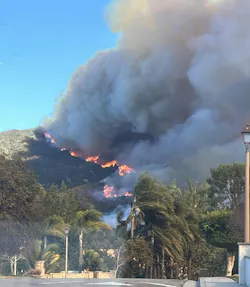
The 10th Standard Firefighting Order is “Fight fire aggressively, having provided for safety first.” This often is quoted, because it reflects the aggressive culture of the fire service. However, it also is one of the most misunderstood Firefighting Orders. It doesn’t simply say “fight fire aggressively.” It qualifies that aggressiveness with a condition: “having provided for safety first.”
The 10th Firefighting Order defines who we are as firefighters. The members of the community expects us to take calculated risks to save lives and protect property. The Order reinforces that we aren’t a defensive organization by default; we are expected to act decisively and aggressively when conditions warrant.
That said, aggressive firefighting doesn’t mean reckless firefighting. It means making calculated decisions that are based on situational awareness, fire behavior, available resources and continuous risk assessment. The 10 Standard Firefighting Orders are the blueprint for risk management. As first responders, we can’t be risk averse; we must rapidly and properly manage risk.
The 10 Standard Firefighting Orders
1) Keep informed on fire weather conditions and forecasts. What is fire weather conditions? The fuels play a major role in the potential. In the structure world, 100-year-old exposed wood burns differently than new lumber. Heavy planks react differently than shingles. When wood is wet, it absorbs more British thermal units (BTUs); when it’s dry and exposed to high BTUs, it burns.
Vegetation is no different. Leaf litter, grass, shrubs, brush and trees all react the same: When they reach critical values of moisture extinction, they burn more readily and can’t deflect the BTUs.
Dry weather patterns and solar preheat affect the flammability of vegetation. Dry weather, lightning, heat and wind coupled with dry fuels is what makes fire weather conditions.
Wind is king and dramatically affects how fire burns. In structural firefighting, wind affects the flow path. In the wildland environment, it drives fire uphill, downhill and across the flats and carries embers to receptive fuel beds as far as two miles away.
The forecast is vital, too. When the inversion layer will lift and when winds will change direction are key elements to fire growth and tactics, no different than a truck company providing vertical ventilation or fire attack teams not coordinating door openings.
2) Know what your fire is doing at all times. This can be easier said than done. You might not be able to see the fire. Adjoining divisions might be on different radio tactical channels. Canyons or ridges might block radio signals and messages. Rapidly changing fire conditions can change tactics for your adjoining forces.
When you are working in a division that is five miles long, your initial briefing and understanding of current fire conditions can change as the work period moves on.
3) Base all actions on the current and expected behavior of the fire. All firefighters must make a fire behavior prediction. In the structure world, you size up the fire immediately and decide a strategy of offensive or defensive, firefighting handline size selection, where to ladder, search opportunities and so on.
The same must occur in vegetation fires—direct, indirect or a combination—using the acronym DRAW: Defend (or hold) your position, Reinforce with resources to make a stand, Advance with an aggressive anchor, flank and pinch, and Withdraw (or delay) until the fire is out of alignment.
4) Identify escape routes and safety zones and make them known. During interior firefighting, we can use the hose to lead us to safety. If we get confused, we know “smooth, bump, bump, to the pump.” We know to operate from large openings instead of man doors and to use lights at the portal of egress. Roof operations require a minimum of two ladders, for two ways off and to allow for rapid retreat of multiple members. Search can start as a right wall, but that same wall turns into a left wall for retreat.
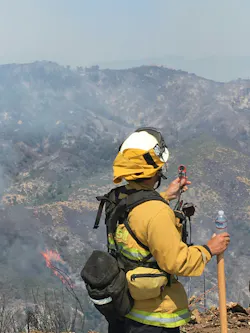
In the wildland, escape routes and safety zones must be identified, and the escape routes must be secured as much as possible. Trees can come down. Exiting civilian vehicles can block your path. The route can be a longer hike than expected. Plain and simple, don’t gamble with your time wedge to safety. If conditions are deteriorating, always take appropriate action.
5) Post lookouts when there is possible danger. During structural firefighting, the lookout can be the officer or senior firefighter who’s behind the nozzleperson getting the bigger picture: looking for signs of flashover, stacked goods falling, etc. The lookout also can be a roof team member/officer standing at a vantage point, listening to the radio traffic, and watching smoke and fire conditions and structural stability for the ventilation team.
In the wildland, the lookout can be a member on the crew who steps back or aside for a head-on-swivel view or who’s placed on another ridge to watch the overall conditions that might affect you. When triggers or changing fire environment action points are met, the lookout radios the crew. The lookout must be properly trained on what to look for.
6) Be alert. Keep calm. Think clearly. Act decisively. There should be standard operating procedures for most structure and wildland fires. Further, the most important nonemergency thing that we do is training. Training allows you to calmly, safely and properly adapt to the unique fire environments that we face. The challenge is staying alert and not becoming complacent at incidents.
7) Maintain prompt communications with your forces, your supervisor and adjoining forces. In a structure fire, a coordinated attack and search are key. Ventilation teams must be in sync with fire attack, search teams must know the plan, and someone must be the quarterback who calls the play while the incident commander (IC) monitors the effectiveness of the operation. Each requires communication to ensure that the plan is working as intended.
In the wildland, of course, communications are key, too. However, terrain and topography might inhibit clear communications. As well, you must be aware of other actions: emergency firing, spot fires, wind changes, a plan isn’t working or isn’t working properly, etc. At times, you might need a human repeater to get out these messages. A dedicated incident communication plan is the key, and interoperable radio channels are a must. No comms, no battle.
8) Give clear instructions and be sure they are understood. A safe, coordinated attack requires clear communication and instructions, and one must ensure that they are understood. Garbled or long-winded radio transmissions can be clipped, cut, stepped on and partially heard. Instructions that are provided face to face must be clear, too, for the desired outcomes.
Messages that present a clear task, purpose and end state are understood easily. The mnemonic SPORT-C (situation, priorities, objectives, resources, tactics and communications) is good for quick briefings or providing instructions quickly without missing key points. All messages need confirmation.
9) Maintain control of your forces at all times. In a structure fire, we don’t operate independent of the plan. We shouldn’t operate independently in the wildland either.
During a structure fire, conducting search without anyone on the incident knowing, engaging in fire attack when assigned as a rapid intervention crew and not informing the IC that you made entry from a different side of the fire than what was expected all can lead to bad outcomes.
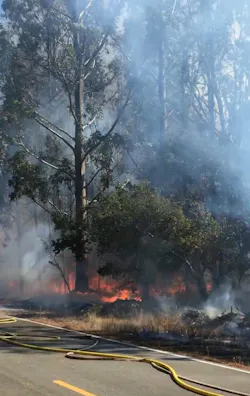
In the wildland, dropping trees without others knowing that you’re going to do so or out of your classification, emergency firing without notification and leaving the pumping platform without informing the crews on the line all can have negative outcomes. Keep your team in sync and run the plays that were communicated and briefed to.
10) Fight fire aggressively, having provided for safety first. The first nine Firefighting Orders point and lead you to this one.
Risk management
To run the plays, you must practice the plays. Train as though your life depends on it, because it does. The municipal firefighter is engaging more and more in the wildland, particularly the wildland/urban interface. We must use risk management—not be completely risk averse—to accomplish our job. We are the problem solvers that put people back home.
About the Author
 Surgey Tomlinson
Surgey Tomlinson
Surgey “Guy” Tomlinson has served in the Los Angeles City Fire Department (LAFD) for more than 36 years. He has been an officer for 26 years, the past nine as an assistant chief. Tomlinson heads Special Operations, which oversees air operations, disaster response, hazmat, wildland, the Homeland Security Section and the Community Emergency Response Team. He is a liaison for the Port of Los Angeles and Los Angeles World Airports and is the president of the LAFD Chief Officers Association.