Wildfire Expert Raises Red Flag Over Government Strategies
Although it uses the words "paradigm shift" 13 times, the U.S. Forest Service's new wildfire crisis strategy appears stuck on old tactics, according to area fire experts.
"I saw no new strategy but rather a potential increase in the same fire control strategy of 'fuel treatment' to enhance fire control," retired Forest Service fire scientist Jack Cohen said after reviewing the documents released on Tuesday.
On Tuesday, U.S. Agriculture Secretary Tom Vilsack announced plans to spend upward of $50 billion to fight catastrophic wildfire. The strategy focuses on "firesheds" — forest landscapes of about 250,000 acres that are likely to burn and have lots of homes and infrastructure at risk.
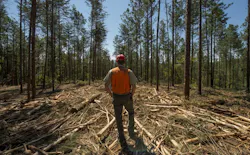
Those firesheds would get intensive work to return 35-45% of their acreage to fire-adapted conditions through hazardous fuels removal, logging and prescribed fires.
The plan identifies five firesheds in Montana, including four along the Idaho border in the Lolo, Bitterroot and Nez-Perce/ Clearwater national forests, and one in the Flathead National Forest surrounding Kalispell.
The strategy calls for treating up to 20 million acres of national forest lands and up to 30 million acres of other federal, tribal, state and private lands over the next 10 years. Nationwide, the strategy will create 300,000 to 575,000 jobs, protect property values, and stimulate local economies.
That represents a tempo of work four times greater than current activity in the West, the report claims.
It should also bring down the Forest Service's annual firefighting costs, which averaged $1.9 billion a year between 2016 and 2020.
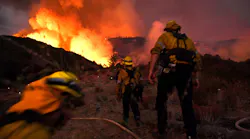
The report notes that wildfires in 2020, 2017 and 2015 burned a total of more than 10 million acres. The National Interagency Fire Center has stopped labeling fires larger than 100,000 acres as exceptional events, because they have become so common.
Missoula is home to the Forest Service's Fire Sciences Lab as well as an extensive community of academic and professional forestry and fire experts. It started developing a Community Wildfire Protection Plan in 2005, and updated it in 2018.
"The use of tired, old, ill-defined language such as 'hazardous fuels' does little to describe what the fuels (i.e., wildland vegetation) is hazardous to," said Missoula County Commissioner Dave Strohmaier, who helped revise the latest version of the plan. "We seem to have learned nothing from recent fires that have resulted in community destruction, such as Denton, Montana. This was a grass fire, and there were no forests to thin or otherwise eliminate the risk of crown fire from."
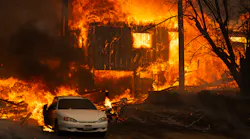
The West Wind fire on Nov. 30 destroyed 25 homes and six commercial buildings in Denton, including the town's granary. The Marshall fire on Dec. 30 burned almost 1,100 houses with an estimated $513 million in total damage. It was primarily a grass fire pushed by 110 mph winds.
And despite 11 of the report's 23 photo illustrations depicting burned houses or fire-threatened neighborhoods, Strohmaier couldn't find the words "home ignition zone" anywhere in the document.
"Community destruction is (a home ignition zone), not a fire control problem," Strohmaier said. Throwing more money at treatments that won't get the expected outcomes "does no one any good and sets up false expectations as to what will truly reduce the risk of community destruction and improve ecological and community resilience."
Cohen found no evidence that the writers considered best available science, which shows that wildland-urban disasters are mainly a factor of how houses catch fire, not forest management, he said.
He cited extensive research explaining how community wildfire destruction (incidents where more than 100 homes get destroyed) happens when fires overrun the fuel breaks and forest treatments intended to control them. But it's not the "big flames of high intensity wildfires (that) cause total home destruction," but rather "lofted burning embers (firebrands) on the home and low intensity surface fire spreading to contact the home" that did the damage, often hours after the main fire had subsided or moved elsewhere.
At the same time, Cohen noted that the fireshed approach appears headed in two contradictory directions. On one hand, it acknowledges the need for large-scale burning to improve forest health and ecology. But it doesn't acknowledge the Forest Service's "inherent management aversion to fires burning at landscape scales that cannot be under tight control."
"The press release and full document are just more of the same management that enables continuation of the wildfire problem," Cohen concluded.
The Wildfire Today blog reviewed the strategy with an eye for its funding. It noted that the Forest Service called for an additional $2 billion a year to get ahead of its hazardous fuels backlog.
"The growth of the climate crisis, which has contributed to the 'wildfire crisis,' appears to be exceeding the estimates of scientists," Wildfire Today moderator Bill Gabbert wrote on Tuesday. "Changes are occurring even more quickly than previously expected. So low-balling the funding for protecting our homeland will mean we will fall even further behind in treating fuels and attempting to keep fires from wiping out more communities."
___
(c)2022 Missoulian, Mont.
Visit Missoulian, Mont. at http://www.missoulian.com
Distributed by Tribune Content Agency, LLC.