Mild Year for California Wildfires after Deadly Start
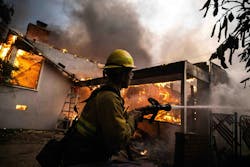
2025 began with a series of raging fires in Los Angeles, which decimated neighborhoods in the Pacific Palisades and Altadena, killing more than 30 people. The burn zones remain in the rebuilding process, an arduous and lengthy undertaking nearly a year later.
After the devastation from the Palisades and Eaton fires, though, the rest of 2025 was quite the opposite in terms of damage from wildfires across Southern California, fire officials said.
“Overall this year, if you take away the devastating January fires, it’s been a pretty mild year for wildfires across California, but that can change in a moment’s notice,” Nick Schuler, deputy director of communications for Cal Fire said.
Across the state, there were more fires than the agency’s five-year average, but less acres burned overall, he said. California’s five-year average for wildfires is 7,200 and there were 7,838 in 2025, Schuler said. Despite that increase, the acres burned were about half what the state has experienced in recent history with 525,000 acres burned compared to the five-year average of 1.3 million, he said.
“So we were seeing a dramatic decrease this year in the number of acres burned,” Schuler said.
January’s deluge of fire was brought on during intense Santa Ana winds during dry conditions spurred by months of below average rainfall and warmer temperatures that “accelerated” vegetation drying out, adding to fire risk, Schuler said.
“We saw the wind really triggered large-scale fires for several months, during what normally we would consider winter conditions. We also saw a weakening coastal marine layer, which when the marine layer doesn’t come in, it doesn’t cause moisture to be in the plants and things like that,” he said. “So, areas that were along the coast tended to be a little bit drier than normal, which contributed to the red flag conditions in January, as well.”
Flames spreading in densely populated areas in one of the country’s largest cities posed difficulties for firefighters, as wind-driven flames caused thousands to evacuate.
“Everybody thinks of those fires in January as wildland fires. They really started out that way, but then it really turned into an urban conflagration, meaning fire spread from structure to structure, and embers being thrown a half a mile, starting homes farther away, so the challenges of fighting fire in those conditions continue to be more and more difficult.,” Schuler said.
While the historic, highly destructive fires in Los Angeles immediately come to mind, wildfires impacted other areas in Southern California.
“In Riverside County, they experienced about 47 fires that were over 10 acres, including the 2,300 [acre] Wolf fire, which started in June,” Schuler said. “San Bernardino County had the 4,293 acre Ranch fire, which started in June as well.”
Looking at the end of the year, Cal Fire’s seasonal outlook reflects an “above-normal large fire potential” in Southern California, with warmer temperatures, lack of rain and above normal Santa Ana winds. The agency expects a “significant rainfall event” to take place at the end of December or in early January, which “ should reduce fire threat to near-normal levels” at the start of 2026.
Here’s a look at some of the notable blazes across the Southern California region in 2025.
Los Angeles County
Palisades fire
Los Angeles County’s largest fire by acreage, the over 23,000 acre Palisades fire burned through a neighborhood known for coastal views and upscale homes. The fire, fueled by a rare wind event of hurricane proportions, killed 12 people and damaged or destroyed nearly 7,000 structures. A 29-year-old man, Jonathan Rinderknecht, was arrested in October on suspicion of starting a fire that became the Palisades fire.
Eaton fire
The deadliest fire of the year in Los Angeles County, the Eaton fire killed 19 people and burned over 14,000 acres in Altadena. The blaze lasted 24 days and broke out amidst intense, rare winds in January. Over 9,000 structures were damaged or destroyed, resulting in the losses of entire neighborhoods in the historic area after the blaze began near Eaton Canyon.
Hughes fire
The Hughes fire exploded to over 10,000 acres in late January near Castaic Lake. The fire was pushed by Santa Ana winds during red flag warnings and at one point over 50,000 people were under evacuation orders and warnings.
Canyon fire
Sparked near Castaic, the Canyon fire’s flames spread through Los Angeles and Ventura counties. The fire burned over 5,000 acres and destroyed seven structures across a few hot August days. Rough terrain, including steep canyons, and high temperatures made for challenging conditions as firefighters fought the fire, containing it after a week.
Kenneth fire
The Kenneth fire began in West Hills, in the San Fernando Valley, burning over 1,000 acres. As the fire blazed in Los Angeles and Ventura Counties, an errant evacuation alert meant for those near the Kenneth fire was mistakenly sent out to everyone in Los Angeles County, causing stress amidst the existing chaos of January firestorms that included the Eaton and Palisades fires. A person of interest was detained, but not arrested as authorities investigated the possibility of arson.
Hurst fire
During January’s raging windstorm, the Hurst fire scorched nearly 800 acres in Sylmar, near the 210 Freeway. Winds pushed the fire into the Angeles National Forest and into the footprint of the 2019 Saddle Ridge fire. It was contained by firefighters after just over a week.
King fire
The King fire began in August near Gorman, reaching just under 600 acres, fueled by gusty winds. The blaze burned an RV park and necessitated evacuations at another.
Riverside County
Wolf fire
In June, the Wolf fire began south of Banning and blazed across the San Jacinto Mountains, scorching over 2,300 acres and destroying one structure. The fire started near Old Banning Idyllwild Road and Wolfskill Truck Trail and burned for over two weeks before firefighters fully contained it.
Rosa fire
Beginning east of Anza at the Santa Rosa Truck Trail in August, the Rosa fire burned over 1,600 acres and caused highway closures that extended out to the Palm Desert area.
Juniper fire
The Juniper fire spread across rural Mead Valley, south of Riverside, burning over 750 acres before firefighters contained it. The late June blaze destroyed outbuildings and had over 9,000 people under evacuation orders and warnings at one point.
San Bernardino County
Ranch fire
A blaze in the High Desert, the Ranch fire burned the Apple Valley area in June. Hundreds of residents were evacuated at one point and several cars were burned in the fire, which ultimately reached over 4,000 acres.
Gold fire
Burning in a section of wilderness north of Big Bear Lake, the Gold fire scorched just over 1,000 acres in early August, causing evacuations at a campground and climbing area.
Orange County
Crow fire
The Crow fire burned 500 acres in one day in Orange and San Diego counties in August, after beginning near Camp Talega.
Related Articles
- Free Rose Parade and Floatfest tickets coming to fire-affected residents
- ‘Rising Together’ Rose Parade float to bring together Palisades, Eaton firestorm survivors
- 5 men charged with felonies for allegedly working as unlicensed contractors in Eaton fire burn-scar area
- A 14-year-old’s letter leads to Hollywood honor for LAFD
- California again delays ‘zone zero’ wildfire protection rules for homes
©2025 MediaNews Group, Inc. Visit dailynews.com. Distributed by Tribune Content Agency, LLC.