Moving U.S. Forest Service to Utah Sparks Ire from Conservationists
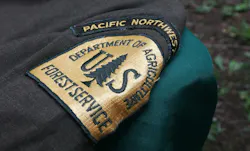
The U.S. Forest Service announced Tuesday that it will undergo a major nationwide reorganization, close its regional offices, install new state-based leadership teams and move its headquarters to Salt Lake City, Utah.
Housed under the U.S. Department of Agriculture, the Forest Service is currently based in Washington, D.C., with nine regional offices across the country. Under the new plan, all of those regional offices will close, the USDA said.
Secretary of Agriculture Brooke L. Rollins characterized the change as a way to “return common sense to the way our government works.”
“Moving the Forest Service closer to the forests we manage is an essential action that will improve our core mission of managing our forests while saving taxpayer dollars and boosting employee recruitment,” Rollins said in a news release. “Establishing a western headquarters in Salt Lake City and streamlining how the Forest Service is organized will position the Chief and operation leaders closer to the landscapes we manage and the people who depend on them.”
The Forest Service will transition into a state-based organizational model designed to “shift authority closer to the field,” the agency said — though not every state will get its own office, retaining a regional model in some parts of the country. Under the new model, 15 state directors will be appointed to represent one or more states, serving as “national leaders with primary oversight of forest supervisors, operational priorities, and relationships with states, tribes, and other partners.”
Most of the western states will get their own offices, with Oregon’s headquartered in Salem and Washington’s in Olympia, according to a list released by the agency Tuesday. Current regional offices will either be shut down or repurposed as “shared operational service centers,” the Forest Service said. The Pacific Northwest Region office in Portland is not listed as one of the places that will be repurposed.
The U.S. Forest Service will also consolidate its research enterprise, the agency said, bringing all of its dispersed research stations under the umbrella of a single research organization based in Fort Collins, Colorado. More than 50 research and development facilities around the country are currently slated to close, including one in Portland and two in Washington.
Firefighting operations will not be affected by the reorganization, officials said.
“This is about building a Forest Service that is nimble, efficient, effective and closer to the forests and communities it serves,” Forest Service Chief Tom Schultz said in the news release. “Effective stewardship and active management are achieved on the ground, where forests and communities are found — not just behind a desk in the capital.”
The move was swiftly criticized by environmental groups, who accused the Trump administration of making changes that would benefit private industry.
“This is a costly bureaucratic reshuffle that will hand more power to corporations and states like Utah to log, mine and drill the public’s forests for private profit. It punishes career staff by forcing them to move across the country,” Taylor McKinnon, southwest director for the Center for Biological Diversity, said in a statement. “National forests belong to all Americans. Our nation’s capital is where federal policy is made and where the Forest Service headquarters belongs.”
Nonprofit conservation group The Wilderness Society said the restructuring is “a solution in search of a problem.” The group said the new state-based model is needlessly recreating the existing regional model.
“Simply put, this reorganization will wreak havoc on the Forest Service management and organization,” Josh Hicks, conservation campaigns director at The Wilderness Society, said in a statement released shortly after the announcement. “At a time when wildfires are getting worse, and access to public lands is already under strain, the last thing we need is an unnecessary reorganization that creates chaos and confusion for the land managers, researchers and wildland firefighters who help keep our forests healthy now and for future generations.”
©2026 Advance Local Media LLC. Visit oregonlive.com. Distributed by Tribune Content Agency, LLC.