Roadmap for Wildfire Risk Modeling Released by UL FSRI
As wildfires continue to increase across the country, the fire service has a new item in the toolbox to better protect their communities.
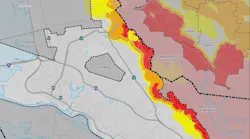
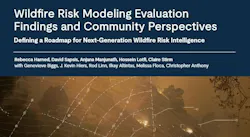
The “Wildfire Risk Modeling Evaluation Findings and Community Perspectives” report, compiled by investigators with the UL Research Institutes’ Fire Safety Research Institute, provides “an actionable roadmap for advancing wildfire risk modeling science.”
“Advancements in wildfire risk modeling should focus on creating a modular, interoperable modeling ecosystem that spans the full wildfire risk pathway rather than developing a universal “best” model. This enables various model specializations, datasets, and analytical methods to work together — leveraging their unique strengths to better support wildfire risk assessment and operational decision-making,” according to the report released recently.
“The Wildfire Risk Modeling Exercise was a convergent test and evaluation of the diverse models available to characterize wildfire risk today. These results revealed broader insights about the state of the science, prioritized gaps, and identified the investments needed to advance wildfire risk intelligence.
The findings provide a critical foundation for shaping the next decade of research, innovation, and operational capability. This report also serves as an important resource for local and state fire service and public safety agencies, providing an evidence-based framework for selecting wildfire risk modeling capabilities and applying them effectively to assess and manage community risk,” explained Rebecca Harned, ULFSRI principal research scientist
Among the findings and recommendations include:
· Establish end-to-end wildfire risk intelligence frameworks to create decision-centered risk assessments capable of identifying who and what are most at risk, why risk exists, and how risk can be reduced.
· Create an integrated landscape-to-community fire modeling ecosystem to enable comprehensive modeling of fire progression, from ignition through community impacts and urban conflagration.
· Advance exposure and vulnerability modeling for improved accuracy in estimating structure ignition probability, damage likelihood, and community impacts.
· Expand wildfire risk modeling into decision support systems to have operationally relevant decision-support tools that inform mitigation, preparedness, response, and recovery activities.
· Develop comprehensive consequence and economic risk modeling capabilities to enable comprehensive assessments of wildfire consequences that support risk-informed investments and policy decisions.
· Improve visualization, communication, and explainability to increase usability, transparency, and adoption of wildfire risk intelligence products by technical and non-technical stakeholders.
· Establish interoperability standards and shared data frameworks to build a federated modeling ecosystem that enables collaboration, model integration, and workflow automation.
· Advance ensemble modeling as the future state of wildfire risk assessment for more robust, transparent, and scientifically defensible predictions that leverage the strengths of multiple modeling approaches.
“Success requires fostering an open community of practice to develop social, technical, and inter-organizational capabilities to create solutions that are higher value than the sum of their individual parts,” researchers determined.
After identifying opportunity gaps, an action plan for the wildfire risk community includes:
· Establish end-to-end wildfire risk intelligence frameworks to create decision-centered risk assessments capable of identifying who and what are most at risk, why risk exists, and how risk can be reduced.
· Create an integrated landscape-to-community fire modeling ecosystem to enable comprehensive modeling of fire progression, from ignition through community impacts and urban conflagration.
· Advance exposure and vulnerability modeling for improved accuracy in estimating structure ignition probability, damage likelihood, and community impacts.
· Expand wildfire risk modeling into decision support systems to have operationally relevant decision-support tools that inform mitigation, preparedness, response, and recovery activities.
· Develop comprehensive consequence and economic risk modeling capabilities to enable comprehensive assessments of wildfire consequences that support risk-informed investments and policy decisions.
· Improve visualization, communication, and explainability to increase usability, transparency, and adoption of wildfire risk intelligence products by technical and non-technical stakeholders.
· Establish interoperability standards and shared data frameworks to build a federated modeling ecosystem that enables collaboration, model integration, and workflow automation.
· Advance ensemble modeling as the future state of wildfire risk assessment for more robust, transparent, and scientifically defensible predictions that leverage the strengths of multiple modeling approaches.
About the Author
 Susan Nicol
News Editor
Susan Nicol is the news editor for Firehouse.com. She is a life member and active with the Brunswick Volunteer Ambulance & Rescue Company, Oxford Fire Company and Brunswick Vol. Fire Co. Susie has been an EMT in Maryland since 1976. Susie is vice-president of the Frederick County Fire/Rescue Museum. She is on the executive committee of Frederick County Volunteer Fire and Rescue Association. She also is part of the Maryland Institute for Emergency Medical Services Systems (MIEMSS) Region II EMS Council. Susie is a board member of the American Trauma Society, Maryland Division. Prior to joining the Firehouse team, she was a staff writer for The Frederick News-Post, covering fire, law enforcement, court and legislative issues.