Rescue vs. Recovery: Making the Hard Call During Technical Rescue Operations
Key Takeaways
- The transition from rescue to recovery at technical rescue incidents occurs when victim survivability is no longer possible, requiring deliberate command decisions supported by technical and medical assessments.
- Clear communication and documentation of the rescue-to-recovery shift are essential to maintain operational discipline and public trust.
- Technical Rescue Specialists play a crucial role in hazard assessment, risk evaluation, and supporting command decisions, especially during emotionally charged incidents.
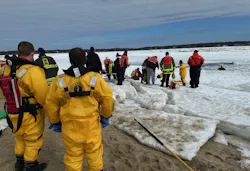
By the time a technical rescue team is activated, the incident has already moved beyond routine operations. These calls can be very complex, resource-intensive, and emotionally charged. They require more than technical proficiency, they demand disciplined decision-making from all involved. From the technical rescue specialists to the incident commander (IC), one of the most critical decisions in any technical rescue incident is determining whether the operation remains a rescue or has transitioned to a recovery.
For technical rescue specialists, this distinction directly impacts strategy, tactics, and risk tolerance. Understanding when and how to make the transition from rescue to recovery is one of the most defining characteristics of technical rescue operations.
What defines a rescue operation?
In any technical rescue environment, a rescue is defined by the presence of what can be described as reasonable survivability. This concept is consistent across national standards and task force doctrines, including NFPA 1670: Standard on Operations and Training for Technical Search and Rescue Incidents and FEMA's Urban Search and Rescue (USAR) operational guidance, which emphasize that rescue activities are justified when conditions indicate a viable life-saving outcome.
Rescue mode is primarily driven by urgency. Time-sensitive priorities dominate the decision-making process by the leaders in charge. Calculated risk is accepted when justified by the potential benefit. Operations move quickly but remain controlled, consistent with the risk management principles outlined in NFPA 1500: Standard on Fire Department Occupational Safety, Health, and Wellness Program, which allows for increased risk when a potential life-saving benefit exists.
Common rescue-mode indicators in various scenarios can include the confirmation of signs of life, including visual confirmation, speaking directly with the victim, sounds that are consistent with life, using listening devices or cameras to visually see the victim, and body heat or breathing that is detected with a thermal imaging camera. These can vary depending on the situation and the location of the victims. Contact can mean prior to rescuers’ arrival with good witnesses and a time period that can give the victim a chance. The time involved will vary based on the situation, but we all work within the golden hour rule that refers to the period immediately following the injury or entrapment that resulted in the rescuers being called. That period is recognized as the timeframe that the victim has highest probability of survival if definitive technical rescue and medical services are rendered in a prompt manner.
Other indicators of rescue mode can include survivable injury patterns that show a chance of survival, such as a crush injury that is limited to extremities, partial burial of the victim with patent airway or minor injuries with prolonged extrication either from height or other location that requires technical skill removal. Environmental conditions that create survivability windows could indicate a survivable situation, including air temperature that is moderate and favorable to the victim, good breathable air that is free of debris, toxins, or low oxygen atmospheres. Lastly, finding and utilizing viable access routes without catastrophic risk to the rescuers, including areas that are not susceptible to secondary collapses or shifting loads either overhead or adjacent to the victim will help determine if this is a rescue or a recovery. During the initial assessment period it is important that technical rescue specialists understand that any time lost may equal a life lost.
An operation typically remains in rescue mode, according to NFPA 1670 and FEMA USAR rescue doctrine, when:
- Victim survivability is reasonably possible
- Medical intervention could change the outcome
- Risk to rescuers is justified by potential life-saving benefit
- Time is a critical factor
- Access can be achieved without uncontrolled hazards
Understanding recovery operations
A recovery operation begins when survivability is no longer reasonably possible. Both NFPA 1670 and FEMA USAR Field Operations Guides (FOGs) recognize recovery as a legitimate operational phase once rescue objectives can no longer be met. This determination must be made by command with input from the following: Technical Rescue Specialists on-scene working with a medical authority (EMS, physicians, medical examiners), an evaluation of the environmental conditions including time, temperature, and other atmospheric hazards including a prolonged period of time prior to arrival of rescuers, extreme hot or cold conditions. Also, exposure to airborne debris, dust, toxins, or low oxygen levels, physical findings and injury patterns, plus structural or geotechnical assessments made by qualified and trained structural engineers that have experience in collapsed buildings/structures or transportation accidents.
An operation transitions to recovery when:
- The victims injuries are incompatible with life.
- Survivability timelines are exceeded when the victim does not meet the criteria of a rescue based on the factors that may include time entrapped, physical injuries, accessibility to the victim, atmospheric conditions and general environmental factors.
- Environmental conditions eliminate viable rescue outcomes
- Medical authority confirms death or non-survivability
- Continued risk offers no life-saving benefit
Once a recovery mode or operation has been declared by command, priorities need to shift. Speed must be replaced with cautious movements. Risk tolerance decreases significantly, consistent with NFPA 1500’s mandate to avoid unnecessary risk when no life-saving benefit exists.
The transition: A critical command decision
The transition from rescue to recovery is a command-level decision, supported by technical specialists and the medical authority. The FEMA USAR doctrine stresses that this decision must be deliberate, documented, and communicated, particularly during extended operations or multi-operational periods. NFPA 1670 emphasizes that IC must continually reassess the following situations: hazard escalation, structural stability, victim survivability, and responder risk exposure.
Once the transition is made, it must be clearly communicated within the incident command system (ICS). Ambiguous language undermines operational discipline and contradicts the intent of both ICS doctrine and USAR task force operations.
Command checklist
- Has survivability been realistically assessed?
- Are we accepting risk without benefit?
- Has the transition been clearly communicated?
- Are tactics aligned with the current operational mode?
- Are emotional pressures influencing decisions?
Risk vs. benefit: The ethical foundation
Technical rescue operations are grounded in a principle echoed across NFPA standards and FEMA doctrine:
We will risk a lot to save a lot.
We will risk little to save little.
We will not risk anything to save nothing.
This philosophy is embedded in NFPA 1500 and reinforced throughout USAR risk management models. In rescue mode, calculated risk is acceptable. In recovery mode, it is not. Continuing high-risk operations without a survivable outcome violates both ethical responsibility and established safety standards.
The role of the technical rescue specialist
Technical Rescue Specialists serve as technical advisors and operational risk managers. There are many times when the IC will not have the required knowledge, skills, or abilities to make these decisions. This is where the IC should rely on the Technical Rescue Specialist. FEMA USAR training places strong emphasis on the Technical Rescue Specialist’s role in the following tasks: hazard identification, operational feasibility, risk vs. benefit assessment, and supporting command decisions. Specialists must be prepared to deliver difficult assessments clearly and professionally, devoid of emotions, particularly when survivability has been lost.
Technical Rescue Specialists responsibilites
- Translating hazards into operational impacts
- Provide clear, defensible recommendations
- Support command with standards-based guidance
- Maintain discipline during emotionally charged incidents
- Reinforce responder safety above all else
Operational discipline after the transition
FEMA USAR after-action reviews repeatedly highlight that some of the highest-risk moments occur after the transition to recovery. Once urgency subsides, complacency or emotional decision-making can increase risk. In recovery mode the following standards need to be continually assessed; Redundant safety systems are mandatory, shoring and stabilization take priority, entry is minimized and justified, continuous atmospheric monitoring is enforced, PPE compliance aligns with NFPA 1500 and 1670. Slowing down is not a lack of effort; it is professional restraint needed to keep all involved safe.
Public and family communication
While NFPA and FEMA standards focus on operations, they also reinforce the importance of clear communication and unified messaging. There will likely be bystanders who are the family and friends of the decedent to be recovered. Explaining the transition from rescue to recovery to the family and friends should emphasize the following points: exhaustive rescue efforts were conducted, decisions were standards-based and medically informed, responder safety remained paramount, operations were conducted with dignity and respect.
Training for the reality of a recovery
NFPA 1670 requires that organizations train not only in rescue techniques but also in operational decision-making. FEMA USAR programs reinforce this through scenario-based training that includes rescue-to-recovery transitions. Effective training should always include various points to focus on including; survivability assessment scenarios, medical education on crush injury, hypoxia, and exposure, risk management and various decision points, command transition protocols, and after-action reviews aligned with standards
Training Takeways
- Teach decision points, not just skills.
- Normalize recovery as part of the mission.
- Reinforce standards-based command authority.
- Prepare responders for emotional and operational realities.
Why The Distinction Between Rescue and Recovery Matters
The rescue vs. recovery distinction is not semantic, it is foundational. It protects responders from unnecessary injury or death. It is important to show the decision of the command staff were completed through defensible, standards-based decisions. This foundation not only solidifies the responding departments through operational credibility, it helps the communities through transparency and trust. These are guidelines that, if followed correctly, can show all involved made choices and decision in the best interest of all parties.
Conclusion
Rescue and recovery are not opposing missions; they are phases within the same responsibility. NFPA standards and FEMA USAR doctrine provide clear guidance, but it is the technical rescue specialist who must apply them in real time.
We fight aggressively for life when life can still be saved. When it cannot, we shift to recovery mode with clarity, discipline, and respect. That distinction is not failure, it is the mark of a professional, standards-driven technical rescue operation.
Reference List
- NFPA 1670 – Standard on Operations and Training for Technical Search and Rescue Incidents
- NFPA 1500 – Standard on Fire Department Occupational Safety, Health, and Wellness Program
- NFPA 1561 – Standard on Emergency Services Incident Management System
- FEMA Urban Search & Rescue Field Operations Guide (FOG)
- FEMA USAR Rescue Specialist Training Manuals
- FEMA ICS / NIMS Doctrine
About the Author
 Christopher Beal
Christopher Beal
Christopher Beal is the fire chief of the Barnstable, MA, Fire Department, where he has worked for the 23 years. Beal is also a Rescue Squad Officer with the FEMA Urban Search and Rescue Team Massachusetts Task Force 1, a Task Force Leader with the Barnstable County, MA, Technical Rescue Team, and a FEMA certified technical rescue instructor with Spec Rescue International. Beal is a licensed paramedic, a Credentialed Fire Chief in Massachusetts as well as with the Center for Public Safety Excellence, and holds a bachelor’s degree in fire science from Columbia Southern University and a masters of Public Administration from Anna Maria College.