Fire Department Search Operations Outside of the Structure
Key Takeaways
- Fire department officers and firefighters must treat wide-area searches as a core skill, not something that’s reserved for technical rescue teams.
- Firefighters’ availability for a wide-area search isn’t the same as them being prepared to conduct one. Departments must take a hard look at their capabilities and understand the differences and similarities between wide-area search and structure fire search.
- Fire department personnel who conduct a wide area search must do so systematically, including diligent communication and documentation.
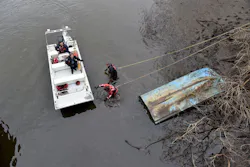
Search always has been one of the core responsibilities in the fire service. Unfortunately, often, it only is considered in terms of inside of a burning structure and ties to smoke conditions, victim profiles, and how fast that we can get a line between us and the fire. However, search doesn’t start and stop at the front door of a house fire. It happens around us constantly, and most firefighters don’t realize how often that they do it.
Career or volunteer department, big city or small town, you’ll find yourself in a search operation that has nothing to do with fire at all. Once you embrace that, you’ll start to understand how much of our job already involves search and how much better that you could be at it if you treated it with the same seriousness that you give interior operations.
Discipline, in all its forms
Most firefighters have been part of a non-structure-fire search without ever calling it that. Maybe they looked for a missing child who slipped away from a backyard or for an elderly resident with dementia who wandered off and police asked for help to check the surrounding blocks. Maybe they were asked to walk a field for evidence after a crime, to sweep a park before a fireworks show or to clear a landing zone for a helicopter. Maybe they were called to look for a driver who was ejected from a vehicle at night and could be anywhere in a 100-foot radius. These things feel routine, but they all are search operations. The scale changes, the urgency changes and the rules of engagement change, but the fundamentals don’t. You’re moving with purpose, you’re communicating, and you’re trying to locate someone or something that isn’t where it’s supposed to be. Once you start to recognize these moments as search work, you start to appreciate how often that they happen and how important it is to approach them with discipline instead of winging it.
Hard look at capabilities
The types of calls that are noted above are becoming more frequent. More people who have cognitive impairments are living independently. There’s more outdoor recreation, more trail systems, more vehicle crashes at higher speeds, more extreme weather events that displace people, more law enforcement requests for assistance.
The fire service is being pulled into these operations because we are available, we are trained to work in chaos, and we know how to organize people quickly. However, being available isn’t the same as being prepared. It’s in this gap where departments get caught behind the eight ball.
Before you can get better at non-fire-structure search, you must take a hard look at what your department is. Every firehouse, whether it’s a staffed urban company or a volunteer outfit that covers a rural district, must understand what it brings to the table. Who actually conducts search operations in your jurisdiction? Do you have a plan, or do you make it up every time? What equipment do you have, and what training levels exist among your members?What is realistic for staffing? How long does it take to get more help? What mutual-aid partners have search capabilities? What does your terrain look like? What types of search incidents have you handled? These aren’t trick questions. They are the foundation for everything else.
This also is where the needs-vs.-wants conversation matters. Everyone wants the best gear and the most advanced tools, but what do you need to be effective right now? What can you sustain? What can you train on consistently? Needs-vs.-wants isn’t about lowering expectations. It’s about building a solid base from which your department can operate. A department that has a handful of volunteers and limited funding can’t stand up a full technical search team overnight, but it absolutely can build a reliable, disciplined approach to the types of searches that it’s most likely to encounter. It can build relationships with the agencies that can bring in the specialized resources when needed.
Systematic, not robotic
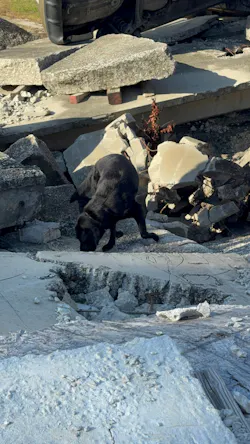
Once a department understands its capabilities, the next step is to adopt a simple, systematic approach to search. Whether clearing a small room or a massive field, the fundamentals don’t change. A clear objective is required. The search area must be defined. Assignments are required. Movement must be methodical. Communication and documenting what was covered is required.
Documentation is one of the most overlooked parts of search operations. Many people assume that they’ll remember where they walked or what they checked, but once the operation grows, once more units arrive, once the sun goes down, that memory becomes unreliable. A simple map that includes marked areas can prevent hours of wasted effort.
Remember, systematic doesn’t mean robotic. Common sense still matters. If you’re searching for a toddler, you’re looking low, near water, near hiding spots and near anything that would draw a child’s curiosity. If you’re searching for an elderly person with dementia, you’re thinking about mobility, familiar paths, and the tendency to drift toward or away from noise. If you’re searching for someone who was ejected from a vehicle, you’re thinking about the physics of the crash, the terrain and how far that a body can travel. If you’re searching for evidence, you’re thinking about how someone might try to hide or discard it.
The combination of a disciplined system and practical common sense is what leads to successful searches. One without the other is a recipe for missed areas and wasted time.
Communication
Information flow is the lifeline of any search operation. The people who take the initial call—dispatchers, 9-1-1 operators, law enforcement—hold critical details that must reach responders quickly and accurately. Once the search begins, information must keep moving: last known location, time last seen, clothing, medical issues, behavior patterns, hazards, weather, terrain, new leads, resource availability, search progress. Every bit of it matters.
This isn’t a one-time briefing. It’s a constant cycle of updates and adjustments. The command post or emergency operations center must stay in contact with units that are in the field, and those units must be disciplined enough to report what they see, what they don’t see and what they need.
If a department never talked about how information flows during a search, it already is behind. Preplanning, tabletop exercises and conversations with mutual-aid partners put a department far ahead when it’s showtime. Even something as simple as identifying the best staging areas in the district, the best access points to wooded areas and the best places to land a helicopter can save precious time.
Similarities
The non-structure-fire search operations mindset is different from the mindset for search inside of a burning building. In a fire, calculated risks are taken based on time of day, construction type, smoke conditions and the likelihood of victims. Members push inward toward the hazard. In a wide-area search, members often start broad and work their way in. Instead of speed, they prioritize coverage and accuracy. Instead of a single building, they might be dealing with miles of terrain. Instead of one crew, they might be coordinating dozens of agencies.
That said, the similarities are there. Time matters. Discipline matters. Communication matters. Teamwork matters. Risk-assessment matters. Victim survivability matters. The difference is scale and perspective. In a fire, members are fighting the clock against heat and smoke. In a wide-area search, members fight the clock against exposure, terrain and the unknown.
Wide-area search principles apply everywhere. Urban settings bring limited visibility, countless hiding spots and complex layouts. Suburban areas mix parks, retention ponds, trail systems and residential neighborhoods. Rural areas bring open fields, woods, limited lighting and long response times. Even basic water searches—not dive operations, but the initial search for, say, a witnessed submersion or a missing person near the water—follow the same fundamentals. Wilderness searches add another layer: A child who wandered off behaves differently than an experienced hiker who had a medical emergency. Understanding who is being looked for shapes how the search is conducted.
Technology
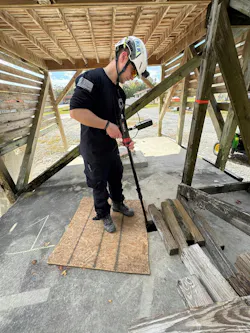
Technology has become a major asset, but only if its use is understood. Some of the most basic tools—thermal imagers, flashlights, maps, compasses, marking tools—can make a huge difference. Depending on a department’s jurisdiction, that might be all that’s required.
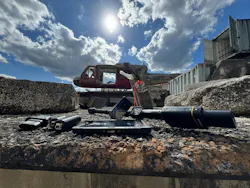
Many departments have access to drones that have thermal or infrared capability, search cameras, seismic and acoustic listening devices, GPS tracking, real-time mapping software, and helicopters that include technology and trained observers. Others have none. What matters is knowing what’s on hand, what can be requested and how to integrate it into the operation. Technology enhances fundamentals. It doesn’t replace them.
Communication
Communication is what keeps a search operation from falling apart. Without it, teams overlap, areas get missed and critical information never reaches the people who need it. Radio discipline, clear terminology, regular check-ins, accurate reporting of searched areas, updates on hazards and confirmation of assignments are essential. A search operation that lacks communication is just people wandering around hoping to get lucky. That isn’t acceptable.
Preplan
The most important thing that any department can do is to preplan. If non-structure-fire search operations never were discussed, start there. Don’t wait for the next missing person call to figure out how the operation will be handled.
Review past incidents. Conduct tabletop exercises. Identify high-risk areas. Map trails, parks and water access points. Establish mutual-aid agreements. Train on basic search patterns. Practice communication protocols.
Build relationships with law enforcement and EMS. Understand what county, state and federal resources are available to you and for such operations.
Most search operations become mutual-aid incidents. Some are small. Others grow into multiagency, multistate operations that involve hundreds of responders. The more that a department prepares now, the smoother that those operations run later.
A firefighter’s job
Search isn’t a specialty that’s reserved for technical rescue teams. It’s part of a firefighter’s job. Whether crawling down a hallway, sweeping a field or combing through a wooded trail system, the mission is the same: Find the person, solve the problem, bring someone home.
The more that we acknowledge how often these incidents happen, the better that we can prepare. When we train, preplan, communicate and build a disciplined search mindset, we give ourselves the best chance of success. At the end of the day, search isn’t about tactics or equipment. It’s about people.
About the Author
 Robert Policht
Robert Policht
Robert Policht, who is a Firehouse contributing editor, is lieutenant of Ladder Co. 2 of the Passaic, NJ, Fire Department. He assisted with developing and establishing the department’s response to human vs. machine incidents and is attached to the Fire Investigation Unit. Policht started his career as a volunteer and has served as a chief of department. He taught at the Bergen County, NJ, Fire Academy and is a member of the NJ Division of Fire Safety's Fire Threat Task Force. Policht has a master’s degree in emergency management and homeland security from Arizona State University and has been published in several trade publications. He is a founder of and contributor to Flow and Vent, which is a website that's dedicated to fire and rescue training.