Scaffolding Rescue Operations by Fire Departments & Technical Rescue Teams
Key Takeaways
- Understanding why a scaffolding incident occurred provide firefighters, technical rescue crews and EMS providers insight into how the rescue will unfold. Knowing when the incident occurred influences visibility, site activity, environmental exposures and the availability of construction personnel who might be able to provide structural knowledge.
- Size-up by rescuers who respond to a scaffolding incident must evaluate the extent of structural compromise, identify the number and location of victims, assess interactions between the scaffolding and surrounding structures, determine the remaining loads, and evaluate weather or environmental influences.
- Stabilization by rescue teams at a scaffolding incident might involve cribbing and lifting for collapse piles, ground-based stabilization using struts or shores and/or elevated stabilization utilizing rope systems or aerial apparatus.
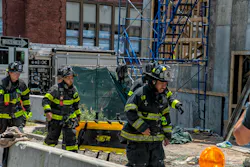
Scaffolding rescue incidents are uncommon but extremely high-risk events that demand a structured and methodical approach from the moment that the call is dispatched. Effective response begins with identifying who’s involved, what occurred, why the incident happened, how it developed and when it took place. These foundational questions shape every operational decision before the first unit arrives and help responders to anticipate the challenges that they might encounter.
Typically, the individuals who are in trouble are workers who are trapped, injured, suspended or otherwise unable to self-rescue. Responding agencies might include fire companies, technical rescue teams, EMS personnel and various specialists, with each bringing different levels of training and capability.
The types of incidents that are encountered range from partial structural collapse to medical emergencies at height, equipment failure, entanglement and falls. These situations often carry the potential for progressive failure or secondary collapse, which makes early stabilization critical to creating a safe environment for both responders and victims.
Why and when
Understanding why an incident occurred provides insight into how the rescue will unfold. Scaffolding failures can arise from mechanical faults, improper assembly, environmental stress or human error. Recognizing these contributing factors helps responders to anticipate hazards, shape contingency plans, and tailor stabilization and access strategies.
When the incident occurred (the time of day, season and weather conditions) directly influences visibility, site activity, environmental exposures and the availability of construction personnel who might assist in providing structural knowledge. A deep understanding of the environment, both the physical and operational context, is essential for safe and effective operations.
Size-up
A comprehensive size-up mirrors the depth that’s required in urban search and rescue or wide-area search operations. Responders must evaluate the extent of structural compromise, identify the number and location of victims, assess interactions between the scaffolding and surrounding structures, determine the remaining loads, and evaluate weather or environmental influences.
Access and egress pathways must be identified early. Size-up is continual and must adapt as new information emerges, particularly as tools are applied, loads shift or environmental conditions evolve. Anticipating secondary collapse is critical; the movement of a single plank, beam or tool can change the system’s stability dramatically.
Stabilization
After size-up, stabilization becomes the next priority and must occur before rescuers make physical contact with the victim. Stabilization might involve cribbing and lifting for collapse piles, ground-based stabilization using struts or shores, or elevated stabilization utilizing rope systems or aerial apparatus. Mechanical jacks, wheels, planks and other components must be secured to prevent movement. Lock-out and tag-out procedures might be necessary to prevent mechanical or hydraulic systems from inadvertently engaging. Some scenarios require rope technicians to work with aerial ladders or platform apparatus to access victims safely. Stabilization protects rescuers and victims alike; no extrication should begin until the system is fully controlled.
Extrication
Once stabilization is complete, responders can begin the extrication process. Scaffolding incidents often involve entanglement with wiring, piping, tools or construction materials. Some victims might be impaled on rebar or scaffolding components or trapped beneath sections of collapsed planking or hardware. These challenges might require specialized cutting tools, high-angle rope techniques or precise aerial operations.
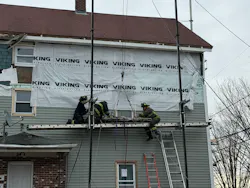
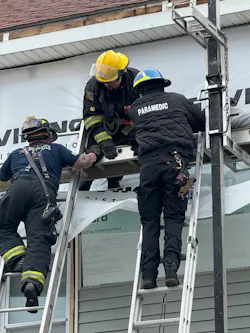
Patient packaging at height often is necessary and must be coordinated carefully between rescue and EMS personnel to avoid aggravating injuries. Because these incidents occur frequently at active work sites, coordination with the Occupational Safety and Health Administration or similar regulatory authorities is likely, particularly during prolonged operations or those that involve severe injury or fatality. This collaboration should be anticipated early by the incident commander (IC) and integrated into the incident action plan.
Staffing
Scaffolding rescues are staffing intensive. Structural monitoring, rope operations, aerial device staffing, extrication and patient care all require numerous personnel who work in coordinated roles. Furthermore, these incidents commonly necessitate mutual-aid partnerships with neighboring departments and specialized rescue teams. Large metropolitan departments frequently deploy rescue medics who provide advanced medical care at height or within compromised environments. At the highest level, FEMA Task Forces demonstrate how structured teamwork, clear assignment of roles and interagency coordination support complex rescue operations. No single unit should expect to manage these incidents alone; collaboration that’s built through preplanning is essential.
Preplanning is one of the most critical components of scaffolding rescue readiness. Departments should identify construction sites that are within their jurisdiction and maintain communication with site supervisors, contractors and safety officers.
Understanding what scaffolding systems are used locally helps departments to anticipate the particular challenges that they might encounter.
Training
Training must be continual and must incorporate realistic scenarios whenever possible. Hands-on training that involves rope systems, stabilization tools, aerial apparatus and patient packaging helps companies to refine skills and develop fluid teamwork. Effective preplanning creates the foundation for confident and decisive response during real-world events.
Equipment
Equipment needs for scaffolding rescues vary depending on the size and complexity of the incident but commonly include shoring materials, ropes, pulleys, cutting tools, aerial devices, atmospheric monitors, thermal imaging cameras and medical packaging systems.
Proper staging is essential to avoid congesting the scene and creating unnecessary hazards. Only essential personnel should operate in the hot zone, with support teams positioned in the warm and cold zones. This tiered approach ensures accountability, prevents scene clutter, and allows rapid deployment of necessary resources while preserving access and operational flow.
Not if, but when
At its core, rescue work is about giving victims the best possible chance to survive a dangerous situation. This requires a balance between risk and reward and an awareness of when operations shift from rescue to recovery. Scaffolding incidents often involve multiple workers, and these events can escalate quickly into mass casualty incidents (MCI). A well practiced MCI plan, including triage, treatment, transportation and resource allocation, is critical for responding effectively when the number of victims exceeds initial expectations.
Departments must assess their capabilities honestly to determine their readiness for scaffolding incidents. This includes evaluating training levels, equipment availability, staffing strength and operational gaps. By identifying vulnerabilities and addressing them through training and resource allocation, departments reduce the likelihood of being overwhelmed during a complex emergency.
The philosophy that “it isn’t a matter of if, but when” should guide preparedness efforts, particularly in communities that experience frequent construction or redevelopment.
Scaffolding rescue incidents require responders to blend traditional fireground tactics with technical rescue expertise, construction site familiarity and adaptability to rapidly changing conditions. The environment is dynamic and unforgiving, and responders must work with discipline and structure, such as that used in high-angle rescues, trench operations and structural collapse scenarios.
Another critical factor is the human element. Workers might be fatigued, inexperienced or emotionally overwhelmed, while responders might face high stress, limited information or difficult access conditions. Clear communication and calm leadership help to stabilize not only the structure but the emotional climate of the scene.
Locale challenges
Scaffolding incidents often occur in areas that present complex access challenges, including narrow alleys, elevated façades and limited apparatus placement options. Responders must consider alternative access methods, such as laddering neighboring buildings, using aerial platforms for overhead anchor points and rigging rope systems that allow multidirectional movement.
Urban environments introduce challenges, such as traffic, overhead wires and uneven ground. Rural areas might face long response times or volunteer staffing challenges. These factors must be addressed in the department’s annual training and planning cycles.
On-site intel
Communication with construction personnel is invaluable. Forepersons, safety officers and equipment operators possess knowledge of the scaffolding’s structure, anchor points and controls that responders might not recognize immediately. Their insight can improve stabilization and access decisions significantly. At the same time, responders must remain mindful of the emotional effect on workers who are witnessing a colleague in distress. Calm, focused questioning helps to gather critical information without escalating the stress of the situation.
Patient management
Patient management also requires specialized attention. Scaffolding incidents might result in multisystem trauma, suspension trauma, hypothermia, crush injuries or impalements. Medics might need to access the patient at height and initiate treatment before movement occurs. Splints, airway kits, hemorrhage control tools, rigid packaging systems and other such equipment must be staged early and brought to the point of care.
Partnerships
Interagency cooperation is essential for success. High-risk/low-frequency incidents reveal gaps in training, terminology and expectations between agencies. Regular joint training with neighboring departments and specialized teams fosters understanding and improves operational cohesion. Preplanning should extend beyond basic construction site awareness to include collaboration with building inspectors, code enforcement personnel and construction firms. These partnerships offer insights into upcoming high-risk projects, unusual scaffolding systems and seasonal hazards that might compromise structural integrity.
ICs face unique leadership challenges during scaffolding rescues. They must maintain situational awareness across multiple vertical and horizontal planes, manage risk to responders, coordinate with external agencies, anticipate secondary hazards and control the pace of operations. Effective leadership requires training, experience and the willingness to slow operations when necessary to maintain safety.
Invest for success
Ultimately, scaffolding rescue operations demand comprehensive awareness, disciplined stabilization, thoughtful extrication, collaborative teamwork and continual training.
Fundamentally, these incidents are about people: workers in crisis and responders who are dedicated to bringing them home safely. When departments invest in preparation, training and interagency cooperation, they create the conditions for safe, successful outcomes during even the most challenging and dynamic incidents.
About the Author
 Robert Policht
Robert Policht
Robert Policht, who is a Firehouse contributing editor, is lieutenant of Ladder Co. 2 of the Passaic, NJ, Fire Department. He assisted with developing and establishing the department’s response to human vs. machine incidents and is attached to the Fire Investigation Unit. Policht started his career as a volunteer and has served as a chief of department. He taught at the Bergen County, NJ, Fire Academy and is a member of the NJ Division of Fire Safety's Fire Threat Task Force. Policht has a master’s degree in emergency management and homeland security from Arizona State University and has been published in several trade publications. He is a founder of and contributor to Flow and Vent, which is a website that's dedicated to fire and rescue training.