Cancer Survivor Story: Patricia Hamann
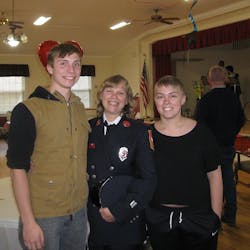
“Had more information been available when I was diagnosed in 2010, maybe I would have had more support and been able to work longer.”
—Patricia Hamann (ret.), Londonderry, NH, Fire Department
What was your first reaction when you discovered that you had cancer? Did you link it to your work in the fire service?
It’s mind-numbing to get a diagnosis like this, especially as a single mom with kids at home. When I first went to the HR department with this information to apply for short-term disability for an upcoming surgery, there was a question on the form asking if the injury/illness was work related. I asked, “How do I know?” and received a response of “It’s probably not.” If I can share one thing from my story, it’s to let other firefighters know “It probably is.”
What did your cancer journey look like post-diagnosis?
As the only woman on my department (and one of a handful in New England), I will share that it was a great challenge to become a professional firefighter. Not only do you need considerable training for the physical requirements of the job, it also requires tremendous mental strength and perseverance. My first captain on the job gave me this advice: “Be a sponge, absorb knowledge from everyone and everything.” I learned that it’s also important to stay uniquely you but work hard as part of the team. This career was a passion of mine, and I’m glad I pushed through all of the obstacles that came before me on my journey, including cancer. I was mostly able to work through my first diagnosis and two additional cancer diagnoses in 2012 and 2014. I battled through six surgeries, radiation and four separate chemotherapy treatments over five years, with minimal time off. I was blessed. I’m very grateful for support I received from members of the fire department and from my community.
What advice do you have for women firefighters who are facing cancer?
After a great deal of research on my part, along with more genetic testing, I concluded that my cancer was likely work-related. However, the path had been laid and could not be reversed. There is some research in the pipeline, but very little has been done to show the effects of firefighting toxins as related to breast cancer in female firefighters. The Women Firefighter Biomonitoring Collaborative Study in 2012 is really the first study of this kind. Had more information been available when I was diagnosed in 2010, maybe I would have had more support and been able to work longer. Many of the presumptive laws for workers’ compensation do not include breast cancer.
I am working with other firefighters to bring attention to this missing support, so that coverage can be available to all firefighters. Having been too adversely affected by the treatments to safely continue in the career I loved, I had to retire in 2016. I am happy to say I am now six years cancer-free and am able to work at a job that allows me to share my passion to help others. My advice: Be vigilant to see early clues and get checked frequently.