Firefighters & Chronic Inflammation
Key Takeaways
- Firefighters are susceptible to chronic inflammation, because their body stays in a constant state of alert.
- Chronic inflammation is linked to post-traumatic stress disorder, anxiety and depression and negatively affects cardiac health and performance.
- To help to clear inflammatory markers that occur after a high-stress shift, firefighters can promote blood flow and help the lymphatic system to flush out the cellular waste that’s caused by inflammation through active recovery, such as mobility work, yoga and low-intensity walking.
In the fire service, we’re trained to respond to alarms. Whether it’s a residential structure fire, a vehicle extrication or a high-acuity medical call, we know how to mitigate the emergency.
There’s an alarm that’s going off inside of the body of thousands of first responders across the United States that doesn’t show up on a thermal imaging camera and doesn’t smell like smoke. It’s called chronic inflammation.
True operational readiness extends far beyond the traditional metrics of physical performance, such as bench press strength or the speed at which we can throw a ladder.
Ultimately, it’s about biological durability and how well our internal systems can withstand the rigors of the job. This is where long-term health and personal resilience directly connect: Resilience is the body’s capability to recover from stress and trauma, but that recovery is impossible if we are in a state of chronic inflammation. When our body is effectively on fire internally, our resilience is compromised, which leaves us to operate on a physiological foundation that’s ready to collapse under the pressure of the next call.
What is the ‘fire within’?
Inflammation isn’t always the villain. When we suffer a minor injury on scene, such as a strained muscle or a small, localized burn, our body triggers acute inflammation. White blood cells rush to the area, things get red and swollen, and the healing process starts. That’s a successful and necessary response by our immune system to repair damage.
The problem that we face is chronic inflammation. Think of this as the slow-burning peat fire that never goes out. It’s a systemic, low-grade mayday by which our immune system stays stuck in the on position. Instead of a targeted response to a particular injury, our body stays in a state of high alert 24/7/365. Over time, that constant stress starts to damage our healthy tissue, our arteries and even our brain.
An inflammation factory
Why does this hit us so hard? Our job description is basically a recipe for systemic inflammation. We live in a perfect storm of physiological triggers, starting with HPA axis dysregulation, or the impairment of the body’s primary stress response system. Every time that the tones drop, our fight or flight response kicks in. Our cortisol spikes, our heart rate jumps, and our body prepares for battle. When this happens repeatedly over a 20-year career, the body loses its capability to turn off the stress response. This is called glucocorticoid resistance. Essentially, the body’s internal thermostat is broken, and it stays stuck in a pro-inflammatory state.
Beyond the internal stress, we deal with constant toxic exposure. Although we talk a lot about cancer, we must realize that every time that we absorb particulates through our skin or inhale smoke, our immune system treats those toxins like an invading army. This triggers a massive, systemic inflammatory response. This is compounded further by hypervigilance: Even when the bay doors are closed, our brain often scans for the next threat. This constant psychological stress keeps pro-inflammatory cytokines circulating in our blood, never allowing the system to truly reset.
Common thread
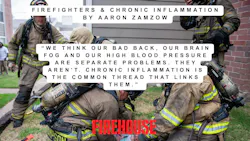
We like to put our health issues in different compartments. We think our bad back, our brain fog and our high blood pressure are separate problems. They aren’t. Chronic inflammation is the common thread that links them. New research shows that when our body is inflamed, our brain is, too.
This is known as neuroinflammation, and it’s linked directly to post-traumatic stress disorder, anxiety and depression.
This inflammation also affects our cardiac health by destabilizing plaque that’s in our arteries. It’s a major reason why so many of us suffer cardiac events shortly after a high-stress call. Furthermore, it saps our performance. When we are chronically inflamed, our body is incapable of true recovery; we simply accumulate damage day after day until something breaks.
Reducing inflammation
Although we can’t always control the tones, the calls or the sleep deprivation, we can control our internal environment through four particular strategies:
Nutrition as medicine. We must stop looking at the firehouse table as a place to just fuel up. We must start to choose foods that act as natural anti-inflammatories. This means increasing our intake of Omega-3 fatty acids, which are found in fish and walnuts, and prioritizing colorful vegetables. Simultaneously, we must avoid refined sugars and processed snacks that trigger blood sugar spikes, which are primary drivers for internal inflammation. Proper hydration also is a critical part of this equation, as water is essential for flushing out the cellular waste and toxins that drive inflammatory responses. Staying consistently hydrated ensures that our kidneys and lymphatic system can manage effectively the internal heat that builds up during a demanding shift.
Master the de-escalation. We are experts at gearing up for the job, but we often struggle to unplug once the emergency is over. Instead of truly clearing the stress, we often deflect, such as by scrolling through social media, which keeps the brain in an active, scanning state and prevents a full reset. To lower inflammation, we must move from deflection to intentional de-escalation. Tactical breathing serves as a manual override for the nervous system, signaling to the brain that the threat is over and shutting down the inflammatory cortisol spike before it lingers.
Prioritize active recovery. Resilience is built in the moments between the stressors, not just by powering through them. When we have a brutal night of calls, our body needs a chance to clear inflammatory markers rather than more high-intensity stress. On days that follow high-stress shifts, focus on active recovery, such as mobility work, yoga or a low-intensity walk. These activities promote blood flow and help the lymphatic system to flush out the cellular waste that’s caused by inflammation, to ensure that we return to our next shift ready to perform.
Create a sleep sanctuary. Because we can’t control sleep on shift, we must be disciplined and obsessive about it at home. Make your bedroom a dedicated sleep sanctuary. Ensure that it’s pitch black, kept at approximately 65 degrees Fahrenheit and free of phones. This environment allows the glymphatic system to stay active, which essentially washes the inflammatory waste out of our brain while we sleep.
Path to longevity
Understanding chronic inflammation is the first step toward reclaiming our performance. Take action today by implementing one or all of these strategies. We can’t wait for a diagnosis to prove that the fire that’s within caused lasting damage. By addressing this internal fire now, we ensure that we remain resilient and operationally ready for our family, our crews and our careers.
Box Breathing to De-escalate
Firefighters often struggle to clear the stress once the emergency is over. Tactical breathing is a highly effective tool for signaling to the brain that the threat is over. It should be performed often throughout the shift—in the rig, at the station and while cleaning gear. The box breathing method involves:
- Inhale: Breathe in through your nose for four seconds.
- Hold: Keep the air in your lungs for four seconds.
- Exhale: Release your breath slowly through your mouth for four seconds.
- Hold: Pause with empty lungs for four seconds before the next breath.
About the Author
 Aaron Zamzow
Aaron Zamzow
Aaron Zamzow is a firefighter/training officer for Madison, WI, Fire Department. He holds a bachelor’s degree in health/wellness and has 20 years of experience as a fitness trainer. He created Fire Rescue Fitness and authors programs that are aimed at getting fire rescue athletes fit for duty.