Breaking the Stigma of Mental Health in the Fire Service
Key Takeaways
- In some ways, the fire service culture that promotes silence rather than someone communicating that the stress of the job is getting to them is deadlier than the flames that are encountered on the fireground.
- In the same vein of rushing to save strangers in their darkest hour, firefighters must welcome the opportunity to look across the firehouse kitchen table and ask a fellow member, “Are you OK?”
- Real leadership from a mental health perspective is allowing members to see their superior showing the weight of a difficult call but doing so without breaking in an unhealthy way.

Fire departments and public safety agencies are dealing with a new type of fire, one that isn’t extinguished with water, foam or a well-placed hoseline. It’s a quiet fire that’s smoldering in the hearts and minds of first responders. It’s about the stigma that surrounds mental health and the generational mindset that firefighters, paramedics and dispatchers must keep their problems bottled up.
The culture for years in emergency services has been one of toughness. The unspoken rule was explicit: Don’t talk about what the job does to you. Don’t show vulnerability. Don’t let the weight of the calls get too heavy to bear. However, this culture, which is so steeped in tradition, actually might be more hazardous than the work itself.
A journey
I became a firefighter in 2012 at the beginning of my high school senior year, when I was just 16 years old, as a volunteer with the Bay District Volunteer Fire Department, which is in California, MD. I immediately was hooked, as many young recruits can be. The firehouse was a new family, a place that became a sort of second home. I dreamed of making a career as a professional firefighter from that passion.
At the time, I had no sense of the mental cost that dream would exact. Firefighting isn’t all about playing on a big ol’ truck with lights and sirens or getting to wear gear that makes you feel larger than life. It’s about rising at all hours of the day or night, mental and physical reserves drained, but still with a duty to perform. It’s seeing the destruction and chaos that sometimes develops in front of your eyes, of holding a life in one’s hands and sometimes helplessly witnessing life fade away.
Yes, it’s rewarding to save a life and to be the difference between hope and tragedy. What’s less discussed is that each one of those calls leaves its trace behind. We don’t discuss that part of the job. When you allow a call to drive you mad or show weakness or that the stress is getting to you, you are accused of being weak. That culture is toxic. In some ways, it’s deadlier than the flames fighting us.
Toll we don’t see
The U.S. Fire Administration recently disaggregated some data from 2015–2017 with depressing results. Of the first responders who died by suicide, 21 percent were firefighters, 18 percent were EMS workers and 2 percent were public safety telecommunications workers.
These are lives lost not in the line of duty but in silent battles of their own. Although statistics can seem remote, anything that’s above zero is too many.
We like to think of each other as a band of brothers and sisters who rush to save strangers in their darkest hour. How often do we turn and look across the table in the firehouse kitchen or into the eyes of the partner we ride with every single shift and ask, “Are you OK?”
Personal choice
For me, the mental stress began to spill over into my personal life. I joined the fire service with every intention of making it my career, but the more that I witnessed, the more that I came to understand that if I made firefighting my vocation, it very well might be my downfall.
I chose to stay a volunteer. I sought help. I went to treatment. I discovered healthier strategies for dealing with stress. On that journey, I promised myself that I would do my bit to break the stigma. I didn’t want the next generation of firefighters—the young men and women who were filling the shoes that I no longer occupied—to have to endure, as I did, the same struggles in silence.
Leading from the front
I have advanced through the ranks of my department’s leadership and now am the fire chief. With this role, I get the responsibility of ensuring not just that we’re ready operationally but of how well my members are.
For me, leadership isn’t pretending that nothing makes a difference to me. It isn’t about being stronger than I am. Real leadership is leading by example. Allowing my members to see me showing the weight of a difficult call but doing so without breaking myself in an unhealthy way sends a powerful message: You don’t have to drown the pain in alcohol, numb it with drugs, or mask it with anger and isolation. There are healthier ways to respond.
Warning signs we can’t ignore
Unhealthy coping mechanisms just reinforce the fear. They escalate the inevitable.
The fire service always has been quick to identify the signs of what fire behavior looks like—heat, smoke, flame—but we also must identify the signs of what mental distress feels and looks like, in ourselves and in our brothers and sisters. What do those signs even resemble?
- Behavior changes: Snapping over trivial annoyances and outbursts that don’t seem to fit the person’s typical temperament.
- Withdrawal: Excluding oneself from the group, not attending social events and/or not talking to others.
- Sleep changes: Sleeping much longer than usual or hardly sleeping at all.
- Overworking: Cramming in endless tasks to avoid having to think, rather than giving the brain and body the respite that they need.
- Substance use: Using alcohol or drugs as an outlet, rather than finding healthier outlets.
These aren’t mere eccentricities or “bad moods.” They could be alerts that somebody isn’t OK beneath the surface. Failing to heed these signs can be as reckless as ignoring smoke in a fire-engulfed building.
Building a culture of care
Here is the truth: Humans weren’t designed to sprint 24/7. Our brain and body need rest. We need connection. We need support.
If you notice those signs in your friends, don’t walk past. Stop. Ask. Offer help. You never know when you could make the difference between saving a life or not.
A culture of silence that has characterized our profession for too long must be disrupted. That change begins with all of us. It isn’t only about sparing the next generation of this stigma. It’s about saving our own generation and the ones that are above ours, so the wisdom of our experience can be passed along instead of buried.
Be the change
When the call comes in, we don’t think twice about standing between a stranger and danger. Don’t our brothers and sisters in uniform who leave home and family for extended periods deserve the same?
This is the fire that we must fight together, not with water and ladders but with empathy, openness and courage.
I am only one voice, but I know that I speak for many others. We can do this together, to end this stigma. Together, we can redefine strength and let it be honesty, not silence. It’s OK to say that you aren’t OK. Be the change.
About the Author
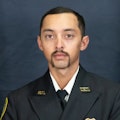 Jason Turner
Jason Turner
Jason Turner serves as the fire chief of the Bay District Volunteer Fire Department in St. Mary’s County, MD. He has been a member of the first responder community for more than 13 years. One of Turner’s major leadership priorities is addressing mental health within the fire service. He is committed to promoting open dialogue, reducing stigma, and encouraging first responders to take care of themselves and one another. Turner’s approach emphasizes building a healthier and more resilient culture within the department.