Key Takeaways
- Firehouse dogs can be an incredible resource during debriefings and defusings after firefighters respond to a significant incident.
- Studies have shown that interacting with a dog can lower cortisol, slow heart rates and increase oxytocin levels.
- When a fire department adds a firehouse dog to its crew, it acts proactively on behalf of the well-being of the mental health of its members.
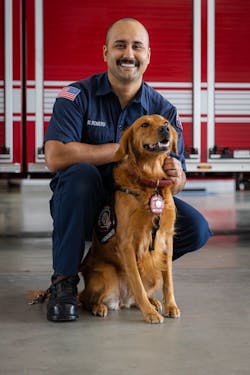
My 48-hour shifts tend to start the same way: I leave home and begin my hour-plus commute with a cup of coffee and a half-asleep golden retriever curled up in the back seat. When we pull into the station parking lot, she lifts her head, stretches forward and shakes off the last bit of her sleepy family dog self. She then steps into her role as our department’s peer support dog, greeting the crews during shift exchange and picking up on cues about the calls the previous shift that get overlooked during the pass down.
Canine support
Mental health has been spotlighted in our society in recent years. Naturally, its importance has trickled its way into our profession. Firehouse dogs no longer tend to the horses that led crews to a fire, but their purpose today is arguably more critical than ever.
First responder exposure no longer is seen only through the lens of cancerous smoke and fire. Most of us are dealing with the challenge of witnessing human suffering multiple times per shift compounded over decades of service. We are well-trained in suppression, sometimes to a fault.
Dogs are an incredible resource during debriefings and defusings after significant incidents. Our department dog, Ember, has responded to multiple requests for comfort and support, both on and off duty, for our members, city employees and outside agencies.
The calls that we run are complex, but it’s often the aftermath that proves the most difficult to navigate. I’ve seen firsthand the power of a wet snout nudging members on their lap, to remind those people that they aren’t sitting alone. Ember’s nonjudgmental eyes offer presence, grounding and hope.
Having a dog in the firehouse also provides daily therapeutic relief to overworked, sleep-deprived responders. Studies have shown that interacting with a dog can lower cortisol, slow heart rates and increase oxytocin levels, no prescription required.
Gone are the days of saying, “It’s just part of the job I signed up for.” This is the best damn job in the world, but we must acknowledge the dark side of a beloved profession that’s riddled with lasting traumatic imagery. Dogs don’t solve the issue, but they are powerful breaching tools to conversations that we desperately need. They serve as the icebreakers that encourage us to lean on our brothers and sisters and support one another better.
A bridge toward getting help
As we learn more about mental health, we continue to build systems, such as peer support teams, to address incidents retroactively. That’s good. Progress is happening. Further, as firefighters, we default to what we do best: problem-solving. However, maybe more departments also should take a proactive approach to mental health, just as we do when we jump in the rig, preplan and identify hazards that are in our district. We might find that the most significant target hazard already is sitting in the jump seat. As more agencies reopen their doors to firehouse dogs, we gain the added benefit of minimizing crises before they escalate.
For those who are on the fence: Yes, I know that change in the fire service and challenging “the way things are” never are easy, particularly when mental health enters the conversation. That said, this journey has brought my department increased morale, midday laughter and firefighters who hang out in the dayroom long after shift change. You might even hear a high-pitched voice of pleasure from someone who’s petting the dog.
Some might see this as the “new generation” getting soft. Maybe what we really need is a slight culture shift.
Suicide rates continue to rise in our profession. Whether a new-generation or old-generation firefighter, we wear the same patch, and the numbers are alarming. There is a silent four-alarm fire happening inside of the mind of our members across every department, and additional resources are staged on the pegboard in the hallway that we walk past every day. A support canine might be the extra step that someone needs to cross the bridge toward getting help.
If a smiling dog that shows up to work a shift alongside you challenges your view of where the fire service is headed, here are a few things to consider:
- The dog might be there for someone else who’s suffering in silence.
- Maybe the dog’s presence is a reminder of something that you’re avoiding and a sign that it’s time to reach out to the resources that are available.
Because, brothers and sisters, I’m in the room with you, struggling with my own thoughts. Ember and others are there whenever you want to talk or play fetch.
About the Author
 Michael Romero
Michael Romero
Michael Romero is a firefighter/paramedic who has 11 years of experience in the fire service and currently serves with the Orange City Fire Department in Orange, CA. He is an active member of his department’s peer support team and mentors fire cadets and paramedic students, helping to prepare the next generation of fire service professionals. A certified canine handler, Romero helped to develop the department’s first peer support dog team, to enhance firefighter wellness and behavioral health support.