Burning It Down to Build It Back: What the Fire Service Doesn’t Talk About—But Must
Key Takeaways
- Too many firefighters go through their workday talking themselves into believing that they're fine mentally and emotionally but then go home and sit in the dark and wonder why they feel completely empty.
- Firefighters who are confronting their mental and emotional challenges must make their therapy sessions nonnegotiable. To do that, they should schedule them like a shift, not as a suggestion; build accountability by sharing their appointment times with others, to create ownership; and expect that they will resist attending sessions but go anyway.
- To change the fire service in terms of recognition of the mental and emotional toll that the job places on firefighters, members must normalize real conversations at the kitchen table; personnel must train for mental health like they train for a mayday; and senior firefighters, officers and chiefs must openly support therapy, use peer support and talk about mental health without stigma.
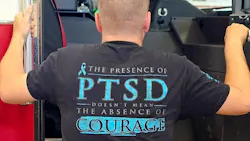
The fire service loves a good origin story: the kid who grew up around the station; the first ride-along; the smell of diesel and coffee at 6 a.m. We tell those stories well. The stories that we don’t tell—at least, not out loud—are the ones that come after the tones stop exciting us and start to feel like a debt that we never can repay.
It’s about rebuilding
I wanted to be a firefighter before I knew what trauma was, before I had language for abandonment, hypervigilance and post-traumatic stress disorder. I just knew that fire felt like purpose. Fire felt honest. Fire didn’t lie to you. It either burned or it didn’t. It either killed you or it didn’t.
Life, as it turns out, is far messier.
I wrote my memoir, “Burning It Down,” because pretending that I was fine almost killed me—not in a dramatic, Hollywood way but in the quiet, dangerous way that many of us know too well, where you still show up to work, still pass your physicals, still laugh in the kitchen, still make the job look easy, but then you go home and sit in the dark and wonder why you feel completely empty.
We are exceptional at compartmentalizing. We are world-class at shoving things into boxes that are labeled “later.” Calls stack up. Kids. Fires. Death notifications. The incident that smelled like your childhood. The one that looked like your kid. The one that you can’t forget no matter how many years go by. We tell ourselves that we’ll deal with it after the next shift, the next promotion, the next retirement. However, trauma doesn’t respect seniority or calendars.
For me, the weight didn’t show up all at once. It accumulated: childhood trauma layered with fireground trauma; relationship strain; identity loss when the job became more than a job and less than a cure. Dark humor stopped being funny and started to be armor. Somewhere along the line, survival became the goal instead of living.
Firefighters don’t like to talk about suicide—not because we don’t care but because we’re terrified of seeing ourselves in the story. We all stood at a casket. We all said, “I never saw it coming.” The truth is more difficult: Sometimes, we did see it coming, but we didn’t know what to do with it. Sometimes, the person in trouble was us.
“Burning It Down” isn’t a hero story. It’s a confession. It’s about breaking down in places that I swore that I never would. It’s about sitting in therapy and realizing that the job didn’t break me but, instead, exposed cracks that already were there. It’s about learning that being tough enough to do this work doesn’t mean that I’m tough enough to ignore its cost.
I used to believe that healing meant going back to who I was before. That’s a lie that a lot of us believe. There is no “before.” There’s only who you are now and who you’re willing to become. Healing, I learned, is less about erasing damage and more about learning how to live honestly with it.
That realization is what led to my second book, “From the Ashes.” If “Burning It Down” is about tearing down the false version of strength that I lived under, “From the Ashes” is about what comes after. It’s about rebuilding—awkwardly, imperfectly and without the illusion that there’s a finish line.
Rebuilding isn’t sexy. It’s therapy appointments that you don’t want to go to. It’s learning how to talk to your spouse instead of shutting down. It’s recognizing when your nervous system is running the show and choosing to interrupt it. It’s finding purpose beyond the job without abandoning the job. It’s understanding that you can love the fire service and still admit that it hurt you.
Making therapy nonnegotiable
One of the biggest failures that I had—and one that I see everywhere—is inconsistency with therapy. We go when things are bad, skip when things feel manageable and disappear when we convince ourselves that we’re “good enough.”
If we treated physical rehab the same way, we never would return to duty. Mental health deserves the same discipline.
Here are three ways to make therapy something that you actually stick with:
Schedule it like a shift, not a suggestion. Put it on your calendar as nonnegotiable—same day, same time, if possible. Don’t make the decision every week; remove the choice entirely.
Build accountability. Tell your spouse, a coworker or a peer support member when your appointment is—not for pressure but for ownership. The job runs on accountability. Your mental health should, too.
Expect resistance and go anyway. The days that you don’t want to go usually are the days that you need it the most. That resistance isn’t a sign to skip. It’s a symptom.
Therapy isn’t about being “fixed.” It’s about staying functional, present and alive in a job that slowly chips away at all three.
Changing the culture: Where we actually start
We talk about culture change as though it’s this massive, abstract thing. It isn’t. It happens in small, repeatable actions, particularly from people who already are respected in the room.
If we’re serious about changing the fire service, here are three places to start:
Normalize real conversations at the kitchen table. Not trauma dumping. Not forced vulnerability. Just honesty. Instead of “I’m good,” try, “That one stuck with me more than I expected.” When one person says it, it gives the next person permission to say it, too.
Train for mental health like we train for maydays. We drill worst-case scenarios on the fireground, but we don’t train for what happens after the call. Departments need structured, repeated training on stress, cumulative trauma and nervous system responses, not just annual check-the-box briefings.
Leadership goes first. Culture doesn’t change from the bottom up; it shifts when senior firefighters, officers and chiefs model it. When leadership openly supports therapy, uses peer support and talks about mental health without stigma, it removes the unspoken rule that everyone else must stay quiet.
The fire service is changing, whether we like it or not. The next generation is watching how we handle this. They’re watching whether we model silence or honesty. They’re watching whether we treat mental health like a checkbox or a responsibility. They don’t need us to be invincible. They need us to be real.
This isn’t about being soft. It’s about being sustainable. You can’t keep running into burning buildings for decades without expecting something to follow you out. We train relentlessly for maydays, flashovers and collapse, but we leave our people dangerously undertrained for the slow burn of cumulative trauma.
Refusing to be ashamed
I didn’t write this article as someone who has it all figured out. I wrote as someone who has failed loudly, broken deeply and chose to stay—to stay alive, stay present and stay honest. I still love this job. I still believe in the fire service. However, love without truth is just another kind of denial.
If there are two things that I hope firefighters take from “Burning It Down” and “From the Ashes” they’re this: You aren’t weak for struggling, and you aren’t alone in it. The bravest thing that I’ve done in my career wasn’t on a fireground; it was admitting that I needed help and refusing to be ashamed of it.
We don’t need fewer firefighters who feel deeply. We need fewer firefighters who feel as though they must suffer in silence. The culture won’t change overnight, but it can change, because of one honest conversation, one kept appointment and one leader who’s willing to go first.
Sometimes, you must burn down what’s killing you to make room for something that might actually save your life. Sometimes, from those ashes, you don’t just rebuild; you rebuild better.
About the Author
 Cody Mecham
Cody Mecham
Cody J. Mecham is a firefighter who has more than 15 years on the job. He is the author of “Burning It Down” and “From the Ashes,” which are rooted in real experience—childhood trauma, post-traumatic stress disorder and the weight that’s carried by first responders long after the call ends.