Helmets: Functionality and Fit Take Prominence
Key Takeaways
- Makers of fire helmets and rescue helmets fold their products’ effect on the head, neck and back into their focus on comfort.
- At least two manufacturers of fire helmets reduced the ride height of one of their products to deliver better balance and pressure distribution.
- Because rescue technicians can end up operating in water, the less drag that the rescue helmet that they use produces, the better. Helmet design that includes a very-low-profile fit has made its way to the marketplace.
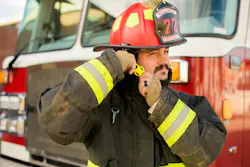
Never has the focus on firefighter safety and health from suppliers to the fire service been more intense. However, that doesn’t mean that those companies also aren’t looking to improve functionality. Makers of firefighting helmets and rescue helmets are no exception.
Of course, because firefighters and rescue technicians wear their helmet for prolonged periods of time, they require comfort, but that doesn’t mean that suppliers are unconcerned with how their products address long-term neck, back and head problems.
MSA Safety, Bullard and Team Wendy launched new helmets that are designed with both factors in mind.
Negating the ‘bobblehead effect’
MSA Safety’s Cairns 1836 helmet was released in April 2024. John Ramsey, who is MSA Safety’s product line manager for Cairns Fire Helmets, tells Firehouse that the company wanted to “fundamentally modernize the traditional helmet platform” while preserving that legacy and tradition that firefighters trust.
The five main components of the Cairns 1836 are its easy disassembly and reassembly without tools and its eye protection, soft goods, suspension and impact cap assembly.
Key features include a 95 percent head size accommodation; a brow pad that’s designed to cover more surface area of the suspension frame to reduce pressure points; removable materials that make decontamination easier; an anchor-based system for the impact cap assembly that allows for removal in fewer than three minutes; and its eye protection maneuverability.
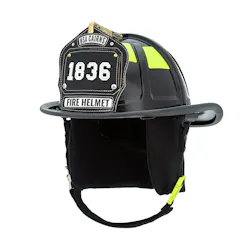
“There's sort of that bobblehead effect,” Ramsey says. “I call it top-heavy.”
Addressing that came via reduction of the ride height by half an inch.
The design of the shell allows it to detach. The impact cap stays on the firefighter’s head and is attached to the chin strap to provide continued protection from impact and heat.
"We brought our weight down by 5½ ounces compared to our current helmet," Ramsey notes, including a parts reduction of about 42 percent, “so it is one of the lightest fire helmets in the market."
MSA Safety visited more than a dozen fire departments across the United States, totaling more than 150 firefighters, to help to bring the concept to life. One of those departments was the Erie, PA, Fire Department. Chief Len Trott says that his firefighters love the comfort. “It’s a brand new helmet that doesn’t have a brand new price.” The department’s firefighters found that “It was more comfortable with the band when it tightened around your head, and they like the way it came apart and the consumables," Trott adds.
Another feature that’s in the Cairns 1836 is the inclusion of an RFID chip in the impact cap liner that bolsters asset management. Departments can see date of manufacture, serial number tracking, and cleaning and maintenance requirements.
Not a pain in the neck
Another helmet that provides a reduced ride height is Bullard’s UST LowRider helmet, which was released in March 2025. Ride height was a pivotal end-user feedback comment regarding Bullard’s previous helmet iteration (the UST Lightweight helmet). For Robert Gonzalez, who is the product manager for Bullard, the themes during the creation process were balance, pressure distribution and weight.
"The main differentiator is all about comfort, the light weight and, now, improved balance of the helmet," Gonzalez remarks. "We reduced the pressure on the head by around 20 percent." A contributor to the latter is a lightweight thermoplastic shell.
The 36 adjustment points provide for a more customized fit, and the FireFit Comfort System supports easy cleaning and maintenance.
Bullard’s work with various departments through the development process included the Cynthiana, KY, Fire Department (CFD). Bullard tapped about a dozen firefighters to test different prototypes.
“There were no more pressure points that the guys would experience after wearing the helmet for a couple of hours,” CFD Chief Bob Chaffee tells Firehouse. “The balance of the helmet was unbelievably better.”
Chaffee also mentions that, because the geometry of the helmet changed, it no longer hits the cylinder on the firefighters’ SCBA.
Further, Chaffee sees the long-term benefits of this helmet in regard to the health of his firefighters.
"You get a lot of people in the fire service who end up having problems with their neck," Chaffee states. "This is going to help out tremendously with that."
Rescue helmet versatility
Team Wendy’s EXFIL Rescuer Helmet came about after the company discovered that end users were utilizing its LTP Series helmets in the water because of their water and air flow capability, more secure chin strap harness and lower-profile fit.
The EXFIL Rescuer is a multipurpose search and rescue helmet that was developed in collaboration with FEMA task forces. Also, because of a connection with a U.S. Coast Guard life support equipment expert, Team Wendy focused on providing a better chin strap, a better color system and a better pad system inside of the helmet.
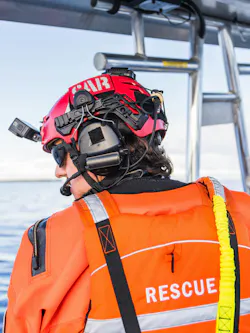
The feedback from the Coast Guard prompted specific improvements:
- Polyurethane film-based liner system holds less water and prevents dripping.
- Various color iterations allow for better visibility in the water.
- Very-low-profile fit provides low drag in the water.
- Headband system and chin strap harness provide the capability to mount accessories, such as thermal imaging and night vision devices.
"What sets the Team Wendy helmets apart is the capability to add function to the helmet," Bryan Javorek says. "We have accessory rails on the side that allow for mounting ear protection or comms headsets. The shroud, which is the night-vision mounting plate in the front of the helmet, is a military standard."
The patented design of the helmet’s headband strap has a quick-release mechanism. Javorek also mentions that the helmet is set up well for future innovations, particularly in regard to a drone vision fold-down feature for helmets.
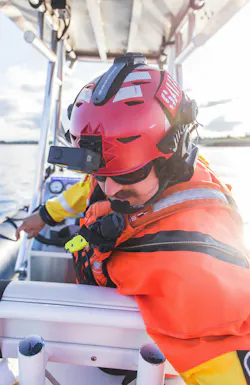
"It's a one-stop-shop helmet," Lt. François Brisson of the Quebec City Fire Department (Quebec, Canada). "It answers all of our needs. I use it for everything, whether it's ice rescue, ocean rescue, swiftwater or technical rescue."
More innovation to come
There are an abundance of firefighting helmet and rescue helmet options for an abundance of situations. Nevertheless, manufacturers continue to work toward improving essential functions and capabilities.
Options to Helmet Replacement
Not every fire department can afford new helmets and, therefore, must replace specific parts, such as helmet liners.
The motivation behind RagTop’s liner, according to the company’s president, Peter Callan, was the possibility that factory liners must be cut down in length and thinned out to properly fit the firefighter’s head. RagTop’s liner has a drawstring and a plastic sizing ring to allow height and circumference adjustments while still meeting NFPA compliance.
An upgraded leather brow pad reduces wear and tear.
Codey Pitts, who has 17 years of fire service experience, has used the liner since it came out.
"The materials are a lot softer," Pitts says. "It feels more durable. They're superior to anything else that's out there."
About the Author
 Ryan Baker
Ryan Baker
Associate Editor
Ryan Baker is a writer and associate editor with prior experiences in online and print production. Ryan is an associate editor for Firehouse with a master's degree in sciences of communication from the University of Wisconsin-Whitewater. He recently completed a year of teaching Intro to Public Speaking at UW-Whitewater, as part of his graduate program. Ryan acquired his bachelor's degree in journalism in 2023 from UW-Whitewater, and operates currently out of Minneapolis, MN. Baker, also writes freelances for the Ultimate Frisbee Association (UFA) in his free time, while also umpiring baseball for various ages across the Twin Cities Metro Area.