Protecting Firefighters From Diesel Exhaust During Cancer Prevention Month
Key Highlights
- NIOSH study found diesel exhaust particulates in fire station living quarters and bunkrooms
- Firefighters face cumulative cancer risk from apparatus operations during routine equipment checks
- Source-capture systems prevent carcinogens from migrating beyond apparatus bays into living spaces
- MagneGrip's magnetic nozzle creates 100% seal, capturing diesel exhaust at the tailpipe
- Free grant assistance is available to help departments fund exhaust removal systems

February is National Cancer Prevention Month—a critical time to focus on reducing occupational exposures that contribute to elevated cancer risk among firefighters. While fireground dangers receive significant attention, a less visible but equally serious threat are airborne toxins that linger within the fire station, especially diesel exhaust.
Diesel exhaust remains one of the most well-documented sources of station-based exposure increasing risk of lung cancer, skin cancer, lymphoma, and other malignancies. A NIOSH Health Hazard Evaluation of three fire stations found measurable diesel exhaust particulate not only in apparatus bays but also in living areas, sleeping quarters, and office spaces. This confirms that exhaust emissions migrate beyond bays into the areas where firefighters spend most of their day.
Indoor air quality in fire stations is shaped by more than a single source. Beyond diesel exhaust, stations accumulate a range of airborne particulates, including fine particulate matter carried in on gear, residual combustion byproducts from calls, off-gassing from equipment and furnishings, cleaning chemicals, and moisture-related contaminants that can contribute to mold growth. Together, these airborne hazards shape the overall indoor air environment firefighters breathe every shift.
The Lesser-Known Risk: Lingering Diesel Exhaust and Air Toxins in Living Quarters
The NIOSH study (HHE Report No. 2015-0159-3265) revealed that even in fire stations with modern engines using ultra-low sulfur diesel fuel and equipped with diesel particulate filter and regeneration systems, elemental carbon was detected throughout the facility. Station 10, which had a back-in only design with a permanent back wall, showed particularly elevated concentrations in the apparatus bay, with levels reaching 13 micrograms per cubic meter near the back wall—though still below California's recommended occupational exposure limit of 20 micrograms per cubic meter.
The danger is compounded by frequency. The NIOSH evaluation noted that "although exposures were low in all the stations, efforts to further reduce exposures are appropriate because of the potential health risks from exposures to diesel exhaust." This finding underscores a critical point: even low-level exposures warrant action, particularly given the cumulative nature of carcinogen exposure over a firefighter's career. Each time the apparatus starts up, backs into bays, or idles during routine equipment checks, exhaust is released into the station environment. Similarly, each return from a fire scene can introduce fine particles and contaminants that remain suspended in the air or settle on surfaces. Without consistent mitigation, these exposures add up—day after day, year after year.
MagneGrip is the Complete Clean Air Solution
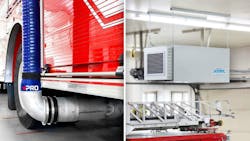
MagneGrip addresses this risk by focusing on source capture—removing diesel exhaust directly at the tailpipe before it can spread through the station. When used with MagneGrip’s PRO Nozzle and compatible hose systems, exhaust is captured at the source with a 100% seal, helping prevent cancer-causing particles and toxic gases from entering apparatus bays, living areas, and workspaces. To further support indoor air quality, MagneGrip also offers AirHAWK Air Purification Systems designed to help reduce airborne contaminants that may remain beyond apparatus operations.
Supporting Fire Departments Beyond Equipment
MagneGrip has installed tens of thousands of exhaust removal systems in firehouses nationwide and remains committed to helping departments take proactive steps toward cancer prevention. In addition to equipment solutions, MagneGrip offers free grant assistance to fire and EMS departments pursuing funding for exhaust removal and air purification systems. Support includes access to grant research, application guidance, needs assessments, engineering specifications, and budgetary quotes. Optional discounted professional grant writing assistance is also available through FireGrantsHelp.com.
About MagneGrip
Founded in 1975, MagneGrip manufactures air purification systems, custom exhaust removal, and source-capture solutions for firehouses and vehicle maintenance facilities. MagneGrip’s commitment to firefighter health has led to the development of trusted exhaust removal systems and AirHAWK air purification technology used by fire departments across the United States.
For more information about MagneGrip products or free grant assistance, visit https://www.magnegrip.com/free-grant-assistance or call 1-800-875-5440.