Your PID and Multi‑Gas Meter Didn’t Get Replaced—Just Made More Useful
Key Highlights
- Pairing PID and multi‑gas meters with XplorIR finally closes the identification gap.
- Identification transforms basic meter readings into precise, chemically informed data.
- Correction factors become operationally useful once the exact gas is identified.
- XplorIR reduces uncertainty, boosting confidence in PPE, tactics, and decision‑making.
- Everyday response calls become faster and clearer when readings link to specific chemicals.
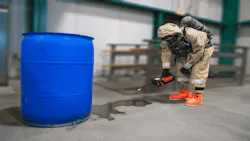

For decades, the PID (Photoionization Detector) and the multi-gas meter have been the undisputed "bread and butter" of the hazmat world. They aren't flashy; they don’t have the futuristic allure of some newer tech, and they certainly aren't new to the scene. But we trust them for a reason. They are fast, they are rugged, and they answer the single most critical question every responder asks the moment they step into a hazmat incident: “Is there a problem in the air right now?”
In most cases, they answer that question exceptionally well. They provide that immediate "yes/no" that allows a team to establish a perimeter and protect life safety. The frustration begins with the very next question: “Okay, but what exactly is it?”
This has always been the "quiet" struggle of gas detection. Fire and hazmat teams can get a reading in seconds, but there is often a massive, lingering gap between detecting a hazard and actually understanding it. A meter can tell you the atmosphere is changing. It can scream that conditions are flammable, toxic, or oxygen-deficient. But it rarely tells you the specific chemical identity driving that alarm. In a high-stakes response, that lack of identity isn't just a technicality; it’s a tactical bottleneck.
The Problem with "Reference Gases"
To understand why this gap exists, we have to look at how our standard tools actually work. Take your everyday four-gas or five-gas meter. In most departments, these are calibrated to methane. It makes sense from a maintenance standpoint; methane is a reliable, standard reference gas.
But out in the field, at a train derailment, a warehouse fire, or a clandestine lab, you’re rarely dealing with pure methane. When that LEL (Lower Explosive Limit) alarm goes off, the number on the screen is filtered through that methane calibration. If the actual gas in the air is heavier or more reactive, that "10% LEL" on your screen might actually be a much more dangerous than 30% or 40% in reality.
The same applies to the PID. It is a workhorse tool because it reacts instantly to Volatile Organic Compounds (VOCs), giving responders an immediate "hit." However, the PID is a non-specific detector. It tells you something is there, but it doesn't name the culprit. Without that name, responders are left using experience, "gut feel," and a whole lot of guesswork to interpret what the numbers actually mean.
Closing the Information Loop
This is where the tactical landscape changes. When you pair these trusted, standard tools with the XplorIR, you aren’t throwing away your old meters. You’re finally finishing the kit. You’re filling in the "Identification" piece of the puzzle that has historically been missing from the initial entry. By adding gas identification to the mix, you’re closing the loop. That one piece of data, the chemical name, transforms your existing meters from "warning lights" into precision instruments.
Once a specific gas is identified on-scene, responders can stop interpreting their readings in the abstract. Now, that PID reading is tied to a specific chemical profile. Now, the LEL reading can be viewed through the lens of what the combustible gas actually is, rather than what the meter was calibrated to.
Turning Theory into Tactics: The Correction Factor
In every hazmat technician's manual, there are pages upon pages of "Correction Factors." Theoretically, if you know you’re looking at Toluene but your meter is calibrated to Isobutylene, you multiply the reading by the correction factor to get the "real" number. In reality, how often does that happen in the first twenty minutes of a call? Rarely. Why? Because you can’t apply a correction factor if you don't know what you're correcting for.
With XplorIR providing the ID, correction factors stop being a "nice-to-have" piece of chemistry theory and start being an operational reality. It allows a tech to say to the IC, "The meter says 50 ppm, but since we’ve identified this as Benzene, the actual concentration is closer to 25 ppm." That is the kind of clarity that saves lives and prevents over-extended stay times in the hot zone.
Shrinking the "Uncertainty Gap"
Hazmat response lives in the space between "we found something" and "we know what it is." That space is where uncertainty lives. It’s where teams start second-guessing their PPE, where Command gets nervous about the evacuation distance, and where entry teams burn through air bottles while trying to figure out if their sensors are cross-sensitizing.
Identification helps shrink that space.
When you add identification to the front end of a call, the older tools you already trust suddenly become more valuable. They haven't changed, but your ability to read them has been difficult. It allows for more intelligent monitoring. You can use the PID and multi-gas for what they do best, monitoring changing conditions and providing fast, real-time warning, while using the XplorIR to provide the "ground truth" that gives those numbers context.
|
Tool |
Primary Function |
The Missing Link |
The XplorIR Solution |
|
Multi-Gas (LEL) |
Detects flammability |
"Is it methane or something else?" |
Identifies the specific fuel |
|
PID |
Detects total VOCs |
"What specific toxin is this?" |
Provides the identity for correction |
|
Colorimetric Tubes |
Semi-specific ID |
Slow, one-time use |
Rapid, continuous identification |
The "Everyday" Response
This isn't just about the massive, headline-grabbing industrial disasters. This combination matters most on the "weird" calls that make up 90% of field work:
- The "Odd Odor" in a Commercial Building: Is it a cleaning solvent, a refrigerant leak, or CO₂ release?
- The Leaking Cylinder: Is the internal pressure reading accurate for the gas identified?
- The Transportation Incident: Are the placards telling the whole story, or is there a secondary product involved?
- The Utility Call: Is that "gas smell" actually natural gas, or is it something more exotic coming from a sewer?
These are the scenes where teams lose time trying to "connect the dots." A reading by itself is just a data point. A reading tied to a specific chemical is actionable intelligence.
Better Decisions Under Pressure
At the end of the day, most responders don't want more "toys." They want tools that help them make better decisions when the clock is ticking. They want fewer assumptions and fewer moments where they have to explain a reading, they don't quite trust. That is why this combination is so powerful. It isn’t about a "new way" of doing hazmat; it’s about making the "proven way" smarter.
By integrating identification into the initial sweep, you aren't just detecting a hazard: you're defining it. You’re giving the Incident Commander a clearer picture, giving the entry team more confidence in their PPE, and giving the community a faster resolution.
The PID and the multi-gas meter still belong on the front line. They still do the heavy lifting. But with XplorIR, those tools finally have the context they need to do their jobs to the fullest.