What Firefighters Actually Need from Gas Detection
Key Highlights
- Reliable gas monitors matter more than features during unpredictable fire and hazmat calls.
- Scene-wide gas detection data improves situational awareness and team coordination.
- The right safety partner supports fire departments before, during, and after the call.
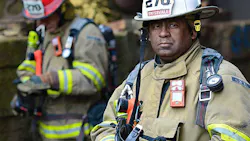

Firefighters and hazmat teams don’t operate in predictable environments. Conditions can change rapidly, visibility is limited, and decisions need to be made quickly and often with incomplete information. That’s why the equipment you bring to a scene matters as much as the training behind it.
Gas detection plays a critical role in that equation. It helps identify hazards that aren’t visible, supports safer entry decisions, and provides insight into how conditions are changing in real time. Increasingly, that also includes identifying risks that extend beyond traditional gas hazards, like gamma radiation, especially in large-scale incidents or unknown environments.
The value that gas detection provides, however, depends entirely on reliability and whether your equipment is built for the realities of emergency response.
Reliability is More Than a Feature
On scene, there’s no margin for error when it comes to hazard monitoring. Gas detectors need to power on without hesitation, maintain consistent performance, and deliver accurate readings throughout the duration of a call. If an alarm goes off, it needs to be clear and actionable. If conditions change, crews need to know immediately.
Fire professionals don’t choose equipment based on features alone. They choose what they trust to perform under pressure.
That’s why many departments standardize on personal monitors, such as the Ventis® Pro5, which delivers multi-gas detection with real-time alarms and team-based visibility, helping ensure crews stay aware without adding complexity.
For targeted applications, the Tango® TX2 is purpose-built to monitor CO and HCN—otherwise known as the “toxic twins”—simultaneously using DualSense® Technology for redundant detection and added confidence in every reading.
This is the difference between equipment that checks a box and equipment that crews rely on every shift.
Built for the Way Emergency Scenes Actually Operate
Emergency response is rarely static. Crews are moving, conditions are evolving, and hazards can shift without warning. Gas detection equipment needs to match that reality.
That means devices that are easy to deploy and operate under pressure, even with gloves and full PPE. That also means device alarms that can cut through noise and distraction.
Area monitors like the Radius® BZ1 are designed to extend that visibility across a scene, allowing teams to monitor multiple zones simultaneously. With the addition of gamma radiation detection, departments can now expand monitoring beyond combustible and toxic gases, capturing radiation hazards as part of the same operational picture.
This matters most in complex or unknown scenarios. Large public events, transportation incidents, and hazmat responses don’t always present a clear hazard profile upfront. Having the ability to detect both gas and gamma radiation in one deployed system helps reduce the number of unknown variables a crew could be managing on scene.
When these monitors are deployed strategically, such as at entry points, perimeters, or around critical assets, they provide continuous insight without requiring personnel to remain in potentially exposed areas.
And when connected through iNet®, that visibility extends even further. Real-time gas readings, radiation levels, alarms, and worker status can be shared across teams and commands, helping eliminate blind spots and support faster, more informed decisions.
Without that broader visibility, crews are often making decisions based on a single data point in an environment that’s constantly shifting. Integrated gas and radiation monitoring helps close that gap.
Support That Matches the Pace of the Job
Reliable equipment is only part of the picture. Ongoing support plays a critical role in keeping that equipment ready for use.
For fire departments, support can’t be optional; it must be part of operational readiness. That means access to real people who understand emergency response and who can help with training, maintenance, and urgent questions when they come up.
With iNet, departments also gain centralized visibility into device health, maintenance status, and compliance, helping reduce administrative burden while keeping equipment ready for the next call. That kind of connected insight becomes even more important as departments manage more advanced monitoring capabilities across their fleets.
Reducing Uncertainty on Scene
Firefighters are trained to manage the unpredictable, and the equipment they rely on should help reduce it.
When gas detection works the way it’s supposed to, it becomes part of the workflow rather than a distraction. It supports faster decisions, improves awareness of changing conditions, and helps crews operate more safely in environments that are constantly evolving.
As hazards become less predictable, having broader visibility across gases, across teams, and even across additional threats like radiation gives departments a clearer understanding of the environments they’re operating in.
The departments that invest in that kind of visibility don’t only change how their crew operate on scene, they help ensure everyone is going home safely at the end of every shift.
See how Industrial Scientific supports fire and hazmat teams with connected gas detection: https://www.indsci.com/en/industry/fire-emergency-response