Electric Vehicle Response: Why Proper Technology and Training Matter
Key Highlights
- EV incidents demand specialized tactics, disciplined scene assessment, and battery-specific training.
- The Cold Cut Cobra offers firefighters a targeted cooling option for lithium-ion battery response.
- Proper training helps crews apply emerging EV response tools more safely and effectively.
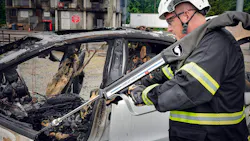

As electric vehicles become more common on the road, fire departments and emergency response teams are being asked to manage a different kind of incident. While many core firefighting principles still apply, lithium-ion batteries introduce challenges that can change the pace, tactics, and duration of a response. Thermal runaway, difficult-to-reach heat, toxic off-gassing, and the potential for reignition all make EV incidents more complex than a typical vehicle fire.
That is why electric vehicle response is increasingly becoming a conversation about both training and technology.
The equipment matters. The tactics matter. But just as important is knowing how those tools fit into the bigger response picture.
One of the more notable newer options in this space is the Cold Cut Cobra. Unlike traditional attack methods that rely on reaching the seat of the fire from the outside, the Cobra is designed to help firefighters access hidden heat and apply cooling more directly. Using ultra-high-pressure water technology, it can cut through material and then transition to fine water mist cooling. In EV and lithium-ion battery incidents, that targeted approach can give responders another option when they need to get water closer to the battery pack and work to slow or stop thermal propagation.
That does not mean it is a one-tool solution. No single piece of equipment solves every battery emergency. But tools like the Cold Cut Cobra represent an important shift in how the fire service is thinking about EV response: not simply fighting what is visible, but addressing the heat source more effectively and with greater tactical precision.
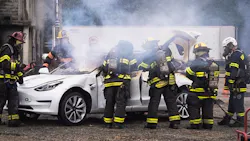
That is also where proper training becomes essential.
New technology only improves outcomes when responders understand how and when to use it. EV incidents demand a solid grasp of battery behavior, scene hazards, cooling priorities, vehicle construction, and post-fire monitoring. Crews need to recognize the signs of battery involvement, understand the limitations of different tactics, and make sound decisions under pressure. In short, the tool is only part of the answer. The people using it have to be ready too.
This is why Safeware Training / Hazard3 is such an important part of the conversation. Training gives departments a chance to move beyond product familiarity and build true operational capability. Rather than focusing only on equipment operation, quality instruction helps responders understand the larger strategy of EV and lithium-ion battery emergencies—from initial size-up and stabilization to suppression, overhaul, and containment.
The Broader View Matters.
That broader view matters because EV response does not begin and end with extinguishment.
For example, scene stabilization can be a critical early priority. Tools such as the Emergency Plug can help responders manage the risk of unintended vehicle movement during rescue, hazard assessment, and initial operations. It is a simple idea, but an important one: before crews can safely address battery hazards, they first need control of the scene.
Then there is the issue of containment after the incident. Damaged lithium-ion batteries can remain unstable even after flames are knocked down. That is why fire containment and battery handling solutions from companies such as CellBlock and KULR are also worth noting. These kinds of products support isolation, storage, and transport decisions for batteries that may still present a risk after the active firefighting phase is over. For many departments, this is one of the most overlooked parts of battery response planning.
Taken together, these tools point to a larger reality: EV response is becoming a layered discipline. It may involve stabilization tools, targeted cooling equipment, containment systems, and post-incident handling protocols. Just as important, it requires firefighters to understand where each tactic fits and how to apply it safely.
That is what makes the combination of proper training and modern equipment so valuable. Departments do not need hype. They need practical solutions, realistic instruction, and equipment they can integrate into their operations with confidence.
As EV adoption continues to grow, the question is no longer whether responders will encounter lithium-ion battery incidents. The question is whether they will be prepared for them.
For agencies looking to strengthen that preparedness, Safeware can help connect the dots between equipment, tactics, and training, so teams are better positioned to respond safely, effectively, and with greater confidence when these incidents occur.
About Safeware, Inc.: Safeware is a leading provider of safety solutions, specializing in assessing, distributing, and training advanced technologies to mitigate risks and enhance safety across various industries. With a commitment to innovation, quality, and customer satisfaction, Safeware remains at the forefront of safety excellence, empowering organizations to protect lives, assets, and the environment. Learn more about Safeware and Hazard3 at www.safewareinc.com