From First Spark to Recovery: Rethinking Wildfire Preparedness
Key Highlights
- Wildfire readiness starts before the first spark.
- Wildfire incidents quickly become community-wide public safety events.
- Situational awareness can buy responders valuable time.
- Communication is a life safety function.
- Recovery planning should begin before the fire is contained.
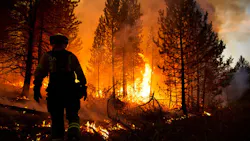

Wildland fire has a way of exposing every weak point in a community’s preparedness plan.
A fire may start in dry grass, brush, timber, or along a roadside. At first, it may look like a local fire problem. But once wind, terrain, heat, and fuel line up, the incident can change quickly. What began as a fire response can become an evacuation problem, a communications problem, a power problem, a traffic problem, and eventually a recovery problem.
For fire departments and emergency response teams, this reality is nothing new. Wildfire incidents rarely stay neatly inside one lane. Firefighters may be working in smoke, heat, low visibility, rough terrain, and changing wind. Emergency managers may be pushing alerts to residents who have only minutes to act. Public works crews may be trying to keep roads open and access points controlled. The incident may last hours or days, but the consequences can last weeks or months.
That is why wildfire readiness has to be bigger than suppression alone. It has to begin before smoke is in the air.
Good preparedness starts with simple questions. Where could a fire start? How would we know quickly? Who needs to be warned? What routes would people use to leave? What happens if power fails? Where will evacuees go? What will responders need if the incident stretches into another operational period? What hazards will remain after the fire is contained?
Those questions are basic, but they are not small. They help departments, emergency managers, procurement officials, and community leaders move from reacting to planning.
One of the most important parts of that planning is situational awareness. In wildfire response, minutes matter. The sooner a possible ignition is identified, verified, located, and shared, the better the chance responders have to act while the fire is still manageable. Early detection does not guarantee containment, especially during extreme wind or drought. But better information can give incident leaders more time and a clearer operating picture.
Today, many agencies are adding new tools to traditional detection methods such as lookout reports, patrols, public calls, and aircraft. Fire weather stations, cameras, lightning detection, satellite hotspot monitoring, air quality sensors, and software dashboards can all help agencies understand what is happening and where risk is building. Wildfire risk management platforms, such as AEM, can help bring those data points into a more usable view for decision makers.
Drones can also play an important role when used by trained operators and when conditions and regulations allow. They can help provide real-time imagery, thermal hotspot detection, fire-edge mapping, remote inspections, and post-fire assessments. The value is not the drone itself. The value is giving commanders and support teams information they can use without immediately sending personnel into unsafe terrain.
Communication is just as important. When fire threatens a community, people need plain instructions, not vague warnings. They need to know what is happening, where the danger is, whether they should leave, which routes are open, and where help is available. That is not always easy. Cell networks may be overloaded. Power may be out. Smoke can reduce visibility. Visitors may not understand local alert systems. Some residents may miss phone-based messages altogether.
This is where layered communication becomes critical. Outdoor acoustic systems, mass notification tools, radios, portable message signs, local media, social channels, and pre-written evacuation messages all have a place. Systems such as Genasys LRAD can help deliver clear voice instructions across distance, especially when mobile alerts are not enough. Portable changeable message signs from Wanco can help direct traffic, identify evacuation routes, warn of road closures, and support access control as conditions change.
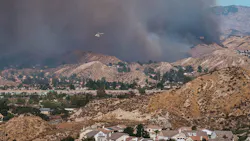
For responders, the equipment picture is just as layered. No single product removes the danger from wildfire response. But the right tools can help crews work safer, communicate better, and keep essential operations moving.
Drones and mapping tools can improve visibility into the incident. Class A fluorine-free foam can be a valuable support tool when used by trained responders in the right conditions, helping water spread, penetrate, and cling to ordinary combustible fuels more effectively than water alone. Portable generators can support command posts, shelters, lighting, communications equipment, pumps, charging stations, medical equipment, refrigeration, traffic control devices, and recovery operations. Emergency shelters can serve evacuees, responders, public works crews, animal support teams, or displaced staff.
Other needs are often less visible until they are missing: PPE, respiratory protection, lighting, radios, hoses, water tanks, traffic control equipment, first aid, trauma supplies, hydration, heat stress supplies, air filtration, sanitation, and hygiene support. None of these items are glamorous, but all of them matter when the incident stretches, the weather shifts, or the community loses power.
Recovery has to be part of the plan because a wildfire does not end when the flames are contained. Communities may still face damaged roads, utility outages, hazardous debris, unstable trees, ash, erosion, flooding, and re-entry concerns, while officials work through decisions about when residents can safely return and what public health guidance is needed. Planning ahead for damage assessment, temporary power, shelter support, traffic control, cleanup PPE, respiratory protection, air filtration, sanitation supplies, and clear public messaging can reduce confusion and help recovery begin faster.
Funding is often part of the readiness conversation because many agencies know what they need, but budgets are limited. Grant programs may help eligible organizations close gaps in planning, mitigation, communications, response equipment, sheltering, and recovery support. The key is to match the need to the right funding path and confirm eligibility, allowable costs, deadlines, and procurement requirements with the appropriate grant administrator.
Wildfire readiness is not about buying equipment for the sake of having equipment. It is about understanding the risk, identifying the gaps, and putting practical solutions in place before lives are on the line.
Before the threat, during the response, and after the fire, Safeware helps responders, emergency managers, public works teams, and procurement officials connect the mission to the right solutions. To learn more about wildfire preparedness, response, and recovery support, visit Safeware at safewareinc.com.